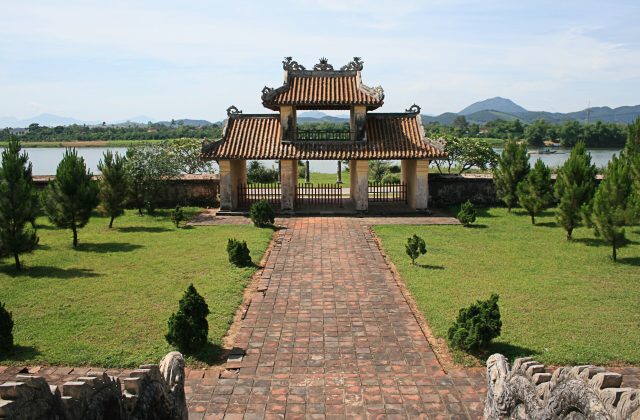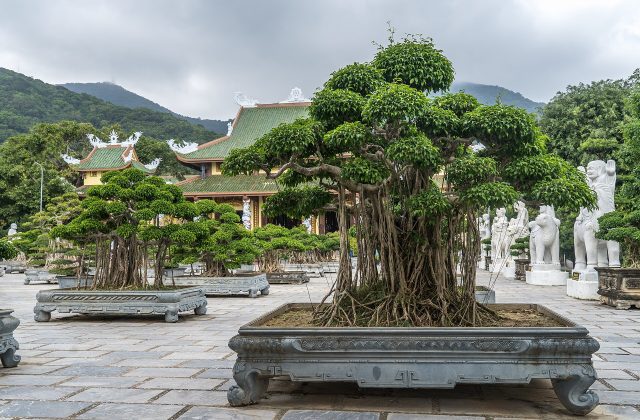
Linh Ung Pagoda (Son Tra)
88 km away
Linh Ung Pagoda on the Son Tra peninsula is an active Buddhist temple with no admission charge, so there is no ticket…
2 tickets & tours
Buddhist Temple · Hue · Vietnam
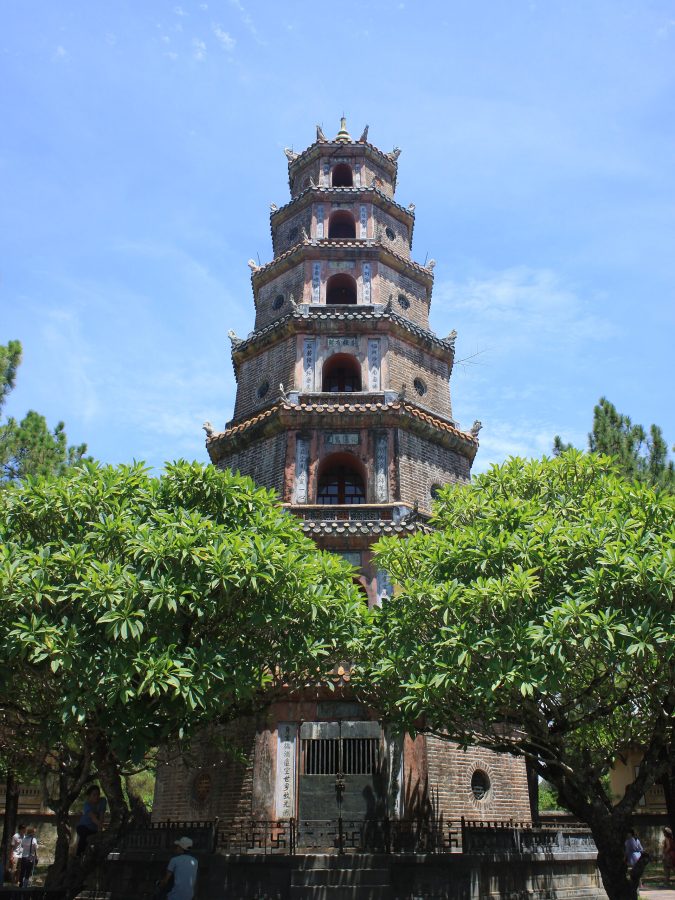
Thien Mu Pagoda is a working Buddhist monastery with free entry, and no ticket for it is sold online. There is no gate booth; you simply climb the steps from the riverside road and walk through the grounds. The pagoda stands on a low hill on the north bank of the Perfume River, about 5 km upstream from the Imperial Citadel of Hue. Independent visitors usually come by taxi, ride-hailing motorbike or bicycle along the riverside road in 15 to 20 minutes from the city centre. The most popular approach is from the water. Dragon boats moored on the riverbank near the city centre run trips upstream, and nearly all of them make a stop at the pagoda's own landing;
some continue to the royal tombs further up the river. A private boat is cheap to charter for a group, and most boats take about half a day if you include a tomb. The other common option is a full-day guided tour of Hue, which usually combines the Citadel, Thien Mu, a boat ride and two or three of the Nguyen emperors' tombs such as those of Tu Duc, Minh Mang and Khai Dinh. These tours normally include transport, a guide and lunch, while entry fees to the Citadel and tombs, which are paid sites, may or may not be covered. Check the inclusions before booking. The page lists any GetYourGuide tours whose route passes the pagoda.
Live prices from GetYourGuide for tickets and tours that include this temple. Free cancellation on most of them.
Thien Mu, the pagoda of the Celestial Lady, was founded in 1601 by Nguyen Hoang, the first of the Nguyen lords who ruled central Vietnam. Legend tells of an old woman who appeared on the hill and foretold that a lord would build a pagoda here for the prosperity of the land. The monastery grew under later Nguyen rulers, especially in the early eighteenth century, and became the leading Buddhist centre of the imperial city. A typhoon in 1904 caused heavy damage, and much of what you see today was rebuilt afterwards. The symbol of Hue is the octagonal Phuoc Duyen tower in front, built in 1844 under Emperor Thieu Tri. It rises seven storeys and 21 m, each storey dedicated to a Buddha; the tower itself is not open to climb.
Pavilions on either side shelter a large bronze bell cast in 1710 and weighing more than three tonnes, said to be audible 10 km away, and a stone stele of 1715 standing on the back of a marble turtle, a symbol of longevity. Beyond the triple gate with its guardian figures lies the main sanctuary, with a laughing Maitreya Buddha flanked by bodhisattvas. Walk on into the rear gardens, shaded by pines, to see the pale blue Austin car that carried the monk Thich Quang Duc to Saigon in 1963, where he burned himself to death in protest at the persecution of Buddhists. Monks live and study here: dress modestly, keep quiet during prayers, take shoes off in the hall and ask before photographing anyone.
The grounds are open every day from early morning until late afternoon or early evening; check locally, as the inner halls may close around the monks' meal and prayer times. Early morning, around 7 or 8 am, is the calmest moment, when mist sometimes lies on the Perfume River. Late afternoon is lovely too, as the sun drops behind the tower and you may hear the monks chanting. From mid-morning, boat groups and tour coaches arrive in waves. The dry months from February to April are the most comfortable time to visit Hue.
From September to December the city has its rainy season, with occasional typhoons and floods, while June to August is very hot. Vesak, the Buddha's birthday, Tet and the full-moon days bring many local pilgrims, and the Hue Festival is held in the city in some years. Allow 45 minutes to an hour. Combine it with a boat ride on the river, the Imperial Citadel and the tombs of the Nguyen emperors.
88 km away
Linh Ung Pagoda on the Son Tra peninsula is an active Buddhist temple with no admission charge, so there is no ticket…
2 tickets & tours
99 km away
My Son lies in a wooded valley about 40 km southwest of Hoi An, and almost everyone visits it as a half-day trip from…
213 tickets & tours
271 km away
Nanshan Temple stands inside a large, fenced Buddhist cultural park on the coast west of Sanya, so the first thing to…
4 tickets & tours
Yes. GetYourGuide sells tickets and guided tours whose route includes Thien Mu Pagoda; live prices are shown on this page.
The grounds are open every day from early morning until late afternoon or early evening; check locally, as the inner halls may close around the monks' meal and prayer times.
Allow 45 minutes to an hour.
Shoulders and knees covered; shoes off in the main hall.
Entry to Thien Mu Pagoda: Free
Thien Mu Pagoda covers 4.2 ha.
Thien Mu Pagoda was established in 1601.
Thien Mu Pagoda is in Hue, Vietnam. The map on this page shows the exact spot.
How to visit a Buddhist temple: shoes, dress and manners — Shoes, dress, feet, photos and offerings in Buddhist temples, from the wats of Thailand and Sri Lanka to the Zen temples of Japan.
Hue, Vietnam
No ticket for the Temple of Literature in Hue is sold online, and it is not one of the sites included in the combined…
No online ticket