
Chandi Devi Temple, Haridwar
123 km away
There is no admission charge for Chandi Devi Temple. The cost of a visit is the ropeway, called Udan Khatola, which…
1 ticket or tour
Hindu Temple · Kedarnath · India
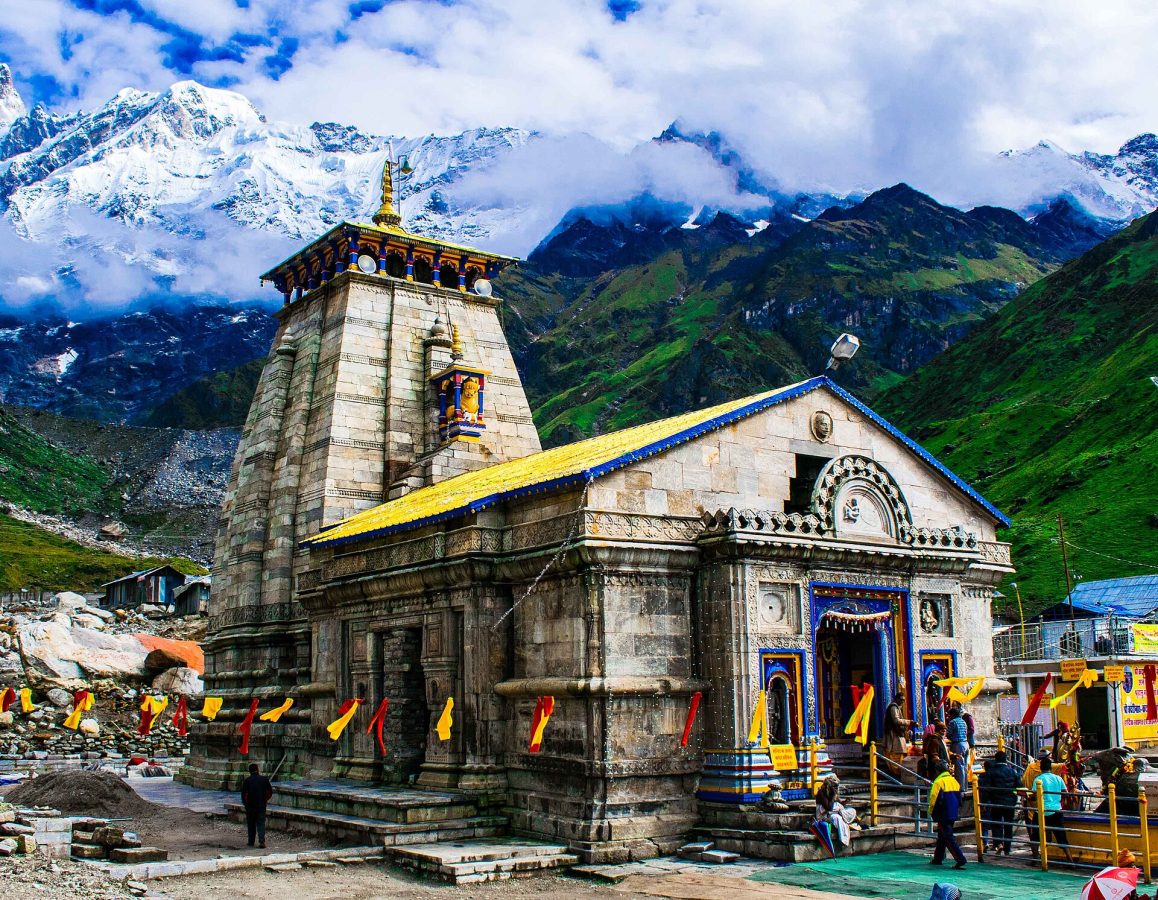
Photo: Shivam Kumar 766, CC BY-SA 4.0
There is no ticket to buy for Kedarnath. Darshan, the sight of the deity, is free for everyone, and the temple committee sells only special pujas and rituals at fixed rates, either on its own website or at the counter. What does need planning is the journey and the registration. Every pilgrim on the Char Dham circuit of Uttarakhand must register with the state tourism authority before travelling, and the registration is checked at Sonprayag, the last point most private cars may reach. From Sonprayag, shared jeeps run to Gaurikund, where the walk to the temple begins: a paved mountain path of roughly 16 to 18 km, rising some 1,600 m.
You can walk it in six to eight hours, hire a pony or mule, or be carried in a palanquin or a basket on a porter's back; all of these are booked through official counters at fixed rates. Helicopter services fly from helipads near Phata, Sersi and Guptkashi to a landing site close to the temple, and the seats, sold through the official booking portal, go very quickly in peak weeks. Most travellers from abroad join a packaged Char Dham or Do Dham tour from Haridwar, Rishikesh or Delhi, which includes road transport, hotels, registration and often the helicopter. No ticket for this temple alone is sold online, and the page lists any GetYourGuide tours whose route passes Kedarnath.
Live prices from GetYourGuide for tickets and tours that include this temple. Free cancellation on most of them.
Kedarnath stands at about 3,583 m at the head of the Mandakini valley, under a wall of snow peaks, and it is the highest of the twelve Jyotirlinga shrines of Shiva. Legend says the Pandava brothers of the Mahabharata first built a temple here to seek Shiva's forgiveness; the present stone temple is of uncertain date, and tradition credits the eighth-century philosopher Adi Shankara with reviving it. It is one of the four shrines of the Chota Char Dham pilgrimage. The building is compact and massive, made of heavy grey stone slabs on a raised platform, with a pyramidal tower over the sanctum. A large stone Nandi, Shiva's bull, faces the entrance. Inside, an assembly hall carries images of the Pandavas, Draupadi and Krishna, and in the dark inner shrine the object of worship is an irregular, pyramid-shaped rock, venerated as the hump of Shiva in the form of a bull.
Devotees may touch it and pour water or ghee over it. Behind the temple lies the great boulder known as the Bhim Shila, which came to rest there during the 2013 floods and is credited with diverting the torrent that destroyed much of the town while leaving the temple standing. Nearby is the rebuilt shrine of Adi Shankara with his statue. On the hill above, a short climb leads to the small Bhairavnath temple and a fine view down the valley. Queues for darshan can last hours. Leave shoes, belts and leather bags at the depositories, keep phones away inside the temple, where photography is forbidden, and follow the volunteers. The altitude is high: rest at Gaurikund before the climb, walk slowly and dress for cold even in summer.
The temple is open only from late April or May, on the festival of Akshaya Tritiya, until shortly after Diwali in late October or November; in winter the deity is carried down to Ukhimath and worshipped there. During the season, the temple opens before dawn for the morning rituals, general darshan runs through the day with a break in the afternoon, and the evening aarti is held at dusk. May and June are the busiest months, with very long queues. July and August bring the monsoon, with landslides that close roads for days;
avoid them. September and October are the best time, with clear skies, fewer crowds and snow on the peaks. The opening and closing days draw huge crowds for the ceremonies around the deity's procession. Allow at least two days: one to walk up and stay overnight near the temple, attending the evening aarti and the dawn rituals, and one to walk down. Combine the trip with Badrinath, the Tungnath temple above Chopta, or Triyuginarayan, where Shiva and Parvati are said to have married.
123 km away
There is no admission charge for Chandi Devi Temple. The cost of a visit is the ropeway, called Udan Khatola, which…
1 ticket or tour
186 km away
Kali Bari is a neighbourhood temple in the middle of Shimla and entry is free; there is no ticket and nothing to book.
1 ticket or tour
292 km away
Entry to the Jama Masjid is free, and no ticket is needed for the mosque itself.
12 tickets & tours
Yes. GetYourGuide sells tickets and guided tours whose route includes Kedarnath Temple; live prices are shown on this page.
The temple is open only from late April or May, on the festival of Akshaya Tritiya, until shortly after Diwali in late October or November; in winter the deity is carried down to Ukhimath and worshipped there.
Allow at least two days: one to walk up and stay overnight near the temple, attending the evening aarti and the dawn rituals, and one to walk down.
September and October are the best time, with clear skies, fewer crowds and snow on the peaks.
Leave shoes, belts and leather bags at the depositories, keep phones away inside the temple, where photography is forbidden, and follow the volunteers.
Entry to Kedarnath Temple: Free; special pujas paid
Modest dress; shoes and leather goods are left outside, and photos are banned inside.
Kedarnath Temple was established in 800.
Kedarnath Temple is in Kedarnath, India. The map on this page shows the exact spot.
How to visit a Hindu temple: dress, shoes and access — What to wear, what to leave at the gate and where non-Hindus may go in Hindu temples in India, Nepal, Bali and South-East Asia.

