Ellora Caves
0 km away
Ellora sits about 29 km northwest of Aurangabad, and almost everything sold online is built around getting there and…
28 tickets & tours
Hindu Temple · Aurangabad · India
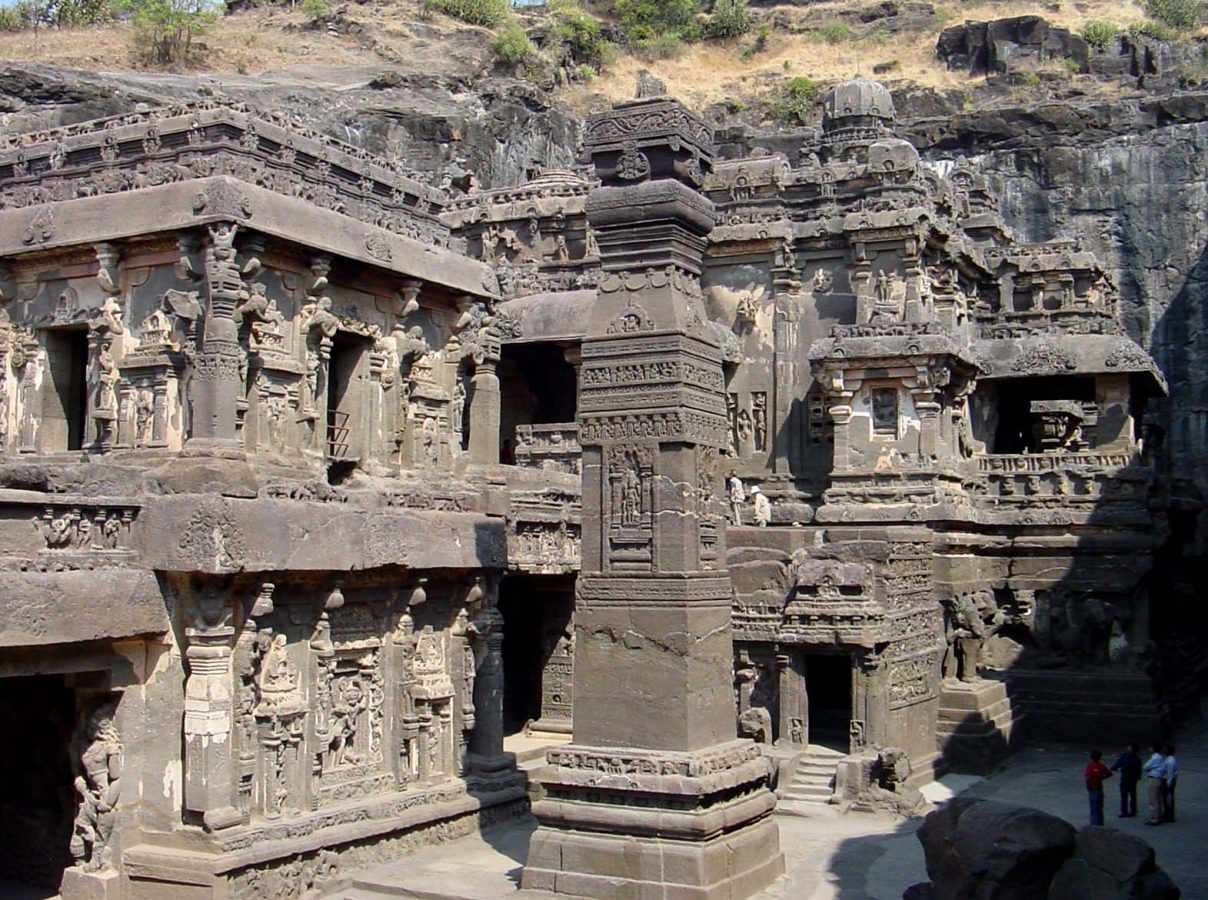
Photo: G41rn8, CC BY-SA 4.0
The Kailasa Temple is Cave 16 of the Ellora Caves, and it is entered on the general Ellora ticket bought at the counter by the main gate; there is no separate ticket for this temple and no reason to book online. Foreign visitors pay a higher rate than Indian citizens, a small extra charge applies to video cameras, and the ticket also covers the Buddhist and Jain caves along the same cliff. How you get there matters more than the ticket. The caves are about 30 km north-west of Aurangabad, now officially Chhatrapati Sambhaji Nagar, and most visitors either hire a car with driver for the day or join a guided day trip from the city.
The usual guided outing combines Ellora with the Daulatabad fort on the way and the Grishneshwar temple next door, and sometimes with the Bibi ka Maqbara in town; a longer and separate day is needed for the painted caves of Ajanta, about 100 km away. A car and driver, with a licensed guide hired at the site, is the most flexible option and lets you arrive before the tour buses. A guide is worth paying for here. The panels around the Kailasa illustrate stories from the Ramayana, the Mahabharata and the Shiva legends, and without someone to read them the carving becomes a blur of figures. Licensed guides wait at the entrance and charge a fixed fee per group. The page lists any GetYourGuide tours whose route includes Ellora.
Live prices from GetYourGuide for tickets and tours that include this temple. Free cancellation on most of them.
The Kailasa is not a building but a sculpture on the scale of a building. In the eighth century, under the Rashtrakuta dynasty and most probably King Krishna I, masons cut a deep trench into the basalt hillside and then carved a complete temple out of the block left standing in the middle, working from the top downwards. An estimated 200,000 tonnes of rock were removed, and the summit of the shrine rises about 33 m above the courtyard. The temple is dedicated to Shiva and represents Mount Kailash, his Himalayan home. You enter through a two-storey gateway into the courtyard. Inside stand two life-size stone elephants and two tall free-standing pillars, and a bridge links a shrine for Shiva's bull Nandi to the main temple.
Climb the stairs to the upper level to reach the pillared hall and the sanctum, which holds the linga. Look for the famous relief of the demon king Ravana shaking Mount Kailasa while Shiva steadies it with one toe, the long friezes of the Ramayana on the base of the temple, the river goddesses in the shrine at the side of the court, and the traces of painting on the ceilings of the porches. The galleries cut into the cliff walls around the courtyard hold more panels and are often quieter. Then take the path that climbs to the top of the cliff on the north side: from there you look down into the whole excavation and understand how it was made. The Ellora Caves as a whole are a UNESCO World Heritage Site. Footwear must come off at the sanctum, the stone is uneven, and photography without flash is allowed.
The Ellora Caves are open from sunrise to sunset, roughly 6 am to 6 pm, and are closed every Tuesday; plan around that, because many visitors arrive on a Tuesday and find the gates shut. Ajanta, by contrast, closes on Mondays. Arrive at opening time. The Kailasa faces west, so the courtyard is in shade in the morning and pleasant to walk; by late morning school groups and coaches fill it, and in the afternoon the facade is lit by the sun, which suits photographs from the clifftop.
The best season is October to March, when days are dry and warm rather than hot. During the monsoon, from late June to September, the rock turns dark, small waterfalls run down the cliff and the hills are green, though paths can be slippery. April and May are very hot. Give the Kailasa at least two hours and the rest of Ellora another two or three. Combine it with the Grishneshwar temple, one of the twelve Jyotirlinga shrines of Shiva, just over 1 km away, and the Daulatabad fort on the road back to the city.
0 km away
Ellora sits about 29 km northwest of Aurangabad, and almost everything sold online is built around getting there and…
28 tickets & tours
80 km away
The Ajanta Caves lie in a remote gorge about 100 km north of Aurangabad, now officially Chhatrapati Sambhajinagar, so…
29 tickets & tours
264 km away
The Global Vipassana Pagoda charges nothing for entry, and there is no ticket to reserve: visitors walk in through the…
2 tickets & tours
Yes. GetYourGuide sells tickets and guided tours whose route includes Kailasa Temple (Ellora Cave 16); live prices are shown on this page.
The Ellora Caves are open from sunrise to sunset, roughly 6 am to 6 pm, and are closed every Tuesday; plan around that, because many visitors arrive on a Tuesday and find the gates shut.
Give the Kailasa at least two hours and the rest of Ellora another two or three.
The best season is October to March, when days are dry and warm rather than hot.
Entry to Kailasa Temple (Ellora Cave 16): INR 600 foreigners, INR 40 Indians
No strict code; modest clothing is respectful, and shoes come off at the inner shrine.
Kailasa Temple (Ellora Cave 16) was established in 756.
Kailasa Temple (Ellora Cave 16) is in Aurangabad, India. The map on this page shows the exact spot.
How to visit a Hindu temple: dress, shoes and access — What to wear, what to leave at the gate and where non-Hindus may go in Hindu temples in India, Nepal, Bali and South-East Asia.
Aurangabad, India
The Ajanta Caves lie in a remote gorge about 100 km north of Aurangabad, now officially Chhatrapati Sambhajinagar, so…
29 tickets & tours
Aurangabad, India
Ellora sits about 29 km northwest of Aurangabad, and almost everything sold online is built around getting there and…
28 tickets & tours