
Ajanta Caves
Aurangabad, India
The Ajanta Caves lie in a remote gorge about 100 km north of Aurangabad, now officially Chhatrapati Sambhajinagar, so…
29 tickets & tours
Ancient Temple · Aurangabad · India
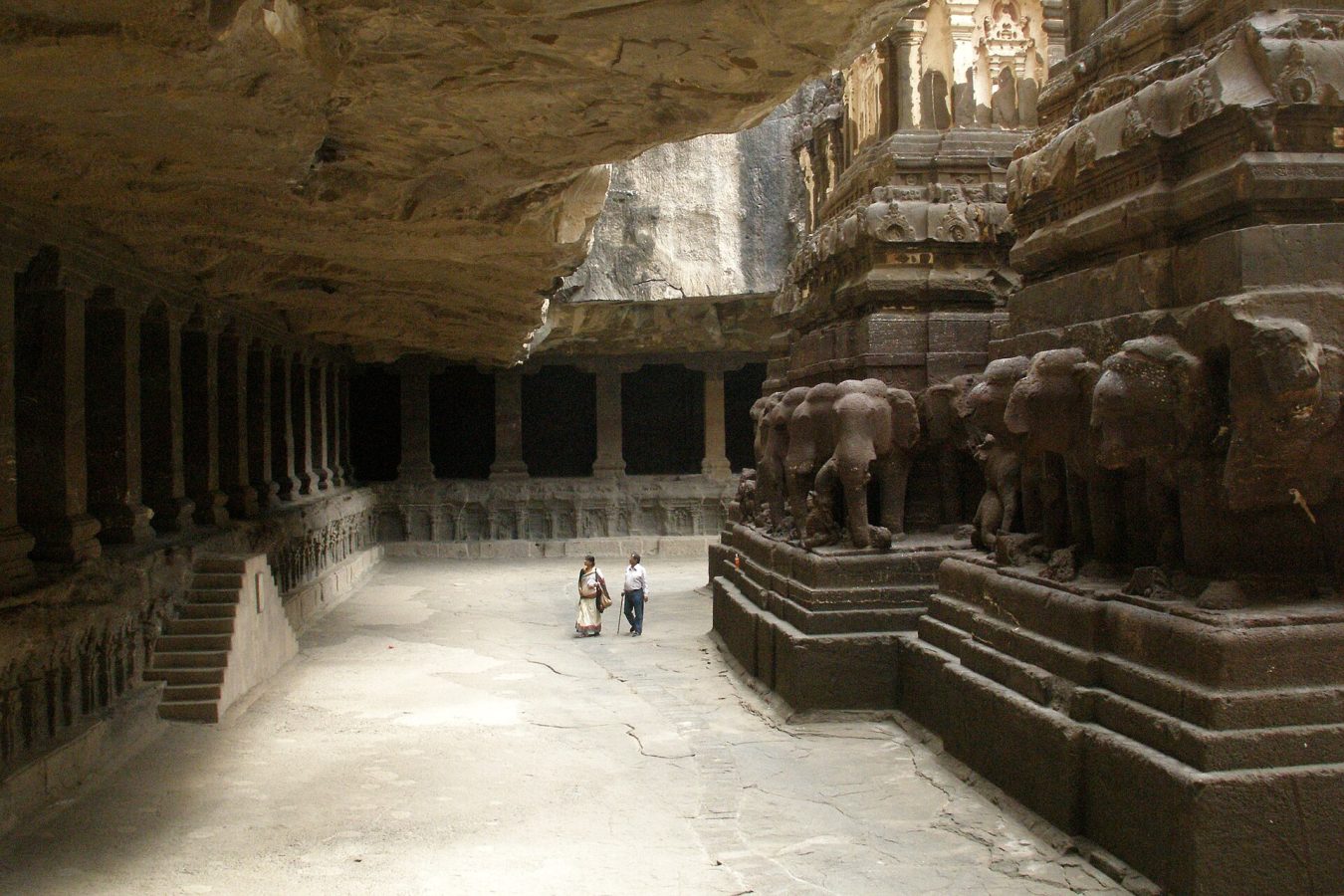
Photo: Vyacheslav Argenberg, CC BY 4.0
Ellora sits about 29 km northwest of Aurangabad, and almost everything sold online is built around getting there and back. The simplest option is a private car with a driver for the day, which collects you from a hotel or the railway station, waits at the car park and drops you back in the evening; entry tickets are usually paid separately at the gate. A step up is a guided visit, where an English-speaking guide walks you through the Buddhist, Hindu and Jain groups and explains the iconography, which is genuinely useful here because the carvings are dense and largely unlabelled. Most operators pair Ellora with the painted caves of Ajanta, roughly 100 km to the north.
Doing both in one day is possible but means a very long drive and only a few hours at each, so the two-day versions, with a night in Aurangabad, are the more sensible choice. Shorter combinations add the hilltop fort of Daulatabad, which lies on the road from the city, or the Bibi ka Maqbara mausoleum in Aurangabad itself. There are also packages from Mumbai and Pune, some with flights or overnight trains, and longer circuits that continue to the Lonar crater or as far as Hampi. Check whether a package says entry fees are included, whether lunch is part of the deal, and whether the guide stays with you inside the caves or only in the vehicle.
Live dates and prices from GetYourGuide. Free cancellation on most tickets.
The caves are cut into a low basalt escarpment running roughly north to south for about 2 km, and they are numbered in that order. The twelve Buddhist caves at the southern end are the oldest; the seventeen Hindu caves fill the middle; the five Jain caves stand apart to the north and are reached by a short drive or the electric shuttle. Of more than a hundred excavations, 34 are open to the public, created between roughly the 6th and 10th centuries under several dynasties, with the Rashtrakuta kings responsible for the greatest work. That work is Cave 16, the Kailasa temple, a full Shiva temple with a shrine, a hall, a gateway and life-size elephants, carved downwards and inwards from a single mass of rock rather than built.
Walk round the trench at ground level first, then climb the path to the rim behind it to understand the scale. In the Buddhist group, look for Cave 10, a chaitya hall whose ribbed ceiling imitates timber beams and whose seated Buddha faces the entrance, and Cave 12, a three-storey monastery. In the Jain group, Cave 32, the Indra Sabha, has a fine upper hall with carved columns and a seated Mahavira. Wear shoes that slip on and off easily, as you will remove them at a few shrines, carry water and a torch for the darker halls, and avoid touching the carvings. Photography without a flash or tripod is generally allowed. The site is run by the Archaeological Survey of India; buses and taxis from Aurangabad take about 45 minutes, and the Grishneshwar temple, one of Shiva's twelve jyotirlinga shrines, is a short walk from the car park.
The caves are open from sunrise to sunset and are closed every Tuesday, a detail that catches out many visitors, so plan Ajanta, which closes on Mondays, around it. Arrive at opening time: the light on the west-facing cliff is soft in the morning, the Kailasa courtyard is still in shade, and the school groups and Indian tour buses arrive from about 10 am. Weekends and Indian public holidays are much busier. The best season is from October to March, when days are dry and warm rather than hot.
The monsoon, roughly from late June to September, turns the escarpment green and sets small waterfalls running over the cave fronts, which is beautiful but slippery. April and May are fiercely hot, and there is very little shade between the groups. The Ellora-Ajanta festival of music and dance is held in some years in the cooler months. Allow at least four hours for the three groups, or a full day if you want to see the lesser caves properly. Combine it with Daulatabad fort and Aurangabad's Bibi ka Maqbara, and with Ajanta on a second day.
Yes. GetYourGuide lists 28 tickets and tours for Ellora Caves, with live dates and prices and free cancellation on most of them.
Of more than a hundred excavations, 34 are open to the public, created between roughly the 6th and 10th centuries under several dynasties, with the Rashtrakuta kings responsible for the greatest work.
Allow at least four hours for the three groups, or a full day if you want to see the lesser caves properly.
The best season is from October to March, when days are dry and warm rather than hot.
Entry to Ellora Caves: INR 600 for foreigners, INR 40 Indians
Shoulders and knees covered; shoes off inside the Jain caves and any shrine still in worship.
Ellora Caves was established in 600.
Ellora Caves receives about 1.8 million a year (2024).
Ellora Caves is in Aurangabad, India. The map on this page shows the exact spot.
How to visit an ancient temple: tickets, heat and rules — Tickets, hours, heat, guides, climbing rules and conservation at the ancient temples of Egypt, Greece, Italy, Angkor and the Maya world.
Aurangabad, India
The Ajanta Caves lie in a remote gorge about 100 km north of Aurangabad, now officially Chhatrapati Sambhajinagar, so…
29 tickets & tours
Aurangabad, India
The Kailasa Temple is Cave 16 of the Ellora Caves, and it is entered on the general Ellora ticket bought at the counter…
No online ticket
