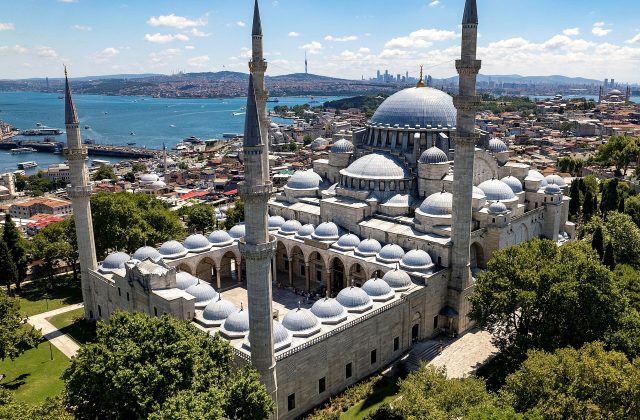
Sultan Ahmed Mosque (Blue Mosque)
92 km away
Entry to the Sultan Ahmed Mosque is free and there is no ticket to buy, so anything sold online is really a guide, a…
34 tickets & tours
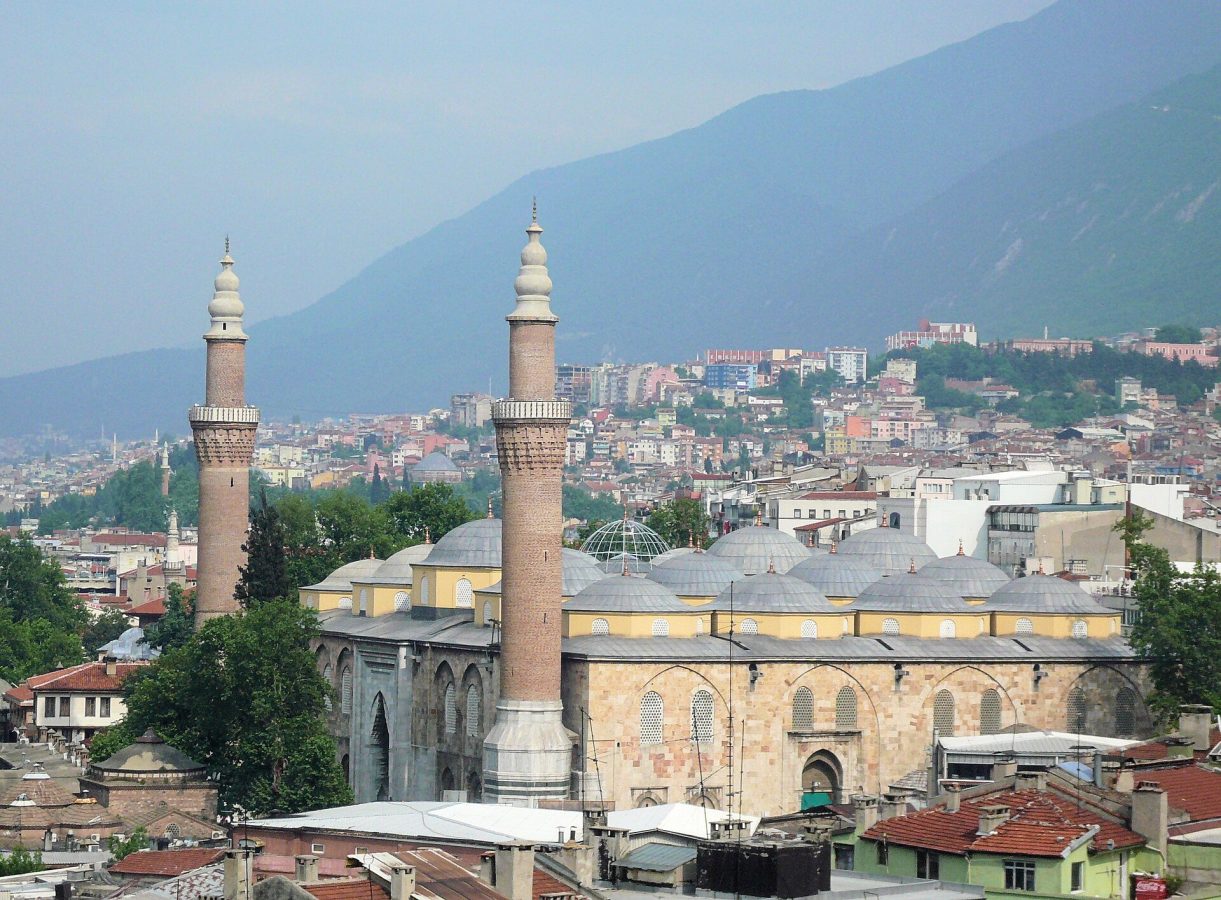
Photo: Beñat Irasuegi, CC BY-SA 4.0
No ticket for the Grand Mosque of Bursa is sold online, and none is needed: entry is free, there are no timed slots, and visitors walk in through the side doors outside prayer times. Scarves and wraps are usually available at the entrance for women who arrive without one. The main decision is whether to come on your own or on an organised trip. Bursa is about two and a half hours from Istanbul by fast ferry and road, and the most common product is a full-day excursion from Istanbul that crosses the Sea of Marmara and covers the city's early Ottoman monuments, typically the Grand Mosque, the Green Mosque and Green Tomb, the silk market and sometimes the village of Cumalikizik or the cable car up Uludag.
These trips generally include transport, a guide and lunch, with the cable car charged extra. They make a long day, so if you have time it is more relaxed to stay a night in Bursa and walk the historic centre at your own pace. Within the city, the mosque needs no tour at all: it stands at the heart of the old market district, and a guide is only worth hiring if you want the calligraphy and the history of the first Ottoman capital explained. The page lists any GetYourGuide tours whose route passes the mosque.
Live prices from GetYourGuide for tickets and tours that include this temple. Free cancellation on most of them.
The Ulu Cami was built between 1396 and 1399 for Sultan Bayezid I, to give thanks for his victory over a crusading army at Nicopolis. A well-known story says he had vowed to build twenty mosques and settled instead on one with twenty domes. The architect was Ali Neccar. The building suffered fires in the early 15th century and a severe earthquake in 1855, after which the roof was rebuilt, so much of what you see inside dates from the 19th century, but the plan and the massive stone shell are original. Inside, twenty domes in four rows of five rest on twelve heavy piers, creating a forest of supports rather than one great space, a layout inherited from the Seljuk mosques of Anatolia.
The walls and piers carry an extraordinary collection of large calligraphic panels, painted by masters over several centuries, which is the main reason to visit. Under the central dome, once open to the sky and now glazed, a multi-sided marble fountain stands inside the prayer hall itself, an unusual feature that makes the interior feel like a courtyard. Look too for the carved walnut minbar near the mihrab, a masterpiece of the early period, and the two minarets, one attached to the building and one standing apart. Take off your shoes, keep to the carpeted areas behind any worshippers and avoid the front rows. Photography without flash is generally tolerated outside prayer. The mosque stands on Ataturk Caddesi beside the covered bazaar and the Koza Han silk market, easily reached by tram or on foot from anywhere in the centre.
The mosque is open from early morning until after the evening prayer, but visitors should avoid the five daily prayer times, when tourists are asked to wait. On Fridays the midday prayer fills the hall and the surrounding streets, so plan another day or come in the late afternoon. Mid-morning on a weekday is the calmest time, after the morning shoppers and before the day-trip groups from Istanbul arrive around midday. The late afternoon, when light falls through the glazed central dome onto the fountain, is the most photogenic.
Spring and autumn are the most comfortable seasons; summers are hot and winters can be cold and snowy, though the snow on Uludag behind the city is a sight in itself. During Ramadan, and at the two Eid festivals, the mosque is crowded with worshippers and visiting hours are shorter. Allow 30 to 45 minutes inside. Combine it with the covered bazaar and Koza Han next door, then take a taxi or bus to the Green Mosque and the tombs of the first Ottoman sultans.
92 km away
Entry to the Sultan Ahmed Mosque is free and there is no ticket to buy, so anything sold online is really a guide, a…
34 tickets & tours
92 km away
Since Hagia Sophia became a mosque again in 2020, the way you visit it has changed.
78 tickets & tours
93 km away
Entry to the Suleymaniye Mosque costs nothing and needs no ticket, so anything sold online for it is really a…
5 tickets & tours
Yes. GetYourGuide sells tickets and guided tours whose route includes Grand Mosque of Bursa (Ulu Cami); live prices are shown on this page.
No ticket for the Grand Mosque of Bursa is sold online, and none is needed: entry is free, there are no timed slots, and visitors walk in through the side doors outside prayer times.
Allow 30 to 45 minutes inside.
Shoulders and knees covered; women cover their hair. Shoes off at the door.
Entry to Grand Mosque of Bursa (Ulu Cami): Free
Grand Mosque of Bursa (Ulu Cami) was established in 1396.
Grand Mosque of Bursa (Ulu Cami) is in Bursa, Turkey. The map on this page shows the exact spot.
How to visit a mosque: dress, timing and manners — What to wear, when to go and how to behave in a mosque as a non-Muslim, and which mosques do not admit visitors at all.
Bursa, Turkey
No ticket for the Green Mosque is sold online, and none is needed.
No online ticket