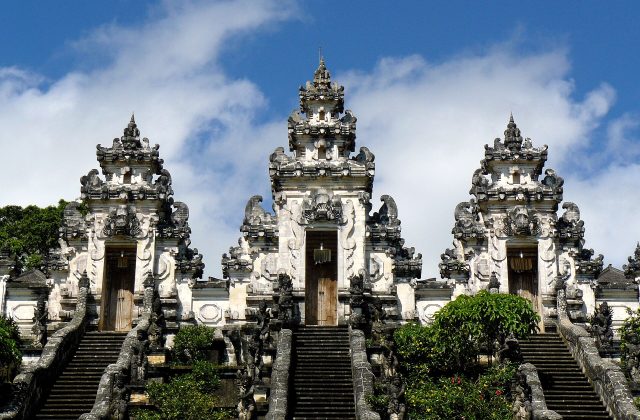
Pura Lempuyang (Gate of Heaven)
Karangasem, Indonesia
Lempuyang lies in the far east of Bali, on the slopes of Mount Lempuyang above Amlapura, about two hours by road from…
29 tickets & tours
Hindu Temple · Karangasem · Indonesia

Photo: Arabsalam, CC BY-SA 4.0
Pura Goa Lawah is not ticketed online. Visitors pay a modest entrance fee at the gate, which normally includes the loan of a sarong and sash, and local guides at the entrance may offer a short explanation for a tip. Most people come by car with a driver, since the temple lies on the main coastal road through east Bali and is easy to fit into a longer day. The organised option sold online is a day out of a different kind: a snorkelling trip in the Blue Lagoon near Padang Bai, combined with a stop at the temple and lunch. These usually include hotel transfers, snorkelling equipment, the boat, the meal and the temple entry, and they suit travellers who want a light taste of the sanctuary alongside a morning in the water.
If the temple is your main interest, a private driver for the day is the better choice, because you can stay longer, add other east Bali sites and avoid arriving with a group. Drivers commonly combine Goa Lawah with Klungkung palace and its painted pavilions, the Besakih mother temple, the walled village of Tenganan or the traditional salt-makers on the black-sand beach at Kusamba. A guided temple tour from Ubud or the southern resorts will usually follow a similar route, with the entrance fees either included or paid on the spot.
Live dates and prices from GetYourGuide. Free cancellation on most tickets.
The temple stands on a low rocky outcrop on the north side of the coast road, facing a black-sand beach. Its name means bat cave, and the reason is obvious as soon as you reach the inner courtyard: thousands of fruit and nectar bats hang from the roof of a cave at the back of the compound, squeaking and shuffling above the shrines built into its mouth. The smell and the noise are part of the experience. The layout follows the classic Balinese plan of three courtyards. A split gate leads into the outer court with its drum tower and pavilions for the gamelan, a second court lies to the side, and three roofed portals open into the inner sanctuary with three multi-tiered meru towers, one of them dedicated to Shiva.
Look for the pavilion whose steps are guarded by the serpent Naga Basuki, the dragon believed to keep the cosmos in balance and said to live in the cave, which legend claims runs all the way to Besakih. The temple is traditionally attributed to the priest Mpu Kuturan in the 11th century and is counted among the holiest sanctuaries on the island. It was also a strategic point in the fighting of 1849 between the Dutch and the kingdom of Klungkung. Wear the sarong and sash, stay out of the innermost area when ceremonies are under way, and never stand higher than a priest or step over offerings. Women who are menstruating are asked not to enter. Across the road on the beach, families often hold purification rites after cremations.
The temple is open to visitors from morning until early evening every day. Mornings are the best time: the light is softer, the heat is lower, and day-trippers from the south have not yet arrived. Ceremonies follow the Balinese calendar rather than a fixed schedule, and you may find the courtyards full of worshippers in white and offerings piled high; this is the most rewarding moment to be there, though parts of the temple may be closed to visitors. The dry season from April to October is the most comfortable time to travel in east Bali.
Galungan and Kuningan, the island's major festivals, which come round every 210 days, bring large processions to all the great temples, and the temple's own anniversary festival is also very busy. On Nyepi, the Balinese day of silence in March, the whole island shuts down and no visits are possible. An hour is enough for the temple itself. Plan it as one stop in a day along the east coast, together with Klungkung, Padang Bai, Tenganan or Besakih.
Yes. GetYourGuide lists one ticket or tour for Pura Goa Lawah (Bat Cave Temple), with live dates and prices and free cancellation on most of them.
Entry to Pura Goa Lawah (Bat Cave Temple): Small fee; sarong included
The temple is open to visitors from morning until early evening every day.
Plan it as one stop in a day along the east coast, together with Klungkung, Padang Bai, Tenganan or Besakih.
Mornings are the best time: the light is softer, the heat is lower, and day-trippers from the south have not yet arrived.
Sarong and sash required for everyone; both are lent at the entrance.
Pura Goa Lawah (Bat Cave Temple) is in Karangasem, Indonesia. The map on this page shows the exact spot.
How to visit a Hindu temple: dress, shoes and access — What to wear, what to leave at the gate and where non-Hindus may go in Hindu temples in India, Nepal, Bali and South-East Asia.
Karangasem, Indonesia
Lempuyang lies in the far east of Bali, on the slopes of Mount Lempuyang above Amlapura, about two hours by road from…
29 tickets & tours
Karangasem, Indonesia
Besakih lies high on the slopes of Mount Agung in eastern Bali, about two hours by car from Ubud and more from the…
20 tickets & tours
