Wat Phra That Doi Saket
36 km away
Wat Phra That Doi Saket is a hilltop temple about 20 km north-east of central Chiang Mai, and there is no admission…
1 ticket or tour
Buddhist Temple · Chiang Mai · Thailand
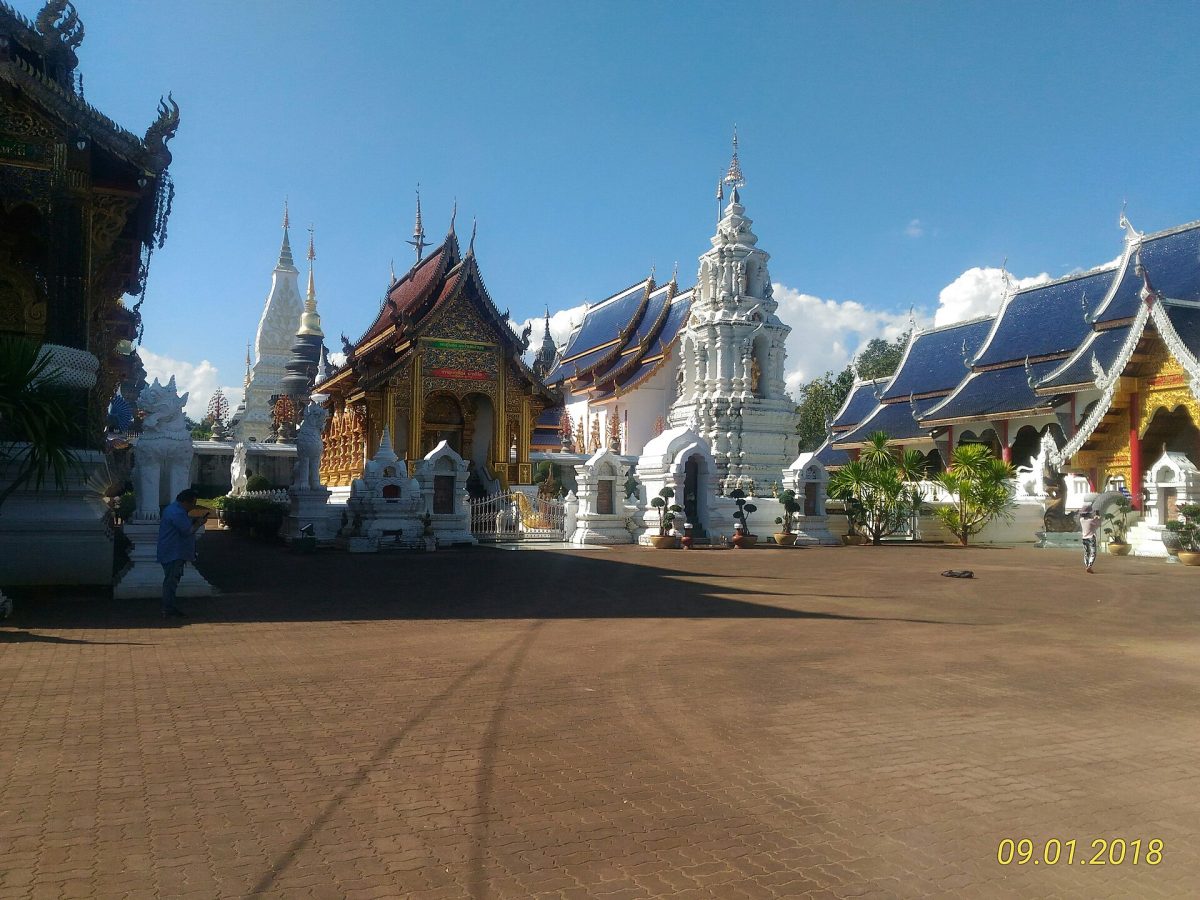
Photo: FredTC, CC BY-SA 4.0
Wat Ban Den is a monastery and entry is free; no ticket for the temple alone is sold online, and the only spending on site is on donations, candles, flowers and the small offerings sold at stalls in the grounds. The temple lies in Inthakhin, in Mae Taeng district, roughly 45 km north of Chiang Mai's old city, so transport is the real question. Independent visitors hire a car with driver or a red songthaew for half a day, or ride a scooter up the main road towards Chiang Dao, which takes around an hour each way.
Ride-hailing cars will bring you here, but finding one for the return can take time in a village setting, so arrange the trip back in advance. The temple has also become a regular stop on day trips into the valleys north of the city. These typically combine it with an elephant sanctuary or a bamboo-rafting trip in Mae Taeng, the caves at Chiang Dao or a hot spring, and include transport, a guide and often lunch, with entry fees for caves or parks sometimes extra. A private driver gives the most flexibility and lets you add the quiet forest monastery of Wat Aranyawiwake, only a couple of kilometres away. If you just want photographs of the halls and chedis, a half-day trip with a driver is enough.
Live prices from GetYourGuide for tickets and tours that include this temple. Free cancellation on most of them.
Wat Ban Den began as a modest village temple centred on a cave revered by local people. Over the past few decades, under the long-serving abbot Kruba Theung Natsilo and with donations from the surrounding community and from Buddhists across Thailand, it has grown into one of the most lavish temple complexes in the north, and building work has continued almost without pause, so you may see craftsmen at work on new structures. The style is Lanna, the traditional architecture of northern Thailand, taken to an exuberant scale: tiered roofs sweeping low over the halls, gables covered in gilded carving and coloured glass, and long naga serpents forming the balustrades of the stairs.
Mythical guardian beasts stand at the entrances, and white and gold dominate the newer buildings. The best-known feature is the group of twelve chedis, one for each year of the zodiac cycle used in northern Thailand. Visitors look for the one matching their birth year and make an offering there, which local belief holds brings luck and protection. Step inside the main viharn as well, where the carving and gilding continue on the pillars and around the principal Buddha image. Dress modestly, remove shoes before stepping into any hall, and avoid pointing your feet at Buddha images. Women should not touch monks or hand objects to them directly. Photography is welcome in the grounds; be discreet inside during chanting.
The grounds are open from early morning to early evening every day. The best light falls on the gilded gables in the early morning and again after about 4 pm, and the temple is quietest before 10 am, when tour groups heading north have not yet arrived. The cool season from November to February is the ideal time for the trip north, with clear skies and fresh mornings; March and April can be hazy from agricultural burning and very hot, while the rainy season from June to October turns the countryside green but brings afternoon storms.
Buddhist holy days such as Makha Bucha in February or March, Visakha Bucha in May or June and the end of the rains retreat in October bring candlelit processions and crowds of local worshippers, while Songkran in mid-April is busy across the region. Allow one to one and a half hours to walk round the complex. Combine it with the forest monastery of Wat Aranyawiwake nearby, the Mae Taeng river for rafting, or continue north to the Chiang Dao caves and mountain before returning to Chiang Mai.
36 km away
Wat Phra That Doi Saket is a hilltop temple about 20 km north-east of central Chiang Mai, and there is no admission…
1 ticket or tour
40 km away
Doi Suthep sits on a mountain 15 km west of Chiang Mai, so the real choice is how to get up there.
46 tickets & tours
40 km away
Wat Pha Lat is free to enter, and most independent visitors arrive on foot.
16 tickets & tours
Yes. GetYourGuide sells tickets and guided tours whose route includes Wat Ban Den (Wat Den Sali Si Mueang Kaen); live prices are shown on this page.
The grounds are open from early morning to early evening every day.
Allow one to one and a half hours to walk round the complex.
The best light falls on the gilded gables in the early morning and again after about 4 pm, and the temple is quietest before 10 am, when tour groups heading north have not yet arrived.
Shoulders and knees covered; shoes off inside the halls.
Entry to Wat Ban Den (Wat Den Sali Si Mueang Kaen): Free; donations welcome
Wat Ban Den (Wat Den Sali Si Mueang Kaen) is in Chiang Mai, Thailand. The map on this page shows the exact spot.
How to visit a Buddhist temple: shoes, dress and manners — Shoes, dress, feet, photos and offerings in Buddhist temples, from the wats of Thailand and Sri Lanka to the Zen temples of Japan.
Chiang Mai, Thailand
Doi Suthep sits on a mountain 15 km west of Chiang Mai, so the real choice is how to get up there.
46 tickets & tours
Chiang Mai, Thailand
Wat Pha Lat is free to enter, and most independent visitors arrive on foot.
16 tickets & tours
Chiang Mai, Thailand
Wat Umong is free to enter and there is nothing to book.
15 tickets & tours
Chiang Mai, Thailand
Wat Chedi Luang charges foreign visitors a small entry fee at the gate on Phra Pokklao Road;
1 ticket or tour
Chiang Mai, Thailand
Wat Phra That Doi Kham is a hilltop temple on the south-western edge of Chiang Mai, and there is normally nothing to…
1 ticket or tour
Chiang Mai, Thailand
Wat Phra That Doi Saket is a hilltop temple about 20 km north-east of central Chiang Mai, and there is no admission…
1 ticket or tour