Buddhist Temple · Samut Prakan · Thailand
Wat Asokaram
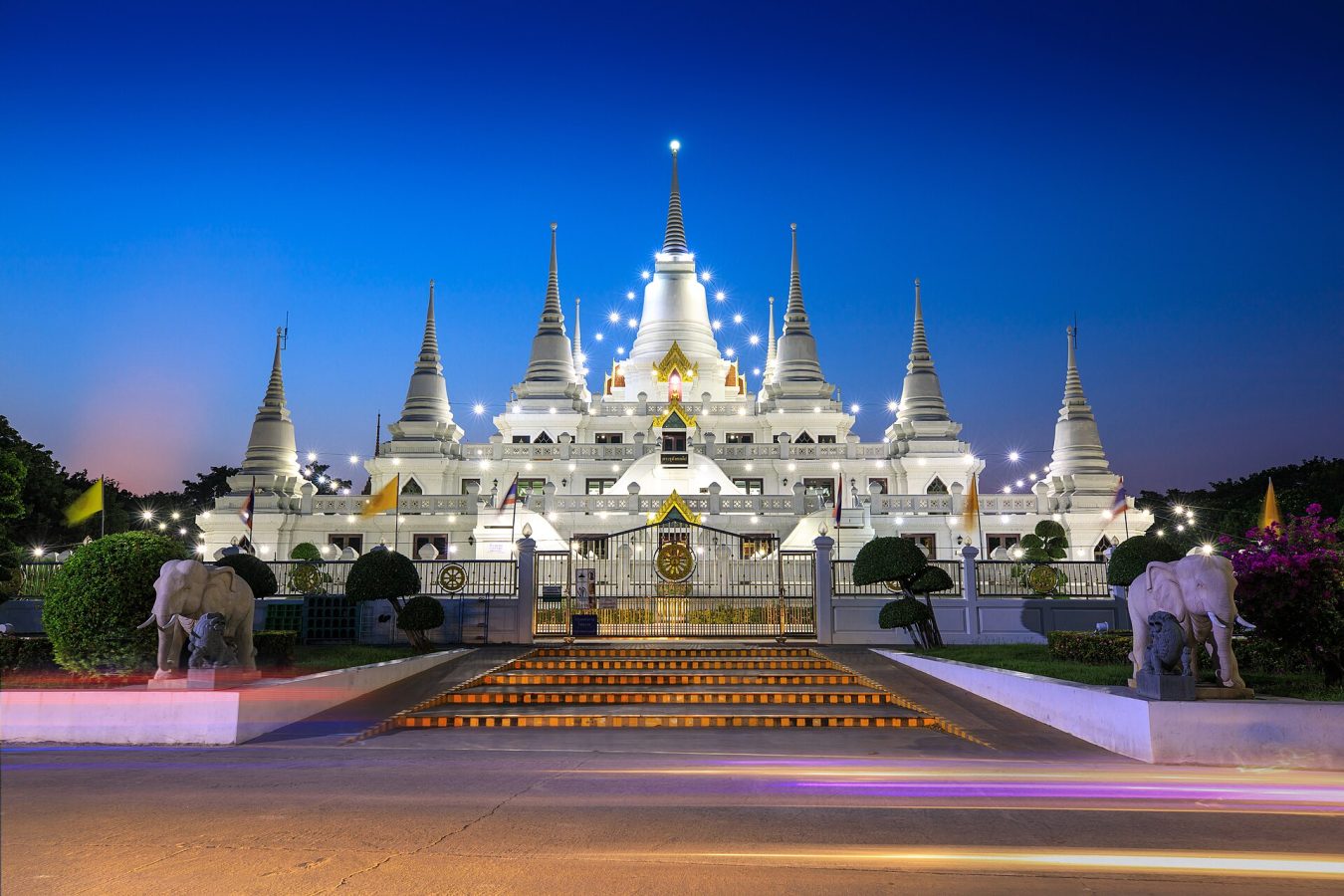
Photo: PhotobyTawat, CC BY-SA 4.0
- Type
- Buddhist Temple
- Where
- Samut Prakan, Thailand
- Religion
- Theravada Buddhism
- Entry
- Free; donations welcome
- Dress code
- White or modest clothing; shoulders and knees covered; shoes off in the halls.
- Tickets
- 1 ticket or tour
- Website
- watasokaram.org
Wat Asokaram tickets and tours: which one to book
Wat Asokaram is a working meditation monastery, and there is no ticket to buy. Visitors walk in through the gate off Sukhumvit Road, leave their shoes at the steps of the buildings they enter and are free to wander the grounds; a donation box stands near the main shrine for anyone who wishes to contribute to the upkeep and to the community of monks and lay practitioners who live here. Getting there is the only part that needs planning, because the temple lies on the coast of Samut Prakan, roughly 30 km south-east of central Bangkok. The easiest independent route is the BTS Sukhumvit line to its southern end around Kheha, then a short taxi or motorbike-taxi ride.
The organised alternative is a private half-day trip from Bangkok that pairs the temple with Bang Pu, the seaside recreation area nearby known for its pier and the gulls that winter there. These outings include a car, driver and usually an English-speaking guide, with a seafood lunch sometimes added; the temple itself costs nothing either way. A guided trip is worthwhile if you want both stops in one morning without arranging taxis, and a guide can explain the forest tradition that shapes life here. Those interested in practice rather than sightseeing can ask the monastery office about staying to meditate, which is arranged directly with the temple, not through a tour company. The page lists any GetYourGuide tours that include the temple.
Tickets and tours for Wat Asokaram
Live dates and prices from GetYourGuide. Free cancellation on most tickets.
Visiting Wat Asokaram: what to see and how to behave
The monastery was founded in the 1950s by Ajahn Lee Dhammadharo, one of the best-known teachers of the Thai Forest tradition, who chose this stretch of coastal mangrove as a quiet place for meditation. It still follows the strict Dhammayut discipline he taught, and many of the people you see in the grounds are lay practitioners dressed in white, keeping precepts for a few days or weeks. The landmark is the great white chedi, a stepped, many-tiered stupa crowned with slender gilded spires and surrounded by pools of still water that throw back its reflection. Stairs lead up to terraces from which you look out over the grounds and the flat shoreline. Inside are relics and Buddha images, and the interior is a place of prayer, so speak quietly and keep photography discreet.
Elsewhere in the compound look for the ordination hall, the shaded kutis where monks live among the trees, and the memorial to Ajahn Lee. A boardwalk area at the edge of the grounds gives a glimpse of the mangroves that once covered this coast. Because this is a meditation centre rather than a tourist site, behaviour matters more than usual. Dress modestly, ideally in light or white clothing, keep your shoulders and knees covered, remove your shoes before entering any building and never touch a monk or hand anything directly to him if you are a woman. Do not disturb people sitting in meditation, and keep to the paths. The temple is on the main road between Samut Prakan town and Bang Pu, and taxis from the BTS terminus know it well.
Wat Asokaram: opening hours, ceremonies and the best time to go
The grounds are open from early morning until early evening every day. Mornings are best: the light on the white chedi is softer, the heat is bearable and you may see monks returning from their alms round. The middle of the day is fierce on the open terraces, and late afternoon brings gentler light again. The cool season, from November to February, is the most comfortable time, and it is also when the migratory gulls gather at Bang Pu, which makes the combination worthwhile.
From March to May the coast is very hot, and the rainy season from June to October brings afternoon storms. Buddhist holy days, especially Makha Bucha in February or March, Visakha Bucha in May and the start of the rains retreat in July, bring candlelit processions around the chedi and many lay visitors; outsiders are welcome to watch respectfully. Allow about an hour for the temple. Combine it with Bang Pu a few minutes down the road, or with the Ancient City open-air museum and the Erawan Museum, both in Samut Prakan, for a full day outside Bangkok.
More tours and activities in Samut Prakan
Before you go
Can I book a temple tour or ticket in Wat Asokaram online?
Yes. GetYourGuide lists one ticket or tour for Wat Asokaram, with live dates and prices and free cancellation on most of them.
When is Wat Asokaram open?
The grounds are open from early morning until early evening every day.
How many days do you need in Wat Asokaram?
Allow about an hour for the temple.
What should I wear to visit Wat Asokaram?
White or modest clothing; shoulders and knees covered; shoes off in the halls.
How much is the entrance fee for Wat Asokaram?
Entry to Wat Asokaram: Free; donations welcome
Where is Wat Asokaram?
Wat Asokaram is in Samut Prakan, Thailand. The map on this page shows the exact spot.
How to visit a Buddhist temple: shoes, dress and manners — Shoes, dress, feet, photos and offerings in Buddhist temples, from the wats of Thailand and Sri Lanka to the Zen temples of Japan.