Meenakshi Amman Temple
205 km away
General entry to the Meenakshi Amman Temple is free. Inside, Hindu worshippers can join the free queue for darshan at…
3 tickets & tours
Hindu Temple · Thiruvananthapuram · India

There is no ticket to buy for the Sree Padmanabhaswamy Temple, and no tour can take you inside unless you are a Hindu. Entry is restricted to those who profess the Hindu faith, and the temple enforces a strict traditional dress code at the gate. Ordinary darshan is free; the temple administration also offers paid special darshan and a range of offerings and pujas booked at the counters or through its official website, which shorten the queue on busy days. Non-Hindu visitors can still appreciate the temple from outside. The tall gopuram over the east gate, the Padma Theertham tank in front of it and the old streets of the Fort area around the temple are open to everyone, and they are the main focus of city walks in Thiruvananthapuram.
Half-day city tours usually combine the outside of the temple with the Kuthiramalika palace museum next door, the Napier Museum and the zoo, and some day trips from Kovalam include a stop in the Fort area. The page lists any GetYourGuide tours whose route passes the temple. If you are eligible to enter, go independently and leave time for the queue and the cloakroom. If not, a guided walk is worth it mainly for the background on the Travancore royal family, the temple treasure and the old Fort quarter, rather than for the temple itself.
Live prices from GetYourGuide for tickets and tours that include this temple. Free cancellation on most of them.
The temple is dedicated to Vishnu in the form of Padmanabha, reclining in yogic sleep on the coiled serpent Anantha, and it counts among the 108 Divya Desams, the holiest shrines of the Sri Vaishnava tradition. It is far older than the present buildings: Tamil poet-saints were praising it more than a thousand years ago. Its current shape owes most to Marthanda Varma, the eighteenth-century ruler of Travancore, who rebuilt it in the 1730s and then dedicated his whole kingdom to the deity, ruling thereafter as the god's servant. The royal family remains closely tied to the temple, and in 2011 the opening of its sealed vaults revealed a treasure of gold and jewels that made headlines worldwide. Everyone can admire the seven-tier gopuram, about 30 m high, built in the Pandyan style, reflected in the tank before the east entrance.
Inside, Hindu visitors walk along a long corridor lined with several hundred carved granite pillars before reaching the sanctum. The reclining image is so large that it is seen through three separate doors: the head and the hand resting over a Shiva lingam through the first, the navel with Brahma rising on a lotus through the second, and the feet through the third. The image is made of thousands of saligram stones from the Gandaki river in Nepal. Mobile phones, cameras and bags must be deposited at the cloakroom before entry, and photography is forbidden inside. Men wear a plain mundu with no shirt; dhotis can be hired at the gate. The temple lies in the East Fort area, a short auto-rickshaw ride from the central railway station.
The temple opens before dawn and closes for several hours around midday, reopening in the late afternoon for the evening rituals; the darshan windows are fairly short, so check the official site for the current schedule before you go. Early morning is the most atmospheric time and usually the least crowded. The two great festivals are Alpashy in October to November and Painkuni in March to April, each lasting ten days and ending with the Arattu procession, when the deities are carried to the sea at Shankumugham beach escorted by members of the royal family.
Every six years the Lakshadeepam festival lights the whole temple with oil lamps. Expect long queues at these times, and on weekends and Hindu holidays. The cooler, drier months from December to February are the most comfortable; the monsoon brings heavy rain from June. Allow one to two hours for darshan including the queue, and combine it with the Kuthiramalika palace, the Napier Museum and an evening on the beach at Kovalam.
205 km away
General entry to the Meenakshi Amman Temple is free. Inside, Hindu worshippers can join the free queue for darshan at…
3 tickets & tours
365 km away
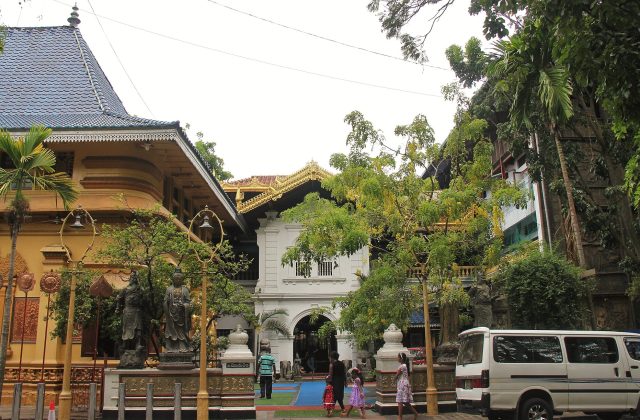
Gangaramaya is an easy temple to visit on your own. There is no online ticket: foreign visitors buy an entry ticket at…
2 tickets & tours
369 km away
There is nothing to book for Kelaniya Raja Maha Vihara. Sri Lankan worshippers enter freely, and foreign visitors pay…
2 tickets & tours
Yes. GetYourGuide sells tickets and guided tours whose route includes Sree Padmanabhaswamy Temple; live prices are shown on this page.
The tall gopuram over the east gate, the Padma Theertham tank in front of it and the old streets of the Fort area around the temple are open to everyone, and they are the main focus of city walks in Thiruvananthapuram.
Allow one to two hours for darshan including the queue, and combine it with the Kuthiramalika palace, the Napier Museum and an evening on the beach at Kovalam.
Early morning is the most atmospheric time and usually the least crowded.
Hindus only. Men wear a white mundu and go bare-chested; women wear a sari or long skirt.
Mobile phones, cameras and bags must be deposited at the cloakroom before entry, and photography is forbidden inside.
Entry to Sree Padmanabhaswamy Temple: Free; paid special darshan available
Sree Padmanabhaswamy Temple was established in 501.
Sree Padmanabhaswamy Temple is in Thiruvananthapuram, India. The map on this page shows the exact spot.
How to visit a Hindu temple: dress, shoes and access — What to wear, what to leave at the gate and where non-Hindus may go in Hindu temples in India, Nepal, Bali and South-East Asia.