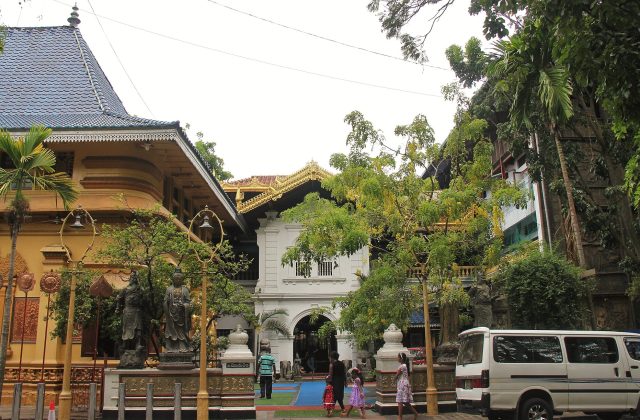
Gangaramaya Temple
Colombo, Sri Lanka
Gangaramaya is an easy temple to visit on your own. There is no online ticket: foreign visitors buy an entry ticket at…
2 tickets & tours
Buddhist Temple · Colombo · Sri Lanka
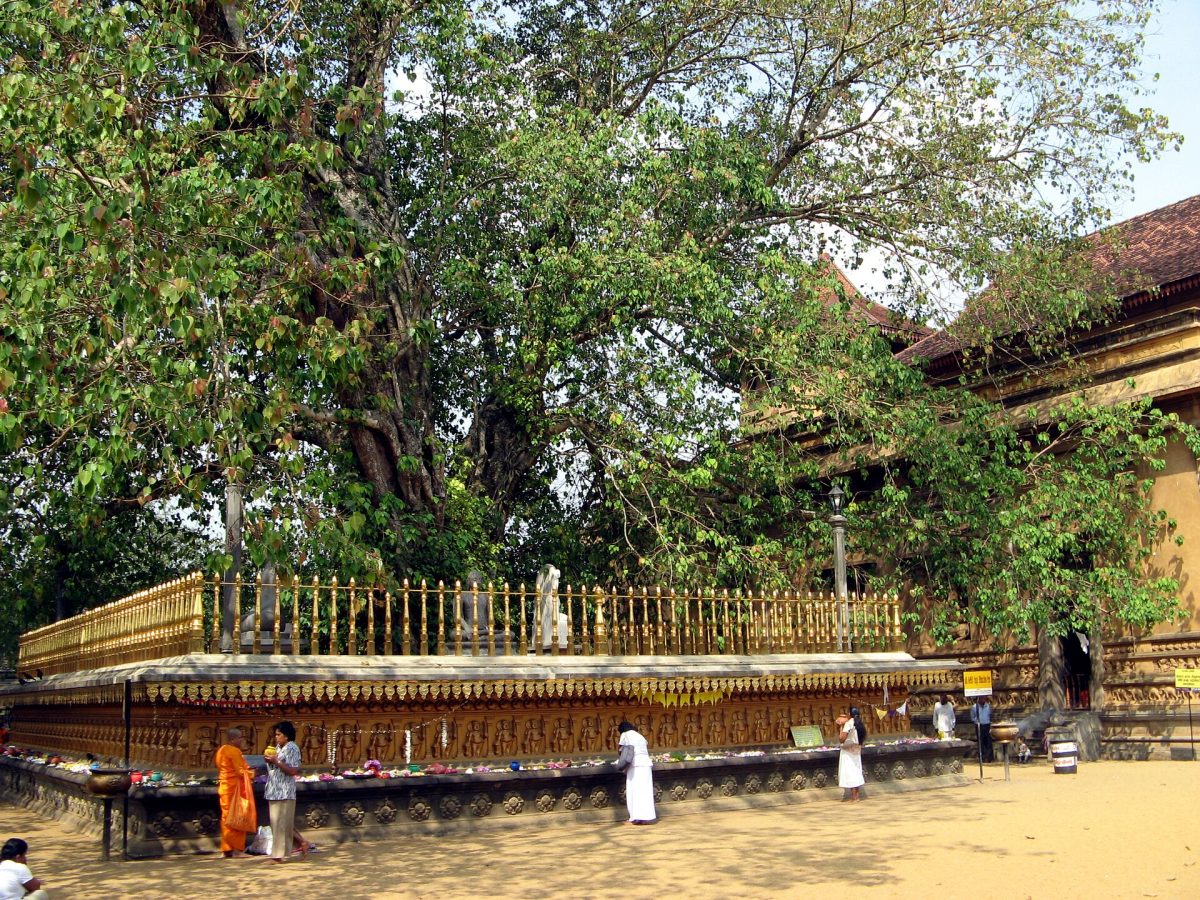
Photo: Michael Gunther, CC BY-SA 4.0
There is nothing to book for Kelaniya Raja Maha Vihara. Sri Lankan worshippers enter freely, and foreign visitors pay at most a small entry charge or donation at the gate; there is no online ticket and no timed entry. Shoes are left at a supervised stand by the entrance for a few rupees. The temple lies about 11 km north-east of central Colombo, and the tours sold online are ways of reaching it with a guide. The simplest is a guided tuk-tuk ride from Colombo, where a driver-guide takes you out through the suburbs, accompanies you around the temple and explains the murals and the rituals, then brings you back;
the price covers the vehicle and the guide, while entry, offerings and drinks are extra. Longer car tours use Kelaniya as the starting point for a journey through Colombo's history, moving from this ancient Buddhist site through colonial Fort and Pettah to the newly reclaimed Port City on the seafront. A guide adds a lot here, because the meaning of the paintings and the importance of the temple to Sri Lankan identity are not obvious to a first-time visitor. If you prefer to go alone, a ride-hailing tuk-tuk or taxi from Colombo takes 30 to 45 minutes depending on traffic, and buses from Pettah stop near the temple.
Live dates and prices from GetYourGuide. Free cancellation on most tickets.
Kelaniya is one of the most sacred Buddhist sites in Sri Lanka. Tradition holds that the Buddha came here on his third and last visit to the island, eight years after his enlightenment, and preached on this spot by the Kelani River; the original stupa is said to enshrine a jewelled throne on which he sat. The temple prospered under the kings of Kotte, lost most of its land under the Portuguese and was rebuilt in the eighteenth century under the Kandyan king Kirti Sri Rajasinha. Its present appearance owes much to restoration in the first half of the twentieth century, funded by the philanthropist Helena Wijewardene. The complex has the three essential elements of a Sri Lankan temple: a large white stupa in the shape of a heap of rice, a sacred Bo tree on a raised terrace hung with prayer flags, and an image house.
The image house is the highlight. Its walls are covered with murals by the artist Solias Mendis, painted over two decades from the late 1920s, depicting the Buddha's visits to Lanka, the arrival of the sacred Bo sapling, and episodes from the Jataka tales in a style that blends traditional and modern Sri Lankan art. There is also a large reclining Buddha and a tall stone statue of the Bodhisattva Avalokitesvara. Etiquette follows Sri Lankan custom. Remove shoes and hats, cover shoulders and knees, walk clockwise around the stupa and the Bo tree, and never pose with your back to a Buddha image. Photograph monks and worshippers only with permission.
The temple is open from early morning until evening. Early morning and late afternoon are the best times: the light is softer, the stone terraces are cooler underfoot, and you see worshippers making their offerings of flowers and lamps. Evening brings the beat of drums and the lighting of oil lamps. Colombo is hot and humid all year; the driest months are December to March, while the south-west monsoon brings heavy rain from May to September.
Every full-moon Poya day draws crowds dressed in white. The most important event is the Duruthu Maha Perahera, held over several nights before the January full moon to commemorate the Buddha's first visit to the island, with elephants, drummers and dancers parading through the town. Vesak, in May, is another spectacular time, with lanterns and illuminated pandals. Allow about an hour. Combine Kelaniya with Gangaramaya Temple, the old Fort and Pettah markets, or a sunset walk on Galle Face Green.
Yes. GetYourGuide lists 2 tickets and tours for Kelaniya Raja Maha Vihara, with live dates and prices and free cancellation on most of them.
The temple is open from early morning until evening.
Early morning and late afternoon are the best times: the light is softer, the stone terraces are cooler underfoot, and you see worshippers making their offerings of flowers and lamps.
Shoulders and knees covered, light or white clothing preferred; shoes and hats off.
Kelaniya Raja Maha Vihara is in Colombo, Sri Lanka. The map on this page shows the exact spot.
How to visit a Buddhist temple: shoes, dress and manners — Shoes, dress, feet, photos and offerings in Buddhist temples, from the wats of Thailand and Sri Lanka to the Zen temples of Japan.
Colombo, Sri Lanka
Gangaramaya is an easy temple to visit on your own. There is no online ticket: foreign visitors buy an entry ticket at…
2 tickets & tours