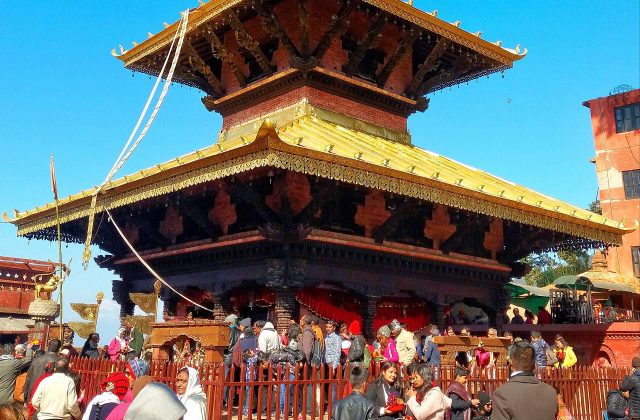
World Peace Pagoda (Shanti Stupa), Pokhara
105 km away
There is no ticket to buy for the World Peace Pagoda itself: the stupa stands on an open hilltop and is reached on foot…
8 tickets & tours
Buddhist Temple · Lumbini · Nepal
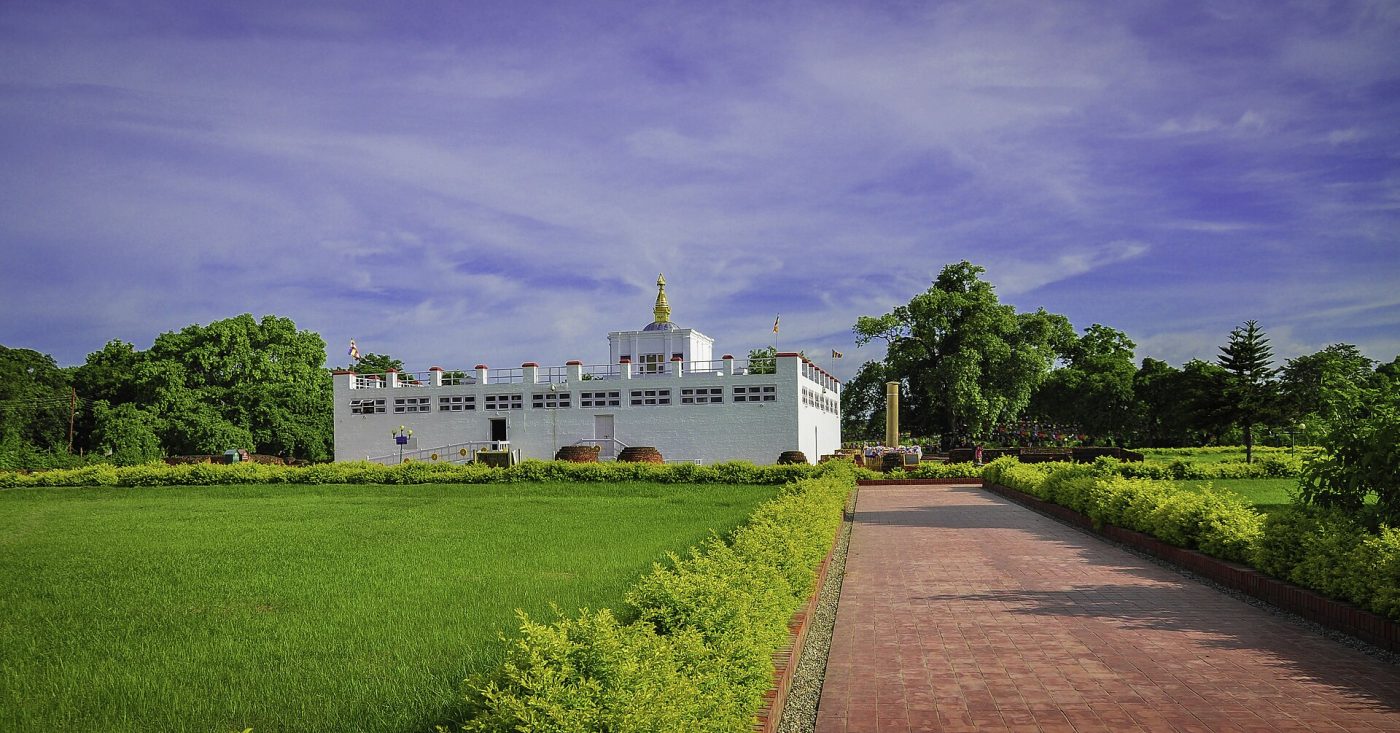
Photo: Bibek Raj Pandeya, CC BY-SA 4.0
No online ticket is sold for the Maya Devi Temple. Foreign visitors pay an admission fee at the ticket office by the entrance to the Sacred Garden, with lower rates for Nepali and South Asian visitors; the ticket covers the temple, the pool and the Ashoka pillar. Shoes are deposited before you enter, and a small charge may apply at the shoe counter. Lumbini lies in the plains of southern Nepal, so the bigger choice is how to get there. Domestic flights from Kathmandu land at Bhairahawa, about 20 km away, and tourist buses take most of a day from Kathmandu or Pokhara.
Travellers coming from India usually cross the border at Sunauli, around 30 km to the south, often as part of a Buddhist circuit that also takes in Bodh Gaya, Sarnath and Kushinagar. Organised options include multi-day pilgrimage tours of the Buddhist sites in India and Nepal, with transport, hotels and a guide included, and day tours from Bhairahawa or a hotel in Lumbini covering the Sacred Garden and the monastic zone by car, cycle rickshaw or electric cart. A guide is worth having for the archaeology, which is hard to read without explanation. Some monasteries offer meditation sessions and short retreats that can be arranged on the spot. The page lists any GetYourGuide tours whose route passes the temple.
Live prices from GetYourGuide for tickets and tours that include this temple. Free cancellation on most of them.
Buddhist tradition holds that Queen Maya, on her way to her parents' home, stopped in the Lumbini garden and gave birth to Siddhartha Gautama, the future Buddha, while holding the branch of a sal tree. The temple marks that spot and is the centre of the Lumbini World Heritage Site, one of the four places the Buddha himself named as worthy of pilgrimage. From the outside the temple is a plain white building of 2003, a protective shell rather than an ancient monument. Inside, a raised walkway leads around the excavated brick foundations of earlier shrines. The oldest go back to the emperor Ashoka, who visited around 249 BC, and excavations led by Durham University with UNESCO and Nepal's Department of Archaeology found traces of a timber shrine below them dating to the 6th century BC, making it one of the earliest known Buddhist shrines in South Asia.
At the centre, behind glass, is the marker stone said to indicate the exact place of birth, and nearby is the worn stone nativity sculpture showing Maya holding the branch, supported by her sister. Outside, look for the Ashoka pillar with its inscription recording the emperor's visit and the birth of the Buddha, the square bathing pool where Maya is said to have washed, and the great tree hung with prayer flags, where pilgrims sit to chant. Walk clockwise around the temple and the pool. Photography is not allowed inside the temple. Speak softly; many visitors are on lifetime pilgrimages. Beyond the garden, a long canal leads north through the monastic zone, where countries from Thailand to Germany have built their own monasteries.
The Sacred Garden and temple open from early morning to early evening, roughly 6 am to 6 pm; there is no official website, so confirm the hours locally. Come at opening time, when monks chant under the tree and the light is soft, or in late afternoon. October to March is the best season, with clear, mild days, though December and January mornings can be wrapped in thick fog.
April to June brings heat above 40 degrees, and the monsoon from June to September makes the plain wet and humid. Buddha Jayanti, the full moon of April or May that celebrates the Buddha's birth, brings processions, chanting and large crowds from across Asia; plan well ahead if you want to be here for it. Allow an hour for the temple and garden, and a full day if you include the monastic zone, the Eternal Peace Flame and the World Peace Pagoda. Hire a bicycle or rickshaw for the distances.
105 km away
There is no ticket to buy for the World Peace Pagoda itself: the stupa stands on an open hilltop and is reached on foot…
8 tickets & tours
106 km away
The temple itself charges nothing. What you pay for is the boat: Tal Barahi stands on a small island in Phewa Lake, and…
3 tickets & tours
137 km away
There is no ticket for the temple itself; worshippers pay only for their offerings.
3 tickets & tours
Yes. GetYourGuide sells tickets and guided tours whose route includes Maya Devi Temple, Lumbini; live prices are shown on this page.
Entry to Maya Devi Temple, Lumbini: Fee for foreign visitors at the gate
The Sacred Garden and temple open from early morning to early evening, roughly 6 am to 6 pm; there is no official website, so confirm the hours locally.
Allow an hour for the temple and garden, and a full day if you include the monastic zone, the Eternal Peace Flame and the World Peace Pagoda.
October to March is the best season, with clear, mild days, though December and January mornings can be wrapped in thick fog.
Photography is not allowed inside the temple.
Shoulders and knees covered; shoes off before the temple, socks allowed.
Maya Devi Temple, Lumbini was established in 249 BC.
Maya Devi Temple, Lumbini is in Lumbini, Nepal. The map on this page shows the exact spot.
How to visit a Buddhist temple: shoes, dress and manners — Shoes, dress, feet, photos and offerings in Buddhist temples, from the wats of Thailand and Sri Lanka to the Zen temples of Japan.