Hakone Shrine
57 km away
Hakone Shrine does not sell entry tickets: the grounds and the main hall are open to everyone free of charge, and only…
7 tickets & tours
Shinto Shrine · Shizuoka · Japan
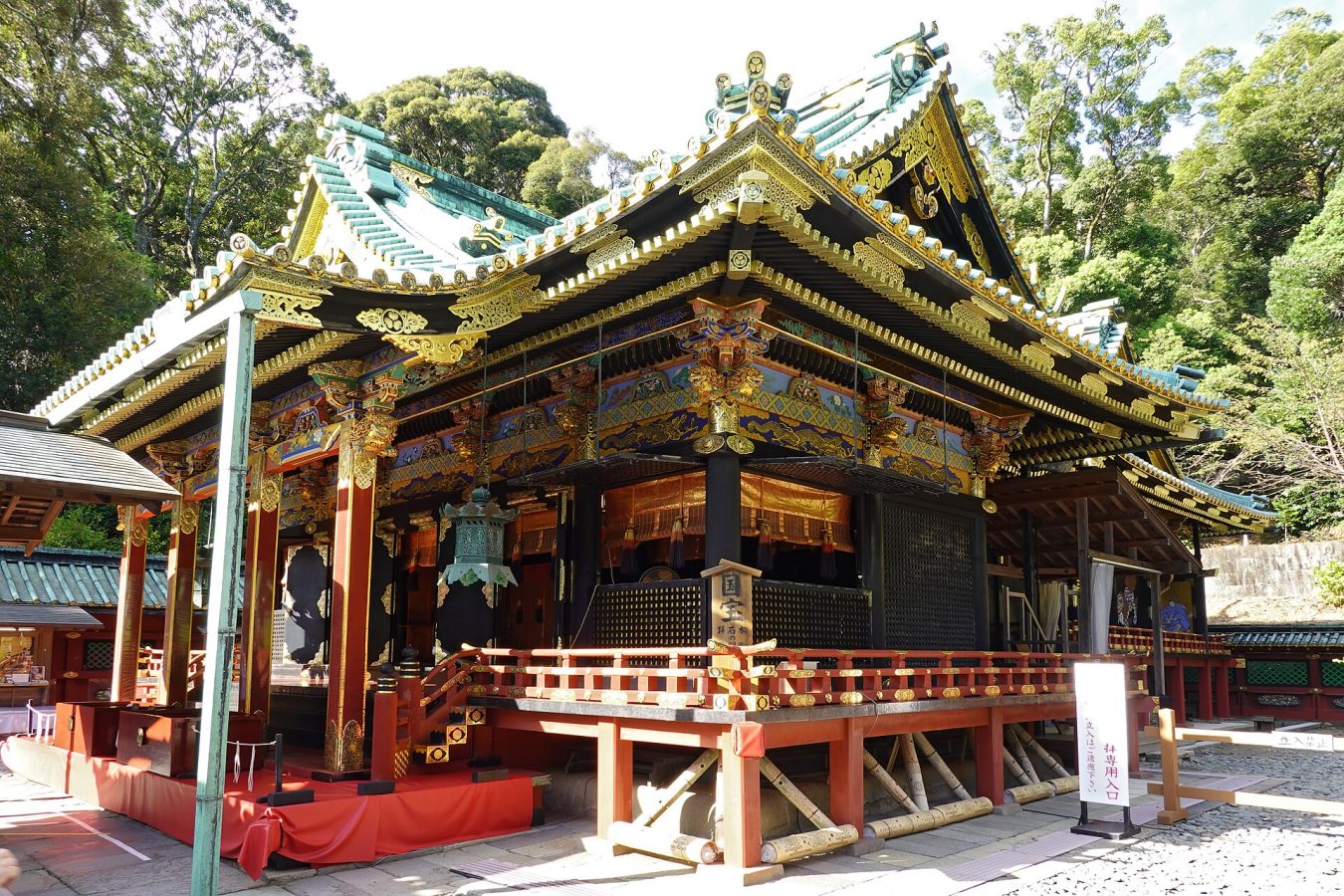
Photo: 663highland, CC BY-SA 4.0
No online ticket is sold for Kunozan Toshogu, and none is needed. The shrine grounds beyond the main gate are entered with a modest ticket bought at the window on arrival, and the shrine museum, which holds Tokugawa Ieyasu's personal belongings, has its own admission; a combined ticket for both is usually the better value if you have any interest in the swords and armour. What does need deciding is the approach, because the shrine sits on the summit of Mount Kuno, a steep 216 m peak above Suruga Bay, and it has no road to the top. One option is to climb the stone stairway from the coast road on the south side, more than a thousand steps that zigzag up the cliff.
It takes most people 20 to 30 minutes, and the views over the sea grow with every turn. The other is the Nihondaira Ropeway, a short cable car from the Nihondaira plateau across a valley to the back of the shrine. Buses run from Shizuoka station to both the foot of the stairs and to Nihondaira. Many visitors combine the two: take the bus up to Nihondaira for the view of Mount Fuji, ride the ropeway across, then walk down the steps to the coast and catch a bus back. Guided tours that include the shrine are rare; the page lists any GetYourGuide tours whose route passes it.
Live prices from GetYourGuide for tickets and tours that include this temple. Free cancellation on most of them.
Kunozan Toshogu was the first shrine built to Tokugawa Ieyasu, the founder of the Tokugawa shogunate, who retired to nearby Sunpu Castle and died in 1616. His son Hidetada ordered him buried on the mountain top, and the main buildings went up in 1617. Iemitsu, the third shogun, later moved the grave to Nikko, but Kunozan remains the oldest of all the Toshogu shrines, and many visitors come for exactly that reason. The stairway from the sea brings you to the Ichinomon gate and a series of terraces, each with its own gate, stone lanterns and storehouses. The climax is the combined Honden and Heiden, the main sanctuary and offering hall, built in the ornate style of the Momoyama period: black lacquer, gold leaf and carved panels of birds, flowers and mythical beasts painted in bright colours.
It is a National Treasure and a smaller, earlier relative of the famous buildings at Nikko. Behind it a path leads up to the Shinbyo, the stone tomb pagoda that marks Ieyasu's original resting place, set in a quiet grove. Leave time for the museum near the main gate. It displays swords, two suits of armour, letters in Ieyasu's own hand and a mechanical clock given to him in 1611 by a Spanish envoy on behalf of the Spanish king, one of the oldest European clocks in Japan. Etiquette is the usual for Shinto shrines: rinse hands at the purification basin, bow before the hall and keep voices low. Photography is fine outdoors but not inside the museum. From Shizuoka station, allow 40 to 50 minutes by bus to either approach.
The shrine is open every day from morning until late afternoon, usually from about 9 am to 5 pm, with slightly shorter hours in winter; the ropeway follows similar hours, so check the official site and the ropeway timetable before planning a late visit. Clear mornings in winter and early spring give the best chance of seeing Mount Fuji from Nihondaira, and the stairway is far more pleasant in cool weather than in the humid heat of July and August.
The coast road below the shrine is lined with greenhouses for strawberry picking from about January to May, which makes a pleasant addition. The spring festival on 17 and 18 February is the largest event of the year, and the main festival falls on 17 April. Expect crowds and ceremonies on those days. Allow two to three hours for the shrine, the museum and the walk, or half a day if you also linger at Nihondaira. Combine it with Sunpu Castle Park in central Shizuoka, or with the Miho no Matsubara pine beach on the far side of the bay.
57 km away
Hakone Shrine does not sell entry tickets: the grounds and the main hall are open to everyone free of charge, and only…
7 tickets & tours
67 km away
Arakura Fuji Sengen Shrine is free to enter at any hour, and the climb to its famous five-storey pagoda costs nothing…
1 ticket or tour
67 km away
The pagoda stands in a public park on the hillside above Fujiyoshida, and there is no ticket, gate or opening fee.
11 tickets & tours
Yes. GetYourGuide sells tickets and guided tours whose route includes Kunozan Toshogu Shrine; live prices are shown on this page.
The shrine is open every day from morning until late afternoon, usually from about 9 am to 5 pm, with slightly shorter hours in winter; the ropeway follows similar hours, so check the official site and the ropeway timetable before planning a late visit.
Allow two to three hours for the shrine, the museum and the walk, or half a day if you also linger at Nihondaira.
Entry to Kunozan Toshogu Shrine: Small fee; museum ticket extra
No dress code; wear good shoes for the long stone stairway.
Kunozan Toshogu Shrine was established in 1617.
Kunozan Toshogu Shrine is in Shizuoka, Japan. The map on this page shows the exact spot.
How to visit a Shinto shrine: torii, water and prayer — How to pass the torii, purify at the water basin, pray, take photos and buy charms at a Shinto shrine in Japan.