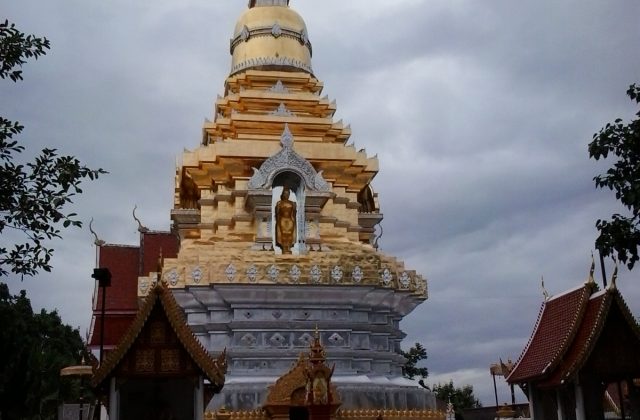
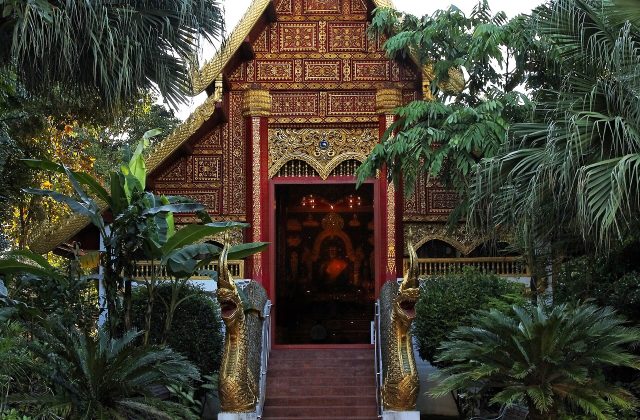
Wat Rong Khun (White Temple)
14 km away
Thai visitors enter free, while foreign visitors pay a modest fee at the ticket office;
17 tickets & tours
Buddhist Temple · Chiang Rai · Thailand
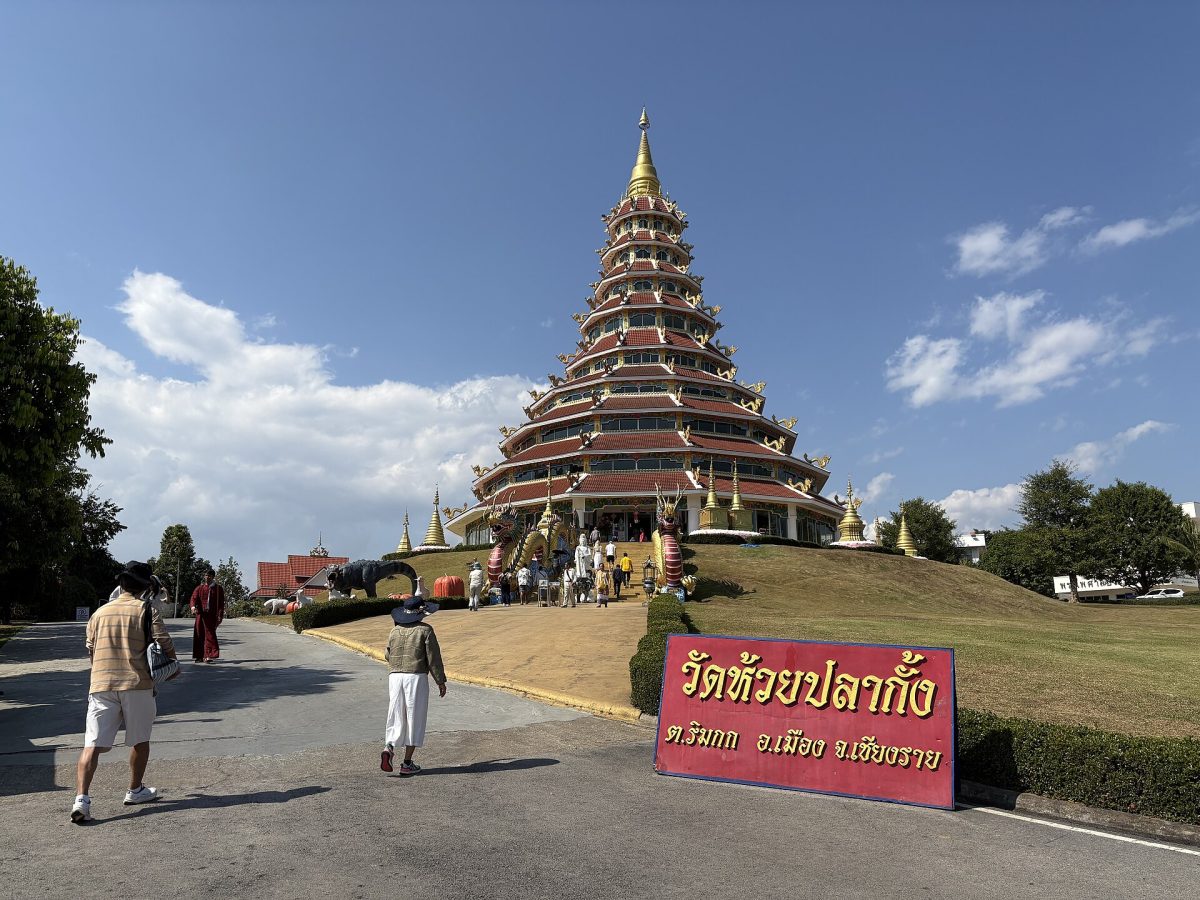
Photo: Chainwit., CC BY 4.0
Wat Huay Pla Kang is free to enter and no ticket for it is sold online. The grounds, the pagoda and the halls are open to anyone; the one thing you pay for is the lift inside the great white statue of Guanyin, where a small fee or donation is collected at the base. Incense, flowers and candles for offerings are sold near the entrance. The temple lies a few kilometres north-west of central Chiang Rai, so most visitors reach it by songthaew, tuk-tuk, Grab car or hired scooter, often on a half-day loop that also takes in the White Temple, the Blue Temple and the Black House.
Drivers in town quote a fixed price for such a circuit, which is usually the cheapest and most flexible option for two or more people. Day trips from Chiang Mai, a long but popular outing, normally include transport in a minivan, a guide, lunch and the entry fees to the White Temple; a stop at the giant Guanyin is common on these itineraries but not universal, so check the stops before booking. If you are staying in Chiang Rai, hiring a driver for the morning is the sensible plan. From Chiang Mai, a guided day trip saves the planning but leaves only short stops at each temple. The page lists any GetYourGuide tours whose route passes the temple.
Live prices from GetYourGuide for tickets and tours that include this temple. Free cancellation on most of them.
Huay Pla Kang is a modern temple complex, developed since the early 2000s by a revered local abbot, and it mixes Thai Buddhist and Chinese elements in a way that makes it stand out from the older temples of northern Thailand. Three things dominate the hillside site. The first is the colossal white statue of Guanyin, the bodhisattva of compassion, which rises roughly 25 storeys above the valley and can be seen from far across the rice fields. A lift inside carries visitors up to the head, where small windows look out over Chiang Rai and the surrounding hills; the interior walls are lined with images and carvings. The second is the nine-tiered pagoda, built in a Chinese style with Lanna detail, guarded by dragons and serpents and covered in white and gold decoration;
inside, the floors hold Buddha images and murals. The third is the ordination hall, a bright Lanna-style building with sweeping roofs and naga balustrades, where monks hold their ceremonies. Take time also to walk up to the large seated Buddha on the hill behind, which gives a fine view of the whole complex. The site is still being extended, so expect some construction work. As in any Thai temple, cover shoulders and knees, take off your shoes before entering a hall or the statue, never point your feet towards a Buddha image, and do not touch monks if you are a woman. Photography is allowed in most areas. The temple is about 6 km from the clock tower in Chiang Rai, a 15 to 20 minute ride.
The temple grounds are open daily from early morning until evening, and the lift inside the statue runs during daytime hours; check locally for the current times. Early morning is the best moment, before the day-trip minivans arrive from Chiang Mai and before the heat builds, and the white statue looks especially striking against a clear blue morning sky. Late afternoon light is also good for photographs from the hill. The best season in Chiang Rai is November to February, when days are dry and nights cool.
March and April are hot, and smoke from agricultural burning often leaves a thick haze over the valley that spoils the view from the top. The rainy season from June to October brings lush green fields but heavy showers. Buddhist holy days such as Makha Bucha and Visakha Bucha draw local worshippers for candlelit processions in the evening, and Songkran in mid-April is a lively time to be in town. Allow about an hour. Combine it with the White Temple, the Blue Temple and the Black House in a half-day loop, or with the Saturday walking street in Chiang Rai.
14 km away
Thai visitors enter free, while foreign visitors pay a modest fee at the ticket office;
17 tickets & tours
137 km away
Wat Phra That Doi Saket is a hilltop temple about 20 km north-east of central Chiang Mai, and there is no admission…
1 ticket or tour
154 km away
Wat Chedi Luang charges foreign visitors a small entry fee at the gate on Phra Pokklao Road;
1 ticket or tour
Yes. GetYourGuide sells tickets and guided tours whose route includes Wat Huay Pla Kang; live prices are shown on this page.
The grounds, the pagoda and the halls are open to anyone; the one thing you pay for is the lift inside the great white statue of Guanyin, where a small fee or donation is collected at the base.
The best season in Chiang Rai is November to February, when days are dry and nights cool.
Shoulders and knees covered; shoes off inside the halls and the statue.
Photography is allowed in most areas.
Entry to Wat Huay Pla Kang: Free; small fee for the lift
Wat Huay Pla Kang is in Chiang Rai, Thailand. The map on this page shows the exact spot.
How to visit a Buddhist temple: shoes, dress and manners — Shoes, dress, feet, photos and offerings in Buddhist temples, from the wats of Thailand and Sri Lanka to the Zen temples of Japan.
Chiang Rai, Thailand
Thai visitors enter free, while foreign visitors pay a modest fee at the ticket office;
17 tickets & tours
Chiang Rai, Thailand
No ticket for Wat Phra Kaew alone is sold online, and none is needed.
No online ticket
Chiang Rai, Thailand
There is no ticket for the Blue Temple and nothing to book for it alone: entry is free, the grounds have no gate fee…
No online ticket