
Gazi Husrev-beg Mosque
Sarajevo, Bosnia and Herzegovina
There is nothing to book in advance for the Gazi Husrev-beg Mosque.
No online ticket
Mosque · Sarajevo · Bosnia and Herzegovina
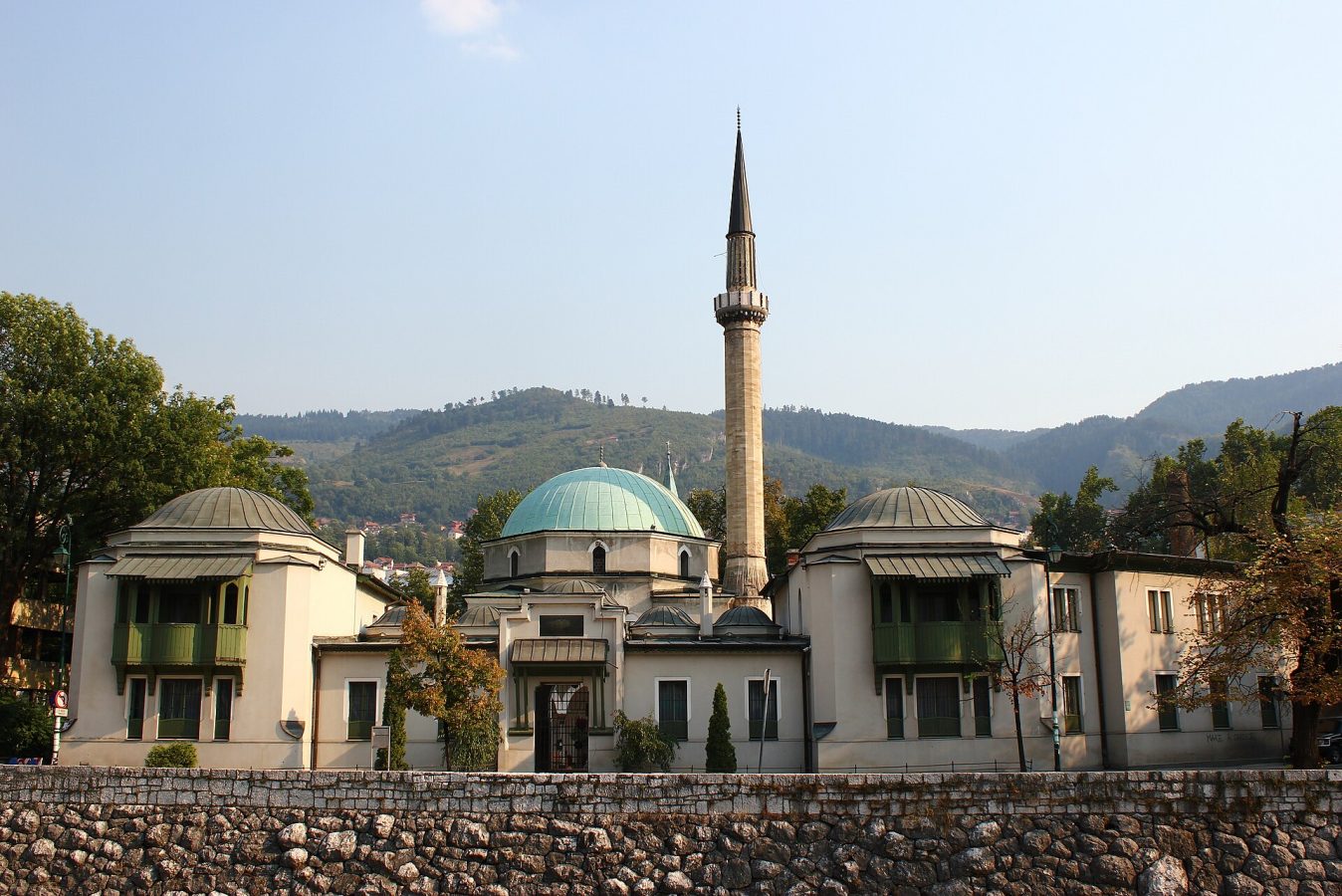
Photo: Julian Nyča, CC BY-SA 3.0
No ticket for the Emperor's Mosque is sold online. It is the main working mosque on the south bank of the Miljacka in Sarajevo, and visitors may enter outside prayer times without booking. There is no formal admission charge, though a donation is welcome, and loose scarves are usually available at the door for women who arrive without one. The mosque lies just across the river from Bascarsija, the old Ottoman market quarter, and most visitors reach it on foot in five minutes over the small Emperor's Bridge or the nearby Latin Bridge.
Trams along the north bank stop close by, and it is an easy walk from most hotels in the old town. Guided walking tours of old Sarajevo frequently stop here as part of a route that covers Bascarsija, the Sebilj fountain, the Gazi Husrev-beg Mosque, the Latin Bridge where Archduke Franz Ferdinand was shot, and the City Hall. Such tours usually last two to three hours and include a local guide who explains the city's Ottoman, Austro-Hungarian and wartime layers; mosque visits are free, so the tour price covers the guide alone. Longer tours add the siege-era tunnel near the airport or a drive to the hills above the city. The page lists any GetYourGuide tours whose route passes the mosque, but the building is easy to visit on your own.
Live prices from GetYourGuide for tickets and tours that include this temple. Free cancellation on most of them.
The Emperor's Mosque was the first mosque raised in Bosnia after the Ottoman conquest. Isa-beg Isakovic, the governor who founded Sarajevo as an Ottoman town, built a mosque here in 1457 and dedicated it to Sultan Mehmed II, the conqueror of Constantinople. That first building was wooden and small, and after it was destroyed it was replaced in 1565 by the present stone mosque, dedicated this time to Suleiman the Magnificent. Isa-beg also built a bathhouse, a caravanserai and a bridge leading straight to the mosque, and the first quarters of Sarajevo grew up around it. The building follows the classical Ottoman pattern: a square prayer hall under a single large dome, the biggest of its kind in Bosnia, entered through a portico with smaller domes and a slender pencil minaret.
Inside, look for the finely carved mihrab, the painted decoration on the walls and dome, restored in the early 1980s, and the sense of space created by the broad, unbroken dome. Side rooms added around 1800 were opened into the main hall in 1848. The mosque was damaged in the Second World War and again during the siege of the 1990s, and its restoration was completed in 2020. Beside the mosque lies a peaceful graveyard with carved turbaned headstones of viziers, muftis, sheikhs and imams. Remove your shoes at the entrance, dress modestly, keep quiet, and do not walk in front of anyone at prayer. Photography is usually allowed without flash.
The mosque is open to visitors from morning until early evening, closing to sightseers during the five daily prayers; the midday prayer on Friday is the busiest time to avoid. Mid-morning and mid-afternoon on weekdays are the easiest times to look around. Sarajevo is at its best from May to June and from September to October, with warm days and cool evenings. Summer can be hot and busy, while winters are cold and snowy, with smog sometimes trapped in the valley.
During Ramadan the mosque fills for the evening prayers, and the old town comes alive after sunset with families breaking the fast; the two Bajram holidays bring crowds dressed in their best. Allow 20 to 30 minutes for the mosque and the graveyard. Combine it with Bascarsija, the Gazi Husrev-beg Mosque, the City Hall and the Latin Bridge, all within a ten-minute walk.
Yes. GetYourGuide sells tickets and guided tours whose route includes Emperor’s Mosque (Careva Dzamija); live prices are shown on this page.
It is the main working mosque on the south bank of the Miljacka in Sarajevo, and visitors may enter outside prayer times without booking.
Such tours usually last two to three hours and include a local guide who explains the city's Ottoman, Austro-Hungarian and wartime layers; mosque visits are free, so the tour price covers the guide alone.
Shoulders and knees covered; women cover their hair; shoes off inside.
Entry to Emperor’s Mosque (Careva Dzamija): Free; donations welcome
Emperor’s Mosque (Careva Dzamija) was established in 1457.
Emperor’s Mosque (Careva Dzamija) is in Sarajevo, Bosnia and Herzegovina. The map on this page shows the exact spot.
How to visit a mosque: dress, timing and manners — What to wear, when to go and how to behave in a mosque as a non-Muslim, and which mosques do not admit visitors at all.
Sarajevo, Bosnia and Herzegovina
There is nothing to book in advance for the Gazi Husrev-beg Mosque.
No online ticket