City God Temple of Shanghai
1 km away
Entry to the temple itself is paid at a ticket window by the main gate, and the price is modest, so there is little…
3 tickets & tours
Chinese Temple · Shanghai · China
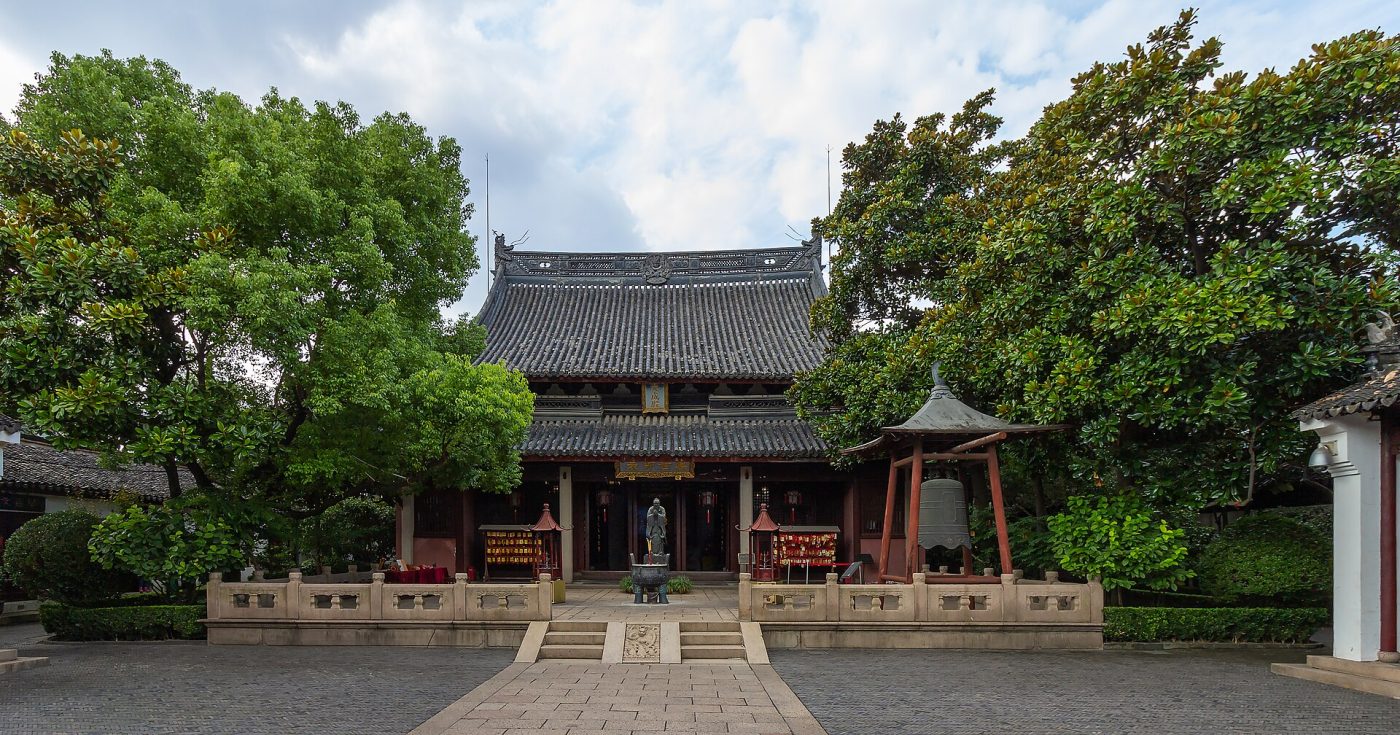
Photo: Stefan Fussan, CC BY-SA 3.0
The Confucius Temple charges a small entrance fee at the gate on Wenmiao Road, and there is nothing to reserve in advance; no ticket or tour for the temple alone is sold online. Bring your passport, as Chinese sites may ask for an identity document when selling tickets, and expect to pay by mobile wallet or cash. It is an easy place to visit independently. The temple lies in the south-western corner of Shanghai's old walled city, a few minutes' walk from Laoximen station on metro lines 8 and 10, and about fifteen minutes on foot from Yu Garden through lanes of older housing that are worth seeing in their own right. Organised options are city tours rather than temple visits.
Walking tours of the old town and private day tours with a guide and driver sometimes include it as a calmer counterpoint to the crowds around Yu Garden and the City God Temple; most, however, skip it, so if you want time inside, it is simplest to go alone. Food walks through the old city often pass nearby. Combined itineraries usually charge separately for each entry, so check what is included. The page lists any GetYourGuide tours whose route passes the temple.
Live prices from GetYourGuide for tickets and tours that include this temple. Free cancellation on most of them.
Shanghai's Wenmiao is a small version of the great Confucian temples of Qufu and Beijing, a place where scholars once honoured the sage and studied for the imperial examinations. The first temple was founded under the Yuan dynasty, when Shanghai was raised from a fishing settlement to a county town, and it served as both shrine and school. It moved and was rebuilt several times; in the 1850s rebels of the Small Swords Society used it as their headquarters, and it was largely destroyed when government troops retook the city. The present complex was rebuilt on this site in 1855, damaged again during the Cultural Revolution and restored in the 1990s. The layout runs through a sequence of courtyards.
You pass the Lingxing Gate and a small semicircular pond crossed by a bridge before reaching Dacheng Hall, the main hall of the temple, with a statue of Confucius and tablets honouring his disciples. To one side stands the Kuixing Pavilion, a three-storey wooden tower dedicated to the god of examinations. Behind lie the Minglun Hall, once the lecture hall of the county school, and quiet gardens with old trees, rockeries and stelae. Look for the red wooden wish cards hung by students on racks around the courtyards, many of them asking for success in the university entrance examinations, and for the collections of stone inscriptions in the side halls. On Sunday mornings the courtyards and surrounding lanes fill with a second-hand book and comic market. There are no religious restrictions; move quietly, do not climb on the stone lions or balustrades, and photograph freely.
The temple is open every day from morning until late afternoon, closing a little earlier in winter; check locally for the current hours. A weekday morning is the quietest time, and you may have the gardens almost to yourself. Sunday morning is the liveliest, when the book market is on and collectors, students and families browse the stalls; go early, before it packs up around midday.
In late May and early June, before the national university entrance examination, students and parents come to pray and the wish racks fill up. Spring, from March to May, and autumn, from late September to November, are the most comfortable seasons in Shanghai. Summers are hot, humid and wet, and winters chilly and grey. Around 28 September, Confucius's traditional birthday, the temple sometimes holds ceremonies in period costume. Allow about an hour, more on market day. Combine it with a walk through the lanes of the old city, the Dajing Pavilion with its fragment of the old city wall, Yu Garden and the City God Temple.
1 km away
Entry to the temple itself is paid at a ticket window by the main gate, and the price is modest, so there is little…
3 tickets & tours
4 km away
Jing'an Temple charges a modest entry fee, paid at the gate on West Nanjing Road or bought in advance as a timed…
7 tickets & tours
5 km away
The Jade Buddha Temple sells its own entry tickets at the gate, for a small fee, and there is no need to book ahead;
5 tickets & tours
Yes. GetYourGuide sells tickets and guided tours whose route includes Confucius Temple, Shanghai (Wenmiao); live prices are shown on this page.
Entry to Confucius Temple, Shanghai (Wenmiao): Small fee at the gate
The temple is open every day from morning until late afternoon, closing a little earlier in winter; check locally for the current hours.
Allow about an hour, more on market day.
A weekday morning is the quietest time, and you may have the gardens almost to yourself.
No dress code.
Confucius Temple, Shanghai (Wenmiao) was established in 1294.
Confucius Temple, Shanghai (Wenmiao) is in Shanghai, China. The map on this page shows the exact spot.
How to visit a Chinese temple: incense, gods and manners — How to behave in Taoist, Confucian and folk temples in China, Taiwan, Hong Kong and South-East Asia: incense, thresholds and fortunes.
Shanghai, China
Jing'an Temple charges a modest entry fee, paid at the gate on West Nanjing Road or bought in advance as a timed…
7 tickets & tours
Shanghai, China
The Jade Buddha Temple sells its own entry tickets at the gate, for a small fee, and there is no need to book ahead;
5 tickets & tours
Shanghai, China
Entry to the temple itself is paid at a ticket window by the main gate, and the price is modest, so there is little…
3 tickets & tours
Shanghai, China
Longhua Temple is entered with a modest ticket bought at the gate, and you do not need to reserve it in advance.
2 tickets & tours