Buddha Tooth Relic Temple and Museum
0 km away
Entry to the Buddha Tooth Relic Temple is free, including the museum floor and the rooftop garden, and no ticket is…
1 ticket or tour
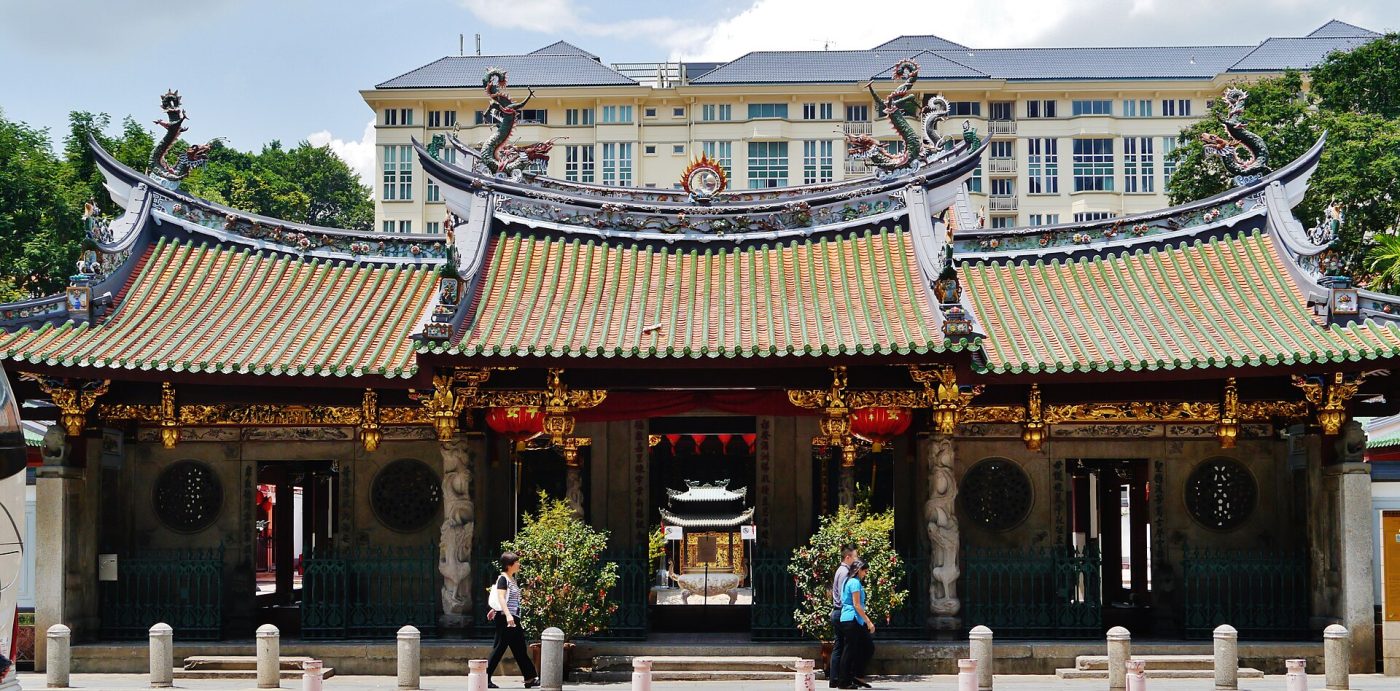
Photo: Zairon, CC BY-SA 4.0
Entry to Thian Hock Keng is free and there is nothing to book: it is an active Hokkien temple, open to the public every day, and no ticket for it is sold online. You walk in from Telok Ayer Street, and the only possible expense is a donation or a bundle of joss sticks if you wish to make an offering. Many visitors come on their own while exploring the Chinatown and Telok Ayer area, which is compact and easy to cover on foot. The temple is also a regular stop on guided walking tours of Chinatown and on heritage walks about the different communities of old Singapore, which usually take in the nearby Al-Abrar Mosque and the Nagore Dargah, the Sri Mariamman Temple and the Buddha Tooth Relic Temple.
Food-focused tours of Chinatown sometimes pass by as well. A guided walk is worth it if you want the meanings of the roof figures, gods and rituals explained, and if you want to understand how these places of worship grew up along what was once the seafront. If you prefer to go independently, the temple has information panels and its own website with background on the deities and festivals. The page lists any GetYourGuide tours whose route passes the temple.
Live prices from GetYourGuide for tickets and tours that include this temple. Free cancellation on most of them.
Thian Hock Keng, the Palace of Heavenly Happiness, is the oldest and most important temple of Singapore's Hokkien community. It began as a small shrine on the waterfront where immigrants arriving from Fujian gave thanks to Mazu, the sea goddess, for a safe crossing; Telok Ayer Street then ran along the shore, before land reclamation pushed the sea far away. The present temple was built from 1839 and completed in 1842, largely funded by the merchant Tan Tock Seng, with stone, timber and the statue of Mazu shipped from China. The layout follows the classic three-hall plan of southern Fujian. You step over the high threshold of the entrance hall, guarded by stone lions and painted door gods, into a courtyard, then reach the main hall, where Mazu sits at the centre attended by other deities.
Behind, the rear hall is a Buddhist shrine to Guanyin, the bodhisattva of compassion. Look up at the roof ridges, crowded with dragons and figures in cut porcelain, and at the carved and gilded timber brackets beneath the eaves, all built without nails. In one wing, look for a small carved figure of an Indian man holding up a beam, a tribute to the local Indian community who helped build the temple, and note the wrought-iron gate made in Glasgow during the renovation of 1906. Visitors are welcome to watch worshippers light incense and consult the oracle sticks; stay quiet, do not stand directly in front of people praying and avoid touching the altars. Photography is allowed. The temple is next to Telok Ayer MRT station and a short walk from Chinatown station.
The temple is open daily from early morning until late afternoon; check the official site for the exact hours. The early morning is the most atmospheric time, when office workers stop to light incense before work and the courtyard is cool. By midday the heat and the tour groups build up, while late afternoon is calmer again. Singapore is hot and humid all year, with heavier rain from November to January, so the season matters less than the hour.
Festivals are the time to see the temple at its liveliest: Chinese New Year brings crowds of worshippers and decorations, and the birthday of Mazu, in the third lunar month, usually in April or May, is marked with rituals and offerings. Expect the halls to be busy on the first and fifteenth days of each lunar month. Allow about 30 to 45 minutes. Combine the temple with a walk along Telok Ayer Street and Amoy Street, the shophouses of Club Street and Ann Siang Hill, lunch at the Lau Pa Sat food centre and the main sights of Chinatown.
0 km away
Entry to the Buddha Tooth Relic Temple is free, including the museum floor and the rooftop garden, and no ticket is…
1 ticket or tour
315 km away
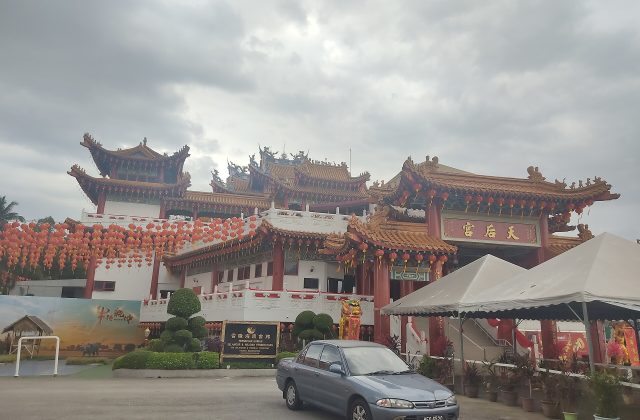
Thean Hou Temple is free to enter and needs no ticket. It stands on Robson Heights, a hill just south of central Kuala…
1 ticket or tour
324 km away
The main sight at Batu Caves, the Temple Cave at the top of the great staircase, is free to enter, so you do not need a…
4 tickets & tours
Yes. GetYourGuide sells tickets and guided tours whose route includes Thian Hock Keng Temple; live prices are shown on this page.
The temple is open daily from early morning until late afternoon; check the official site for the exact hours.
Allow about 30 to 45 minutes.
The early morning is the most atmospheric time, when office workers stop to light incense before work and the courtyard is cool.
Photography is allowed.
Entry to Thian Hock Keng Temple: Free
Shoulders and knees covered; remove hats inside the halls.
Thian Hock Keng Temple was established in 1821.
Thian Hock Keng Temple is in Singapore. The map on this page shows the exact spot.
How to visit a Chinese temple: incense, gods and manners — How to behave in Taoist, Confucian and folk temples in China, Taiwan, Hong Kong and South-East Asia: incense, thresholds and fortunes.
Singapore
Entry to the Buddha Tooth Relic Temple is free, including the museum floor and the rooftop garden, and no ticket is…
1 ticket or tour
Singapore
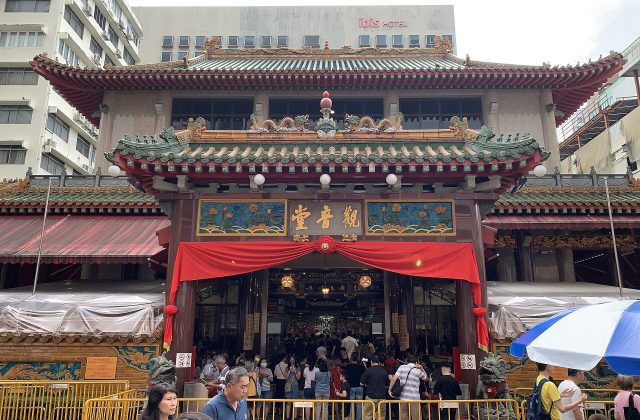
Kwan Im Thong Hood Cho Temple sells no tickets and needs none.
No online ticket
Singapore
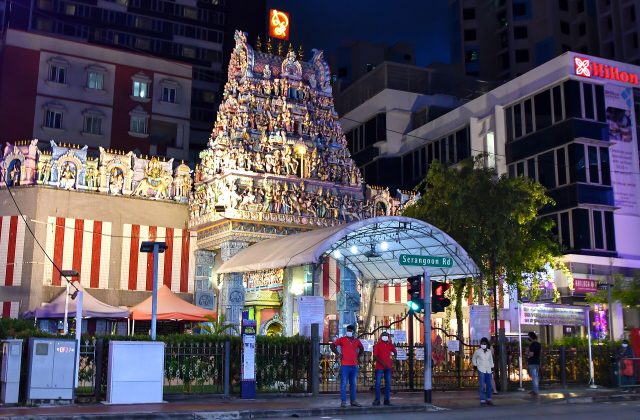
The Sri Veeramakaliamman Temple is a working Hindu temple on Serangoon Road, the main street of Singapore's Little…
No online ticket