Spanish Synagogue
216 km away
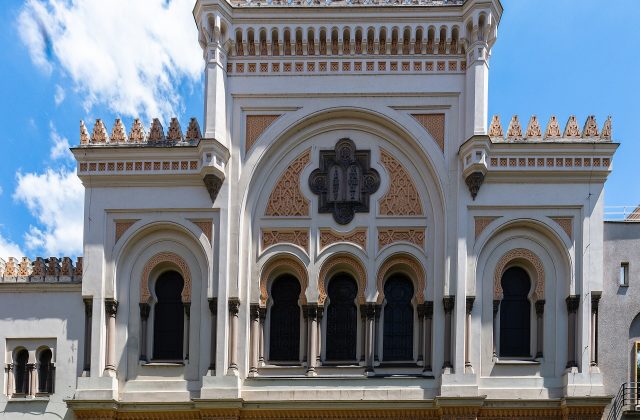
The Spanish Synagogue is run by the Jewish Museum in Prague and cannot be visited on a ticket of its own.
3 tickets & tours
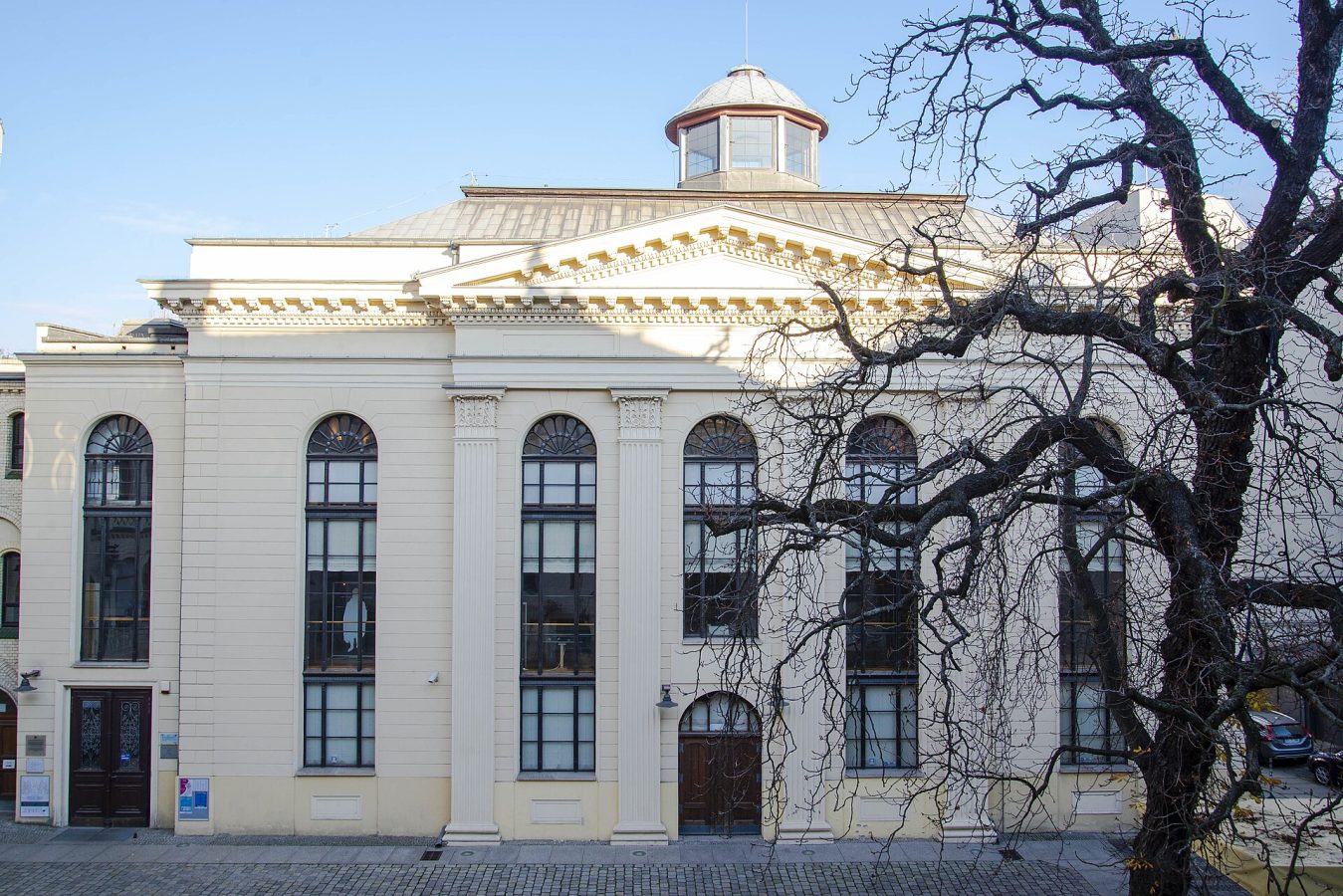
Photo: Isabelles Knowledge, CC BY-SA 4.0
The White Stork Synagogue is not sold as an online ticket. It is the working synagogue of the Jewish community of Wroclaw, and sightseeing visits are possible outside services, with a modest charge at the entrance that also covers the exhibitions in the galleries. There are no timed slots; you simply arrive during visiting hours and pay at the desk. Most visitors walk here from the Market Square, about ten minutes away. The synagogue stands in a quiet courtyard in the so-called District of Four Denominations, where a Catholic church, a Lutheran church, an Orthodox cathedral and the synagogue lie within a few hundred metres of each other, and many city walking tours make a stop here to explain this unusual neighbourhood.
There are also themed walks on the Jewish history of Breslau and Wroclaw, which usually include the synagogue, the streets of the former Jewish quarter and sometimes a visit to the Old Jewish Cemetery further south. A themed guided walk is the best choice if you want to understand the full story, from the prosperous German-Jewish community of the 19th century to the Holocaust and the post-war rebuilding. For the building alone, going independently works well. The page lists any GetYourGuide tours whose route passes the synagogue.
Live prices from GetYourGuide for tickets and tours that include this temple. Free cancellation on most of them.
The synagogue was designed by Carl Ferdinand Langhans, one of the leading Silesian architects of his day, and completed in 1829, when the city was Prussian Breslau. Its name comes from an inn called the White Stork that once stood on the site. From the courtyard you see a calm Neoclassical front; inside, the prayer hall is a light, elegant space surrounded on three sides by tiers of galleries that were originally reserved for women. Its survival is remarkable. On Kristallnacht in 1938 the interior was wrecked and the Torah scrolls torn, but the building was not burned, because it was hemmed in by other houses and the attackers feared the fire would spread; the city's great Liberal synagogue was destroyed that same night.
In 1943 the Nazis used the building as a warehouse for looted property, while the courtyard served as an assembly point for the deportation of Wroclaw's Jews. After the war it was given to the new Jewish community, later taken by the communist authorities, and only returned and restored in the 2000s, being rededicated in 2010. Look for the wooden frame of the Torah ark and the damaged tablets of the Ten Commandments, the only original fittings that survived. The galleries now hold exhibitions on the history of the Jews of Silesia and Wroclaw, and the synagogue also hosts concerts and cultural events. Visitors are expected to dress respectfully, and men should cover their heads in the prayer hall. The entrance is through the courtyard off Wlodkowica Street, a short walk west of the Market Square.
The synagogue is open to sightseers during the day on most weekdays and Sundays, but closed on Saturdays for the Sabbath and on Jewish holy days, when only worshippers attend; check the community's official site for the current hours, as they can change around holidays and events. Midday on a weekday is usually calm. Wroclaw is pleasant from May to September, when the Market Square and the river islands are at their liveliest, and in December, when the Christmas market fills the old town.
The synagogue itself is a good stop at any season and a welcome indoor visit on a cold or rainy day. Look out for the concerts and the annual Jewish culture festival, which bring music and lectures to the building. Allow about an hour for the prayer hall and exhibitions. Combine the visit with the other churches of the District of Four Denominations, the Market Square and Ostrow Tumski, and set aside an extra hour for the Old Jewish Cemetery with its striking 19th-century tombs.
216 km away
The Spanish Synagogue is run by the Jewish Museum in Prague and cannot be visited on a ticket of its own.
3 tickets & tours
237 km away
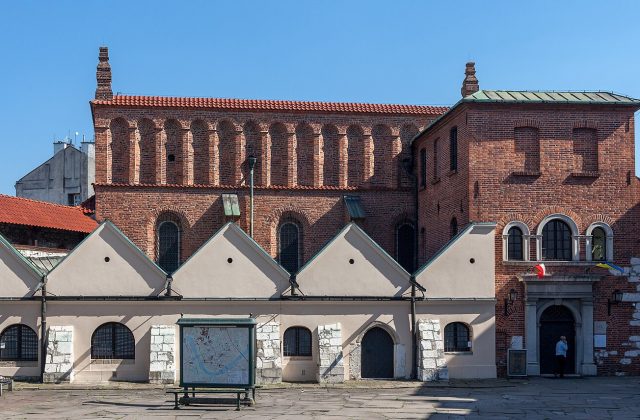
The Old Synagogue in Krakow is no longer a place of worship but a branch of the city's historical museum, so a…
1 ticket or tour
Yes. GetYourGuide sells tickets and guided tours whose route includes White Stork Synagogue; live prices are shown on this page.
The synagogue is open to sightseers during the day on most weekdays and Sundays, but closed on Saturdays for the Sabbath and on Jewish holy days, when only worshippers attend; check the community's official site for the current hours, as they can change around holidays and events.
Allow about an hour for the prayer hall and exhibitions.
Men cover their heads; kippot are available at the entrance.
White Stork Synagogue was established in 1829.
White Stork Synagogue is in Wroclaw, Poland. The map on this page shows the exact spot.
How to visit a synagogue: dress, security and Shabbat — When synagogues open to visitors, how to dress, why security is tight and how to behave at a service, from Prague to Djerba.