
Ancient Synagogue of Barcelona (Sinagoga Major)
Barcelona, Spain
The Sinagoga Major is a small site in the medieval Jewish quarter, the Call, and entry is paid at the door;
No online ticket
Ancient Temple · Barcelona · Spain
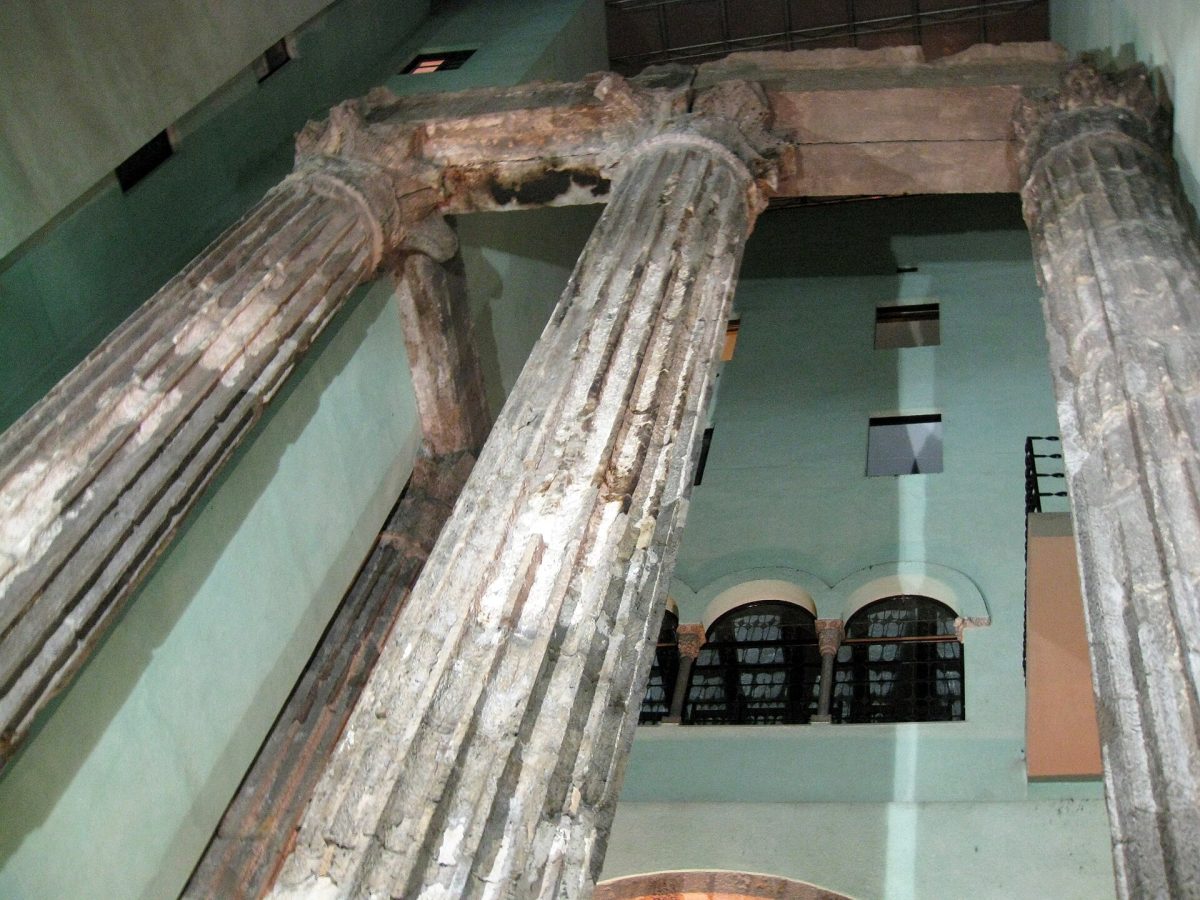
Photo: Enfo, CC BY-SA 3.0
The Temple of Augustus is one of the free heritage sites of the Barcelona City History Museum, known by its Catalan initials MUHBA, so there is no ticket to buy and nothing to reserve. You walk in from the street during opening hours, see the columns in a small courtyard and walk out again, usually in a matter of minutes. Because it is tucked away in a narrow lane of the Gothic Quarter, most people find it either with a map or on a guided walk. Walking tours of the old town, whether general introductions or tours focused on Roman Barcelona, often slip in here between the cathedral and Placa Sant Jaume, and the guide's explanation of the Roman colony of Barcino brings the stones to life.
A walking tour is the sensible choice if you want to understand how the medieval city sits on top of the Roman one; a visit on your own is just as easy if you simply want to see the columns. If Roman Barcelona interests you, the paid underground site of the MUHBA at Placa del Rei, a few minutes away, is the natural companion: it shows the excavated streets, workshops and wine vats of Barcino beneath the medieval palace. The page lists any GetYourGuide tours whose route passes the temple.
Live prices from GetYourGuide for tickets and tours that include this temple. Free cancellation on most of them.
Four fluted Corinthian columns, still carrying a stretch of their entablature and raised on a section of the original podium, stand in the courtyard of a medieval building at Carrer del Paradis 10, the home of the Centre Excursionista de Catalunya, a hiking club. The setting is part of the charm: you enter through an ordinary doorway in a quiet lane and find yourself face to face with the remains of the main temple of Roman Barcelona, squeezed between later walls. The temple was built in the early imperial period on the summit of Mont Taber, the low hill on which Barcino was founded, beside the forum of the colony. It was a large building, surrounded by columns on all sides and set on a tall podium, and its dedication to the emperor Augustus is traditional rather than proven.
After the end of paganism it was dismantled and swallowed by the medieval city. Three columns turned up in the late 19th century during building work for the hiking club; a fourth, which had stood for a time in Placa del Rei, was later brought here and joined to them. Before you go in, look down at the pavement in the doorway lane: a round millstone set into the paving marks the highest point of Mont Taber, a reminder that you are standing on the Roman city's acropolis, if only a modest one. Photography is allowed and the visit is entirely self-guided, with information panels in the courtyard. From the Jaume I metro station, walk up towards the cathedral apse; Carrer del Paradis runs off Carrer de la Pietat behind the cathedral.
The courtyard keeps daytime opening hours set by the City History Museum, with shorter hours on some days and closures on certain public holidays; check the MUHBA official site before going. Since the space is tiny, it is best visited early in the day or in the late afternoon, when the guided groups have moved on and you may have the columns to yourself. Barcelona is a year-round city.
Spring and autumn are the most pleasant seasons for walking the Gothic Quarter, while July and August bring heat and the densest crowds in the old lanes. In winter the old town is calmer and the courtyard, being sheltered, is a pleasant stop on a cool day. Ten to fifteen minutes is enough for the temple itself. Combine it with the cathedral and its cloister, the Roman remains at Placa del Rei, the stretches of Roman wall along Placa Ramon Berenguer and Avinguda de la Catedral, and lunch in the Born district.
Yes. GetYourGuide sells tickets and guided tours whose route includes Temple of Augustus, Barcelona; live prices are shown on this page.
You walk in from the street during opening hours, see the columns in a small courtyard and walk out again, usually in a matter of minutes.
Photography is allowed and the visit is entirely self-guided, with information panels in the courtyard.
Entry to Temple of Augustus, Barcelona: Free
No dress code.
Temple of Augustus, Barcelona is in Barcelona, Spain. The map on this page shows the exact spot.
How to visit an ancient temple: tickets, heat and rules — Tickets, hours, heat, guides, climbing rules and conservation at the ancient temples of Egypt, Greece, Italy, Angkor and the Maya world.
Barcelona, Spain
The Sinagoga Major is a small site in the medieval Jewish quarter, the Call, and entry is paid at the door;
No online ticket