
Garni Temple
179 km away
Garni is about 30 km east of Yerevan and almost every visit is made by road, either by taxi or private driver or on an…
31 tickets & tours
No ticket is sold for the Tbilisi Central Mosque, and none is needed. It is a working place of worship in the old bath-house quarter of Abanotubani, entry is free outside prayer times, and visitors who arrive dressed appropriately are generally welcomed in. A donation box by the entrance is the only cost. Almost everyone reaches the mosque on foot while exploring the old town, since it stands a few steps from the domed sulphur baths and directly below the Narikala fortress. Walking tours of Old Tbilisi often stop outside to explain why this is one of the few mosques in the world where Sunni and Shia Muslims pray together, and some go inside briefly.
Such tours usually bundle the mosque with the baths, the Leghvtakhevi waterfall, the cable car to Narikala and the churches of the old town, and they are worth taking if you want the layered religious history of the city explained in a couple of hours with a local guide. If the mosque is your main interest, going independently works perfectly well: time your visit between prayers, check that the door is open, and ask the caretaker before entering the prayer hall. The page lists any GetYourGuide tours whose route passes the mosque.
Live prices from GetYourGuide for tickets and tours that include this temple. Free cancellation on most of them.
The mosque is easy to miss at first: a red-brick facade with a slim minaret, wedged into a sloping lane above the baths, with the fortress walls rising behind it. Inside, the prayer hall is surprisingly bright and intimate, its walls and ceiling painted with floral designs and calligraphic panels, with carpets underfoot and a modest mihrab facing Mecca. A gallery runs above the main space. A mosque has stood on this spot since the Ottoman period of the 18th century; the present building dates from the very end of the 19th century, when the earlier structure was rebuilt in brick. Its real interest is social rather than architectural. Tbilisi once had several mosques, including a Shia mosque near the river, but most were demolished in the Soviet decades.
From then on Sunni and Shia believers, Azerbaijani and Georgian Muslims alike, shared this single building, and the custom of praying side by side has continued. Ask the caretaker and he will often tell the story himself. Etiquette follows ordinary mosque practice. Remove your shoes at the entrance, keep shoulders and knees covered, and women should cover their hair; bring a scarf, as loans cannot be relied upon. Avoid visiting during the five daily prayers and at Friday midday prayers, keep voices low and do not photograph people at prayer without asking. From Freedom Square or the Avlabari side of the river, walk down to the Meidan square and follow the lane uphill past the bath-house domes; the mosque is on the left, a few minutes from the river. The nearest metro station is Avlabari, across the bridge.
The mosque is open through the day for prayer, and visitors are welcome between the prayer times. There are no published hours for tourists; late morning and mid-afternoon on weekdays are the safest windows, while Friday around midday is best avoided because the hall fills for congregational prayer. Tbilisi is at its most pleasant in spring, from April to early June, and in autumn, from September to October, when the old town is warm but not baking.
Summer afternoons can be very hot in the narrow lanes, and winter is cold but quiet. During Ramadan the mosque is busiest after sunset, and on the two Eid festivals it is crowded with worshippers, so sightseeing is better left for another day. A visit inside takes only fifteen to thirty minutes. Combine it with a soak in one of the sulphur baths next door, the short walk to the waterfall in the gorge behind, the climb or cable car ride to Narikala, and the old churches and wine bars of the surrounding lanes.
179 km away
Garni is about 30 km east of Yerevan and almost every visit is made by road, either by taxi or private driver or on an…
31 tickets & tours
Yes. GetYourGuide sells tickets and guided tours whose route includes Jumah Mosque; live prices are shown on this page.
It is a working place of worship in the old bath-house quarter of Abanotubani, entry is free outside prayer times, and visitors who arrive dressed appropriately are generally welcomed in.
Shoulders and knees covered; women cover their hair; shoes off in the prayer hall.
Entry to Jumah Mosque: Free; donations welcome
Jumah Mosque was established in 1872.
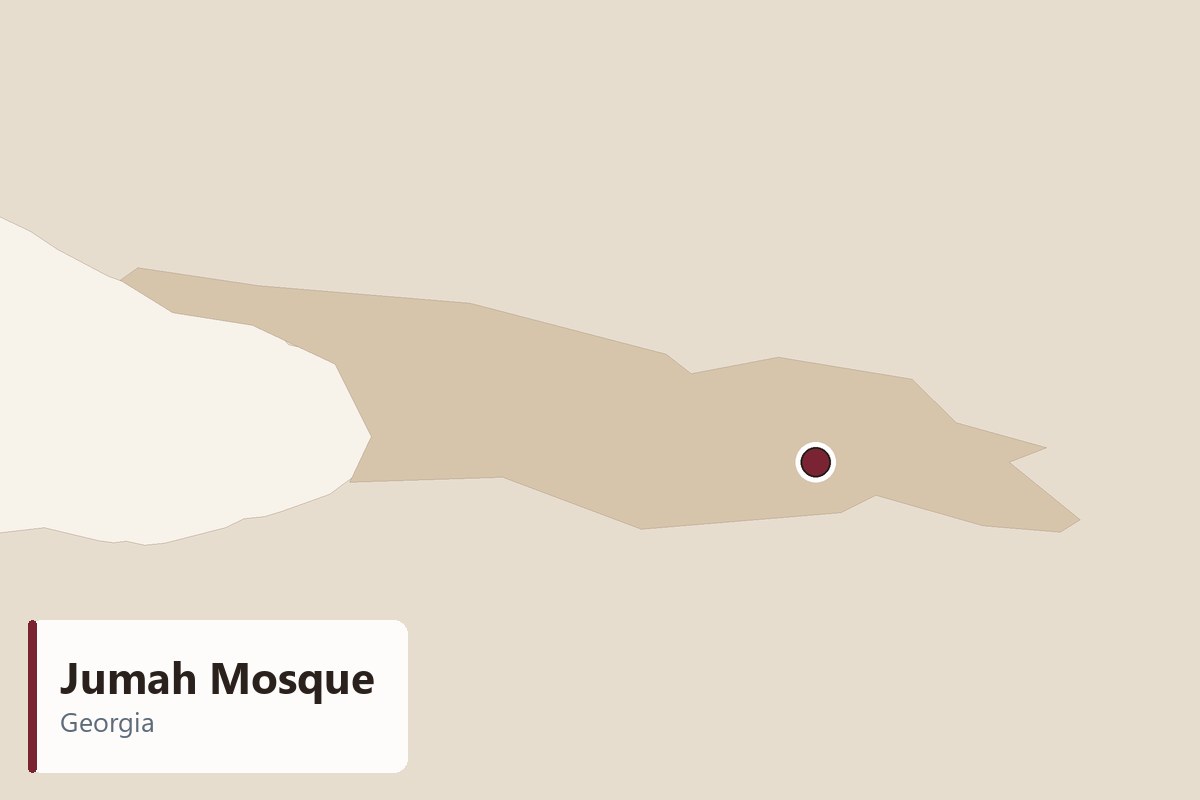
Jumah Mosque is in Tbilisi, Georgia. The map on this page shows the exact spot.
How to visit a mosque: dress, timing and manners — What to wear, when to go and how to behave in a mosque as a non-Muslim, and which mosques do not admit visitors at all.