Buddhist Temple · Jinzhong · China
Shuanglin Temple
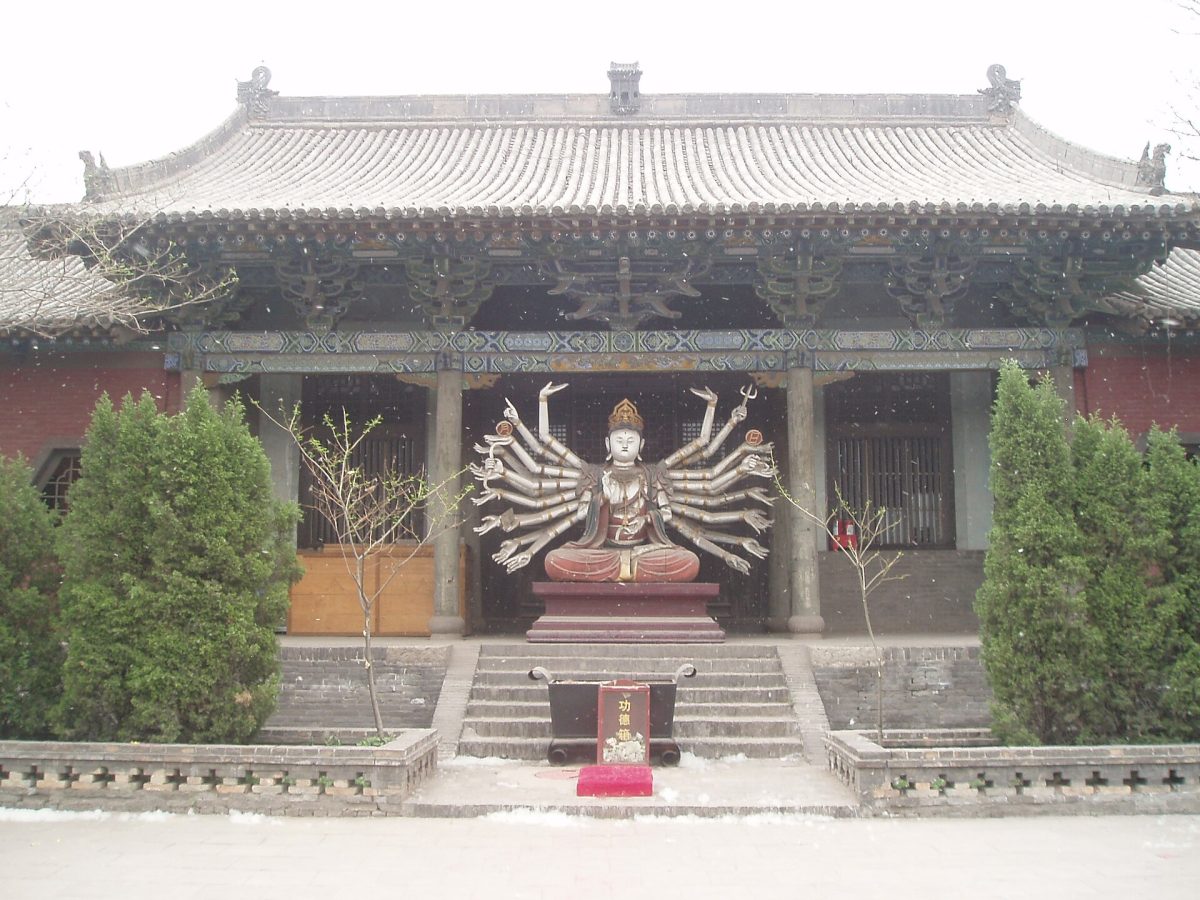
Photo: Angus Cepka, CC BY-SA 3.0
- Type
- Buddhist Temple
- Religion
- Chinese Buddhism
- Area
- 1.6 ha
- Founded
- 571
- Entry
- Fee charged; Pingyao pass may cover it
- Dress code
- No formal dress code; modest clothing is appreciated in the halls.
- UNESCO
- Ancient City of Ping Yao
- Tickets
- 2 tickets and tours
Shuanglin Temple tickets and tours: which one to book
Shuanglin Temple is a museum-like site that charges admission at the gate. The combined ticket for the walled city of Pingyao, valid for several days, has generally included Shuanglin and the Zhenguo Temple as well as the sights inside the walls, so if you already hold one, check whether it covers the temple before paying again. Tickets are sold on the spot and rarely sell out, though Chinese national holidays bring long queues. Online you will find two kinds of product. One is a plain entry ticket, sometimes bundled with the Pingyao city ticket, which mainly saves you the purchase at the window and comes with no guide or transport.
The other offers a choice between the ticket alone and a guided visit, in which an English-speaking guide meets you in Pingyao, arranges the short car ride out of town and leads you through the halls, explaining which figures are which and how the sculptors worked. Transport and guiding are the main additions; lunch is not normally included. Because the statues are the whole point and almost nothing is labelled in English, a guide is genuinely useful here. Independent travellers can manage with a taxi or electric rickshaw from the south gate of Pingyao and a good guidebook, and the driver will usually wait for the return trip if you agree a price in advance.
2 tickets and tours for Shuanglin Temple
Live dates and prices from GetYourGuide. Free cancellation on most tickets.
Visiting Shuanglin Temple: what to see and how to behave
The temple stands in open farmland near the village of Qiaotou, about 6 km south-west of Pingyao, behind high earthen walls that make it look more like a small fortress than a monastery. It was founded in 571 under the Northern Qi and later took the name Shuanglin, after the pair of sal trees beneath which the Buddha died. The buildings you see are of the Ming and Qing periods, but what makes the place exceptional is inside them: some two thousand painted clay figures, of which more than 1,500 survive, made between the 12th and 19th centuries. Together with the walled city and the Zhenguo Temple it forms the Ancient City of Pingyao World Heritage Site. Ten halls are set around three courtyards.
The figures range from small reliefs to statues over 3 m tall and include buddhas, bodhisattvas, arhats, guardian kings and many ordinary people, set against sculpted clouds, rocks, trees and buildings so that some halls feel like painted grottoes. Look for the four fierce Heavenly Kings near the entrance, the lively, individual faces of the arhats, and the much-admired standing figure of the guardian Weituo, often singled out as the masterpiece of the collection. The many-armed Guanyin in the Hall of the Thousand Buddhas is also striking. Many statues stand behind wooden grilles and the halls are dimly lit, so bring a small torch. Photography is restricted in parts of the temple, and flash is not allowed, to protect the pigments. Do not touch the figures. The site is about 15 minutes by car from Pingyao's south gate.
Shuanglin Temple: opening hours, ceremonies and the best time to go
The temple is open daily from morning until late afternoon, with slightly shorter hours in winter; check locally, as times vary by season. Go in the morning, when the light entering the halls is brightest and the tour groups from Pingyao have not yet arrived. Overcast days make the interiors very dark, which is another reason to bring a torch. Spring, from April to early June, and autumn, from September to October, are the best seasons in Shanxi, with mild days and clear skies.
Summer is warm and can be dusty, and winter is cold and dry; the unheated halls are chilly at that time of year, though nearly empty. Avoid the national holidays in the first week of May and the first week of October, when Pingyao is overwhelmed by domestic visitors. Lunar New Year brings lantern displays to the old city. Allow an hour and a half at the temple, plus travel time. Combine it with the Zhenguo Temple, on the other side of Pingyao, or with an afternoon on the city walls.
More tours and activities in Jinzhong
Before you go
Can I book a temple tour or ticket in Shuanglin Temple online?
Yes. GetYourGuide lists 2 tickets and tours for Shuanglin Temple, with live dates and prices and free cancellation on most of them.
When is Shuanglin Temple open?
The temple is open daily from morning until late afternoon, with slightly shorter hours in winter; check locally, as times vary by season.
How many days do you need in Shuanglin Temple?
Allow an hour and a half at the temple, plus travel time.
How much is the entrance fee for Shuanglin Temple?
Entry to Shuanglin Temple: Fee charged; Pingyao pass may cover it
What should I wear to visit Shuanglin Temple?
No formal dress code; modest clothing is appreciated in the halls.
How big is Shuanglin Temple?
Shuanglin Temple covers 1.6 ha.
When was Shuanglin Temple founded?
Shuanglin Temple was established in 571.
Where is Shuanglin Temple?
Shuanglin Temple is in Jinzhong, China. The map on this page shows the exact spot.
How to visit a Buddhist temple: shoes, dress and manners — Shoes, dress, feet, photos and offerings in Buddhist temples, from the wats of Thailand and Sri Lanka to the Zen temples of Japan.