Hindu Temple · Nathdwara · India
Shrinathji Temple, Nathdwara
- Type
- Hindu Temple
- Religion
- Hinduism
- Founded
- 1672 (image installed at Nathdwara in 1672)
- Entry
- Free; donations welcome
- Dress code
- Modest clothing; no leather, phones or cameras inside, shoes left outside.
- Tickets
- 1 ticket or tour
- Website
- nathdwaratemple.org
Shrinathji Temple, Nathdwara tickets and tours: which one to book
Entry to the Shrinathji temple is free, and there is no ticket to buy online. Worshippers queue for darshan, the brief viewing of the deity, which is offered only at fixed moments through the day; between them the shrine doors are closed. What travellers book, if anything, is the transport. Nathdwara lies about 50 km north of Udaipur on the main highway towards Ajmer, roughly an hour by car. Most foreign visitors come on a private car-and-driver day trip from Udaipur, and the standard circuit joins three stops: the Eklingji temple complex, a major Shiva shrine of the Mewar rulers on the way north; the battlefield and small museum at Haldighati, where Maharana Pratap fought the Mughal army in 1576;
and Nathdwara itself. A guided version of this round adds someone who can explain the Pushtimarg tradition and steer you through the darshan crowds, which is genuinely useful on a first visit. Check whether the price covers a driver only or a guide as well, whether museum fees at Haldighati are included, and whether the schedule is built around darshan times rather than arbitrary hours. Independent travellers can also take a state bus or shared jeep from Udaipur. Inside, lockers are provided for phones, bags and leather goods, and there is nothing else to pay unless you wish to make an offering or buy prasad, the blessed food sold by the temple.
Tickets and tours for Shrinathji Temple, Nathdwara
Live dates and prices from GetYourGuide. Free cancellation on most tickets.
Visiting Shrinathji Temple, Nathdwara: what to see and how to behave
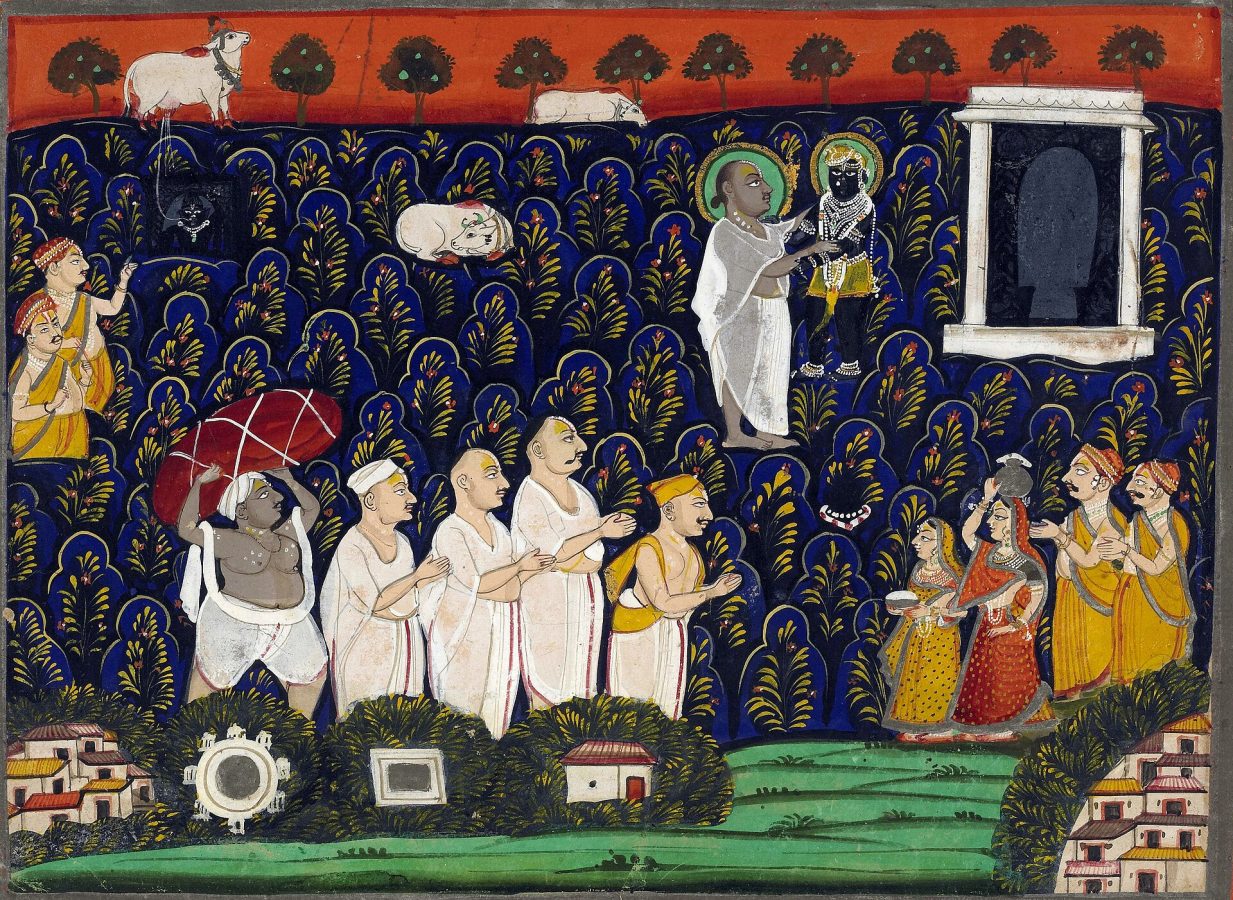
Shrinathji is Krishna in the form of a seven-year-old child holding up Govardhan hill with his raised left arm, and this temple is the chief shrine of the Pushtimarg, the devotional path founded by Vallabhacharya in the sixteenth century. The black stone image was worshipped near Mathura until 1672, when its priests carried it south to escape Aurangzeb's campaign against Hindu temples. Tradition says the cart sank into the mud at the village of Sihad in Mewar, so the deity stayed, and the Maharana of Mewar gave it protection. Do not expect a towering stone temple. The shrine is built as a haveli, a household mansion, because Krishna is treated here as a living child of the house rather than a distant god.
You pass through gateways and courtyards, with separate queues for men and women, into a hall facing the sanctum. Each darshan lasts only a few minutes, and the crowd pushes forward vigorously; the image is dressed and adorned differently at every session according to the hour and the season, which is the real fascination for devotees. Nathdwara is also the home of pichhwai painting, large cloth hangings made to hang behind the deity. The lanes around the temple are full of workshops and shops selling them, along with sweets and devotional items, and are worth an unhurried walk. Etiquette is strict. Phones, cameras and leather belts or bags are not allowed inside, so use the lockers. Dress modestly, remove shoes, keep calm in the press, and follow the stewards. Non-Hindu visitors are generally admitted to darshan.
Shrinathji Temple, Nathdwara: opening hours, ceremonies and the best time to go
The temple holds eight darshans a day, from the early morning mangla, around dawn, to the shayan in the evening, with closures between them; the exact times shift with the season and festival calendar, so check the official site or ask at your hotel the night before. The late morning rajbhog darshan is the most elaborate and one of the most crowded. October to March is the comfortable season in this part of Rajasthan; from April to June daytime heat is intense.
Festivals bring enormous crowds and the most splendid decorations: Janmashtami, Krishna's birthday in August or September, Holi in spring, and above all Annakut, the day after Diwali, when a mountain of food is offered to the deity. On those days expect long waits and plan accordingly. Allow an hour or two for a single darshan with the queue, more if you want to explore the painting workshops. Combined with Eklingji and Haldighati, the round trip from Udaipur makes a full day. The giant Shiva statue on a hill at the edge of town is easily added on the way.
More tours and activities in Nathdwara
Before you go
Can I book a temple tour or ticket in Shrinathji Temple, Nathdwara online?
Yes. GetYourGuide lists one ticket or tour for Shrinathji Temple, Nathdwara, with live dates and prices and free cancellation on most of them.
How many days do you need in Shrinathji Temple, Nathdwara?
Allow an hour or two for a single darshan with the queue, more if you want to explore the painting workshops.
What should I wear to visit Shrinathji Temple, Nathdwara?
Modest clothing; no leather, phones or cameras inside, shoes left outside.
How much is the entrance fee for Shrinathji Temple, Nathdwara?
Entry to Shrinathji Temple, Nathdwara: Free; donations welcome
When was Shrinathji Temple, Nathdwara founded?
Shrinathji Temple, Nathdwara was established in 1672.
Where is Shrinathji Temple, Nathdwara?
Shrinathji Temple, Nathdwara is in Nathdwara, India. The map on this page shows the exact spot.
How to visit a Hindu temple: dress, shoes and access — What to wear, what to leave at the gate and where non-Hindus may go in Hindu temples in India, Nepal, Bali and South-East Asia.