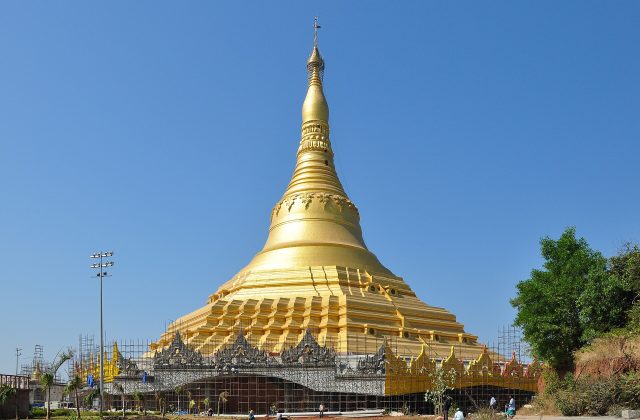
Global Vipassana Pagoda
312 km away
The Global Vipassana Pagoda charges nothing for entry, and there is no ticket to reserve: visitors walk in through the…
2 tickets & tours
Hindu Temple · Veraval · India
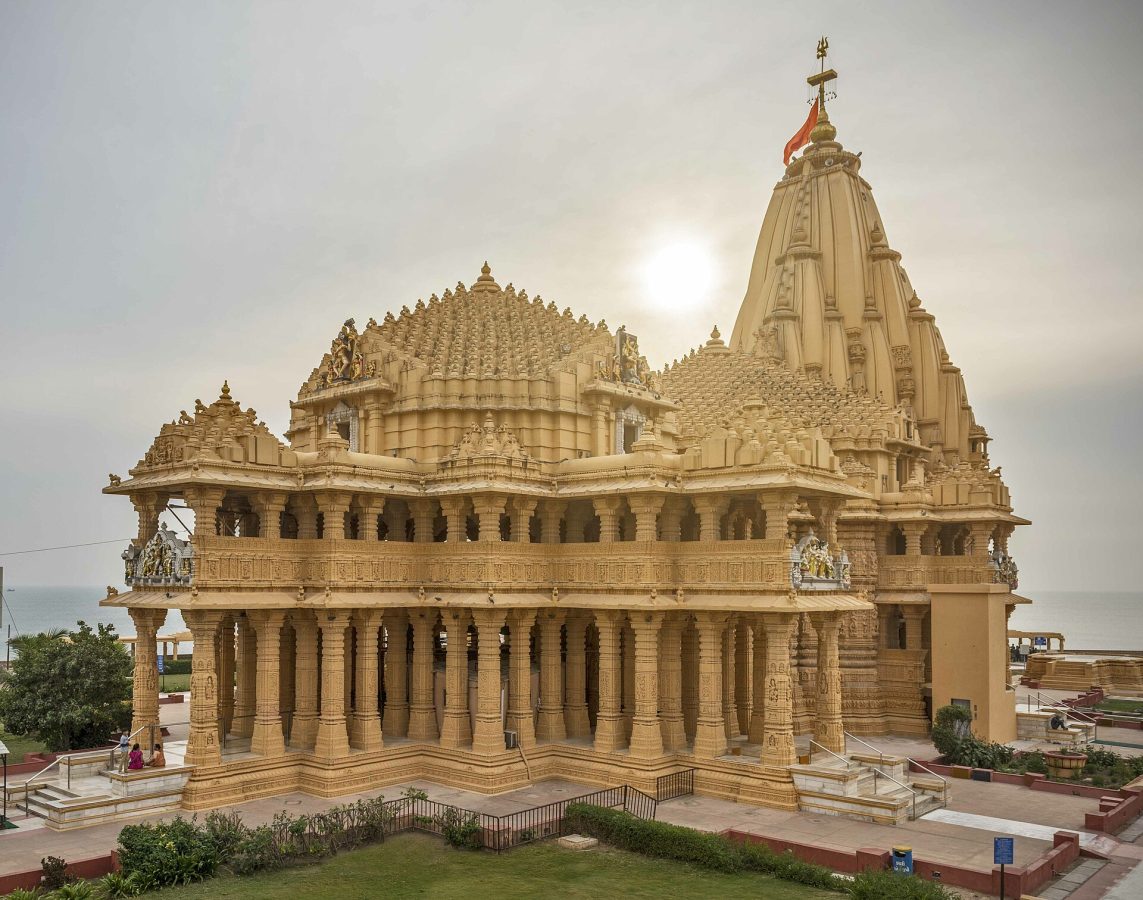
Photo: B. SurajPatro1997, CC BY-SA 4.0
No ticket is needed to enter Somnath Temple and nothing for the temple alone is sold online. Entry is free, and the only things to organise are practical: shoes, mobile phones, cameras, bags and leather items have to be left at the free cloakrooms near the gate, and there is a security check at the entrance. Non-Hindu visitors are welcome, though they may be asked to register at the trust office near the gate before going in. The one paid extra worth considering is the sound and light show staged in front of the temple after the evening aarti, which tells the story of the shrine's destruction and rebuilding; tickets are sold at a counter on the day.
Puja and abhishek rituals can be booked through the temple trust for those who want to make a formal offering, and the trust also runs guesthouses close to the shrine. Somnath lies at Prabhas Patan, on the coast just east of Veraval, about 400 km from Ahmedabad. Most visitors arrive by train at Veraval or Somnath station, or by road as part of a Saurashtra circuit that also takes in Dwarka, Junagadh, the lions of Gir and the island of Diu. Private drivers and pilgrimage packages from Ahmedabad or Rajkot usually include the car, hotels and the main temples, with donations and show tickets paid separately. The page lists any GetYourGuide tours whose route passes the temple.
Live prices from GetYourGuide for tickets and tours that include this temple. Free cancellation on most of them.
Somnath is the first of the twelve jyotirlinga shrines of Shiva, and few temples in India carry as much history. A sacred bathing place existed here on the Saurashtra coast in ancient times, and the temple was raided by Mahmud of Ghazni in 1026, then destroyed and rebuilt several times over the following centuries. The building you see today is modern: after independence the ruins were cleared and a new temple was raised at the initiative of Vallabhbhai Patel, with the main consecration in 1951. It is built in the Maru-Gurjara style of western India, in pale sandstone, with a tall curved spire over the sanctum topped by a golden kalash and a flag that is changed several times a day. Walk slowly around the outside to look at the carved bands of dancers, deities and animals before going in.
Inside, past a pillared assembly hall, the linga sits in the sanctum, framed by silver and gold decoration; devotees file past quickly under the eye of guards. Behind the temple a broad terrace faces the Arabian Sea. Look for the Baan Stambh, the arrow pillar on the sea wall, whose inscription claims that there is no land in a straight line between this point and the South Pole. Nearby stands the smaller temple built by Ahilyabai Holkar in 1783, where worship continued while the main site lay in ruins. Photography is not allowed inside the complex, so enjoy the view from the seafront promenade instead. Dress modestly, stay calm in the queues and follow the barriers. Autorickshaws link the temple with Veraval and the railway stations.
The temple is open from early morning until late evening every day, with three daily aartis, at around 7 am, noon and 7 pm; the evening one, followed by the sound and light show, is the most atmospheric. Check the trust's website for current times. Early morning is the calmest time, with sea breezes and short queues. October to March is the best season;
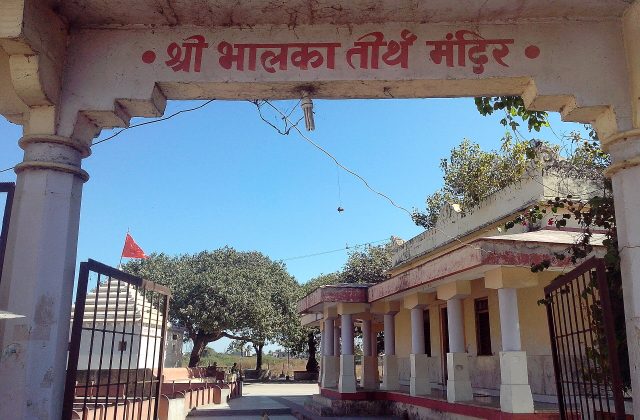
April to June is hot and humid, and the monsoon brings rough seas and heavy rain. Maha Shivaratri, in February or March, draws enormous crowds and long queues, as does the month of Shravan in July and August, especially on Mondays. The Kartik Purnima fair in November fills Prabhas Patan with stalls and pilgrims. Allow one to two hours for the temple and the seafront, and half a day with the nearby Triveni Sangam and Bhalka Tirth, where Krishna is said to have been struck by an arrow. Gir, Diu and Junagadh are each within a few hours.
312 km away
The Global Vipassana Pagoda charges nothing for entry, and there is no ticket to reserve: visitors walk in through the…
2 tickets & tours
328 km away
Entry to Siddhivinayak is free, and the ordinary darshan queue, in which devotees file past the image of Ganesha, needs…
2 tickets & tours
331 km away
The Jain temple on Malabar Hill is a place of daily worship, and no ticket is sold for it: you walk in through the gate…
1 ticket or tour
Yes. GetYourGuide sells tickets and guided tours whose route includes Somnath Temple; live prices are shown on this page.
The temple is open from early morning until late evening every day, with three daily aartis, at around 7 am, noon and 7 pm; the evening one, followed by the sound and light show, is the most atmospheric.
Allow one to two hours for the temple and the seafront, and half a day with the nearby Triveni Sangam and Bhalka Tirth, where Krishna is said to have been struck by an arrow.
October to March is the best season; April to June is hot and humid, and the monsoon brings rough seas and heavy rain.
Photography is not allowed inside the complex, so enjoy the view from the seafront promenade instead.
Entry to Somnath Temple: Free; donations welcome
Modest clothing covering shoulders and knees; shoes, phones, cameras and leather deposited before entry.
Somnath Temple is in Veraval, India. The map on this page shows the exact spot.
How to visit a Hindu temple: dress, shoes and access — What to wear, what to leave at the gate and where non-Hindus may go in Hindu temples in India, Nepal, Bali and South-East Asia.
Veraval, India
Entry to Bhalka Tirth is free, with no ticket, timed slot or queue pass to buy, and no tour of this temple alone is…
No online ticket