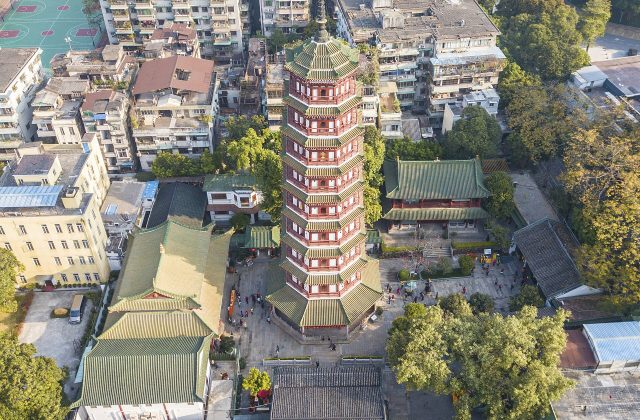
Temple of the Six Banyan Trees (Liurong)
132 km away
Liurong, the Temple of the Six Banyan Trees, is a working monastery in the old centre of Guangzhou, and you simply pay…
1 ticket or tour
Chinese Temple · Hong Kong · China
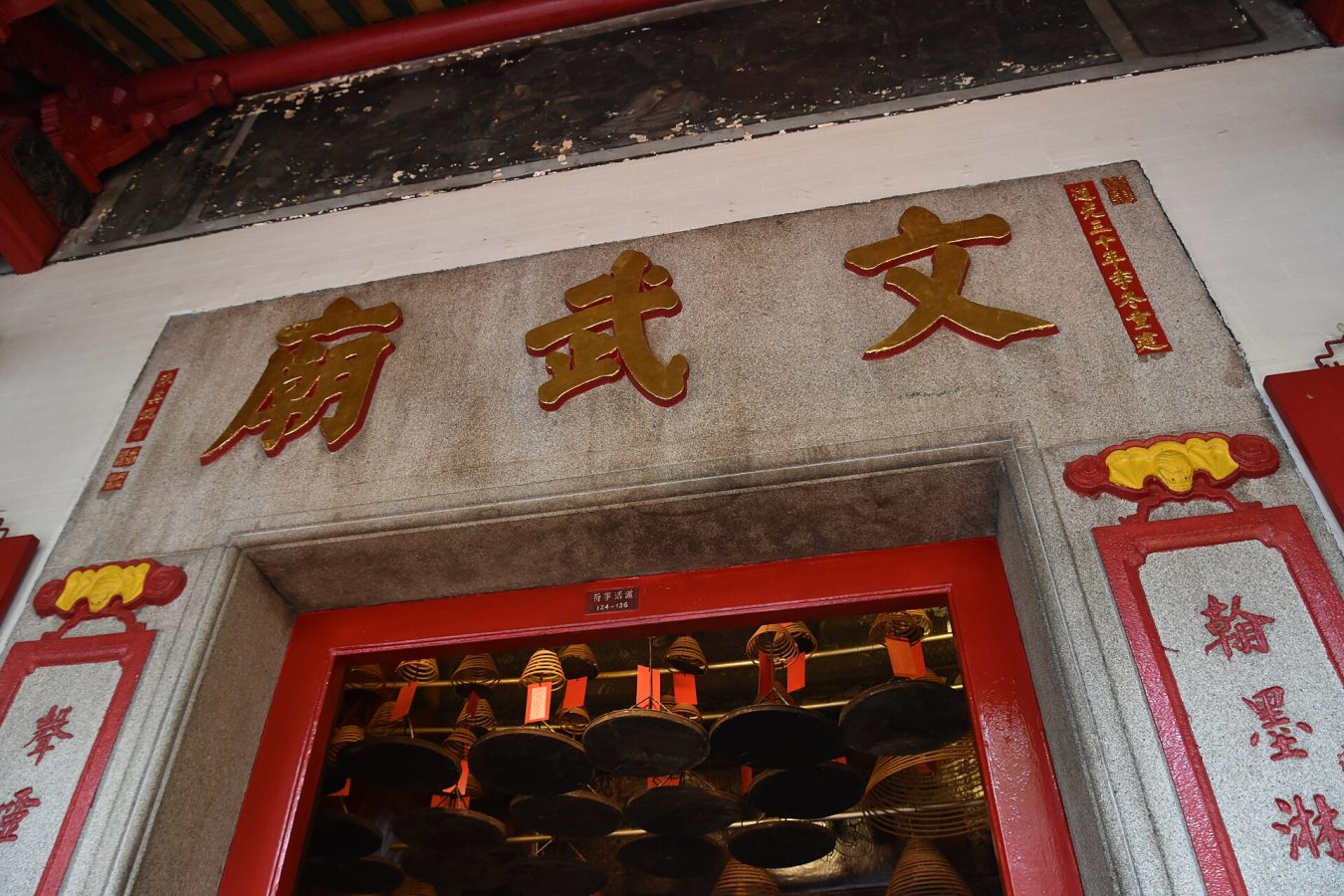
Photo: Richard Mortel from Riyadh, Saudi Arabia, CC BY 2.0
The Man Mo Temple on Hollywood Road is free to enter and has no tickets; no online booking exists for the temple alone. Incense sticks and coils are sold at a counter inside if you wish to make an offering, and donations go towards the Tung Wah Group of Hospitals, the charity that has run the temple since 1908. Most visitors come on foot. From Sheung Wan or Central MTR stations it is a ten-minute uphill walk, or you can ride the long Mid-Levels escalators from Central and drop down to Hollywood Road.
Buses run along the road itself, and the historic tram on Des Voeux Road is a short walk below. Guided walking tours of Sheung Wan and the old western districts of Hong Kong Island often stop here, together with the antique stalls of Cat Street, the converted police quarters at PMQ and Tai Kwun, and the dried seafood shops of Des Voeux Road West. Food tours of the same area frequently pass the door. A guide explains the folk religion and the social history of the temple, which as an assembly place for Chinese residents once mattered as much as the deities. Half-day city tours by coach sometimes include it as well. The page lists any GetYourGuide tours whose route passes the temple.
Live prices from GetYourGuide for tickets and tours that include this temple. Free cancellation on most of them.
Several Man Mo temples exist in Hong Kong, at Tai Po and on Lantau among others, but the one on Hollywood Road in Sheung Wan, built in 1847, is the largest and best known. It is a declared monument and forms a row of three linked buildings: the Man Mo Temple itself, the Lit Shing Kung, devoted to all the heavenly gods, and the Kung So, an assembly hall where the Chinese community once settled disputes and swore oaths. The main temple honours two deities. Man Cheong, the god of literature, holds a writing brush and was prayed to by candidates for the imperial examinations; today students before exams still come to him. Mo Tai, also called Kwan Tai, the red-faced god of war, holds a sword and stands for loyalty and righteousness.
Side altars hold Pao Kung, the incorruptible judge, and Shing Wong, the city god. The first thing you will notice is the smoke. Huge spiral incense coils hang from the ceiling, each burning for days or weeks and carrying a red paper tag with the donor's prayers. Light falls through the smoky air in shafts from the roof, the walls are dark from more than a century and a half of incense, and the granite columns, gilded woodcarvings and roof figures are worth a close look. Two carved sedan chairs, once used to carry the gods in procession, stand inside. Photography is generally allowed, but do not use flash and do not photograph worshippers at their prayers. Avoid standing directly under the coils, which can drop ash.
The temple is open every day from early morning until early evening, usually about 8 am to 6 pm; there is no official website for the temple, so check locally on public holidays. Mornings are best, when worshippers light the day's first incense and the light through the smoke is at its most striking; late afternoon is also good. Tour groups come in the middle of the day.
Hong Kong is most comfortable from October to December, while summer is hot, humid and stormy. The temple is at its busiest during Chinese New Year, when queues form to offer incense and seek good fortune for the year, and on the birthdays of Man Cheong and Kwan Tai in the lunar calendar. Before the public examinations in spring, students and parents crowd the altar of the god of literature. Allow 20 to 30 minutes. Combine the temple with Cat Street, PMQ and Tai Kwun nearby, a walk down the steep lanes to Sheung Wan's dried seafood street, or an evening in SoHo above.
132 km away
Liurong, the Temple of the Six Banyan Trees, is a working monastery in the old centre of Guangzhou, and you simply pay…
1 ticket or tour
Yes. GetYourGuide sells tickets and guided tours whose route includes Man Mo Temple, Hollywood Road; live prices are shown on this page.
The temple is open every day from early morning until early evening, usually about 8 am to 6 pm; there is no official website for the temple, so check locally on public holidays.
Allow 20 to 30 minutes.
Entry to Man Mo Temple, Hollywood Road: Free
No dress code; keep clear of the incense coils and worshippers.
Man Mo Temple, Hollywood Road was established in 1847.
Man Mo Temple, Hollywood Road is in Hong Kong, China. The map on this page shows the exact spot.
How to visit a Chinese temple: incense, gods and manners — How to behave in Taoist, Confucian and folk temples in China, Taiwan, Hong Kong and South-East Asia: incense, thresholds and fortunes.
Hong Kong, China
Wong Tai Sin Temple is free to enter and no ticket is sold online or at the gate.
No online ticket