Ancient Temple · Konark · India
Konark Sun Temple
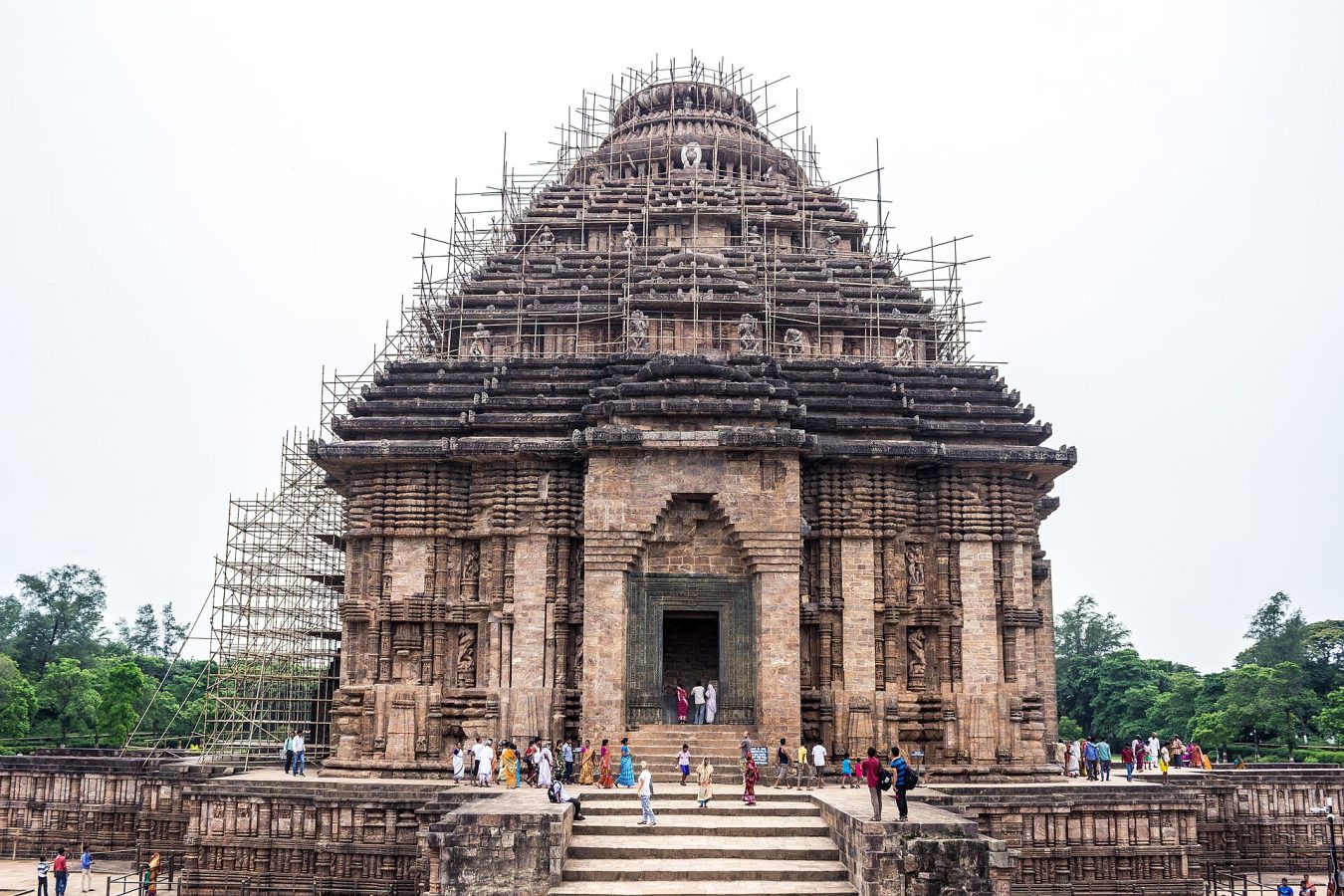
Photo: Dhruv Raj Kashyap, CC BY-SA 4.0
- Type
- Ancient Temple
- Religion
- Hinduism
- Area
- 11 ha
- Founded
- 1250 (c. 1250)
- Visitors
- 3.6 million a year (2024)
- Height
- 39 m
- Entry
- INR 40 Indians; INR 600 foreigners
- Dress code
- No formal dress code; modest clothing suits the site, and shoes are fine as it is no longer in worship.
- UNESCO
- Sun Temple, Konarak
- Tickets
- 6 tickets and tours
- Website
- konark.nic.in
Konark Sun Temple tickets and tours: which one to book
Entry to the Sun Temple is by a standard Archaeological Survey of India ticket, bought at the counters by the entrance or online in advance, with a much lower price for Indian and South Asian visitors than for other foreign nationals; children under 15 enter free. There is no skip-the-line product and no need for one outside festival days. Licensed guides wait near the gate and can be hired on the spot, and a guide is worth the money here, because the carvings tell stories that are easy to walk past without explanation.
An audio guide is also available. What is sold online is almost entirely transport and combined sightseeing, because Konark lies on the coast about 65 km from Bhubaneswar and 35 km from Puri. Private day trips from Bhubaneswar with a car and driver are the most common, often stopping at the appliqué craft village of Pipli on the way, and sometimes adding the beach at Chandrabhaga or the Jagannath Temple town of Puri. Two- and three-day packages cover Bhubaneswar, Konark and Puri together, sometimes with Chilika Lake, and include hotels and transport while entrance fees are often extra. Independent travellers can do the same with a hired taxi or a local bus from Puri.
6 tickets and tours for Konark Sun Temple
Live dates and prices from GetYourGuide. Free cancellation on most tickets.
Visiting Konark Sun Temple: what to see and how to behave
The temple was built around 1250 by King Narasimhadeva I of the Eastern Ganga dynasty and dedicated to Surya, the sun god, conceived as a colossal stone chariot. Twenty-four carved wheels, about 3 m across, line the base of the platform, and seven horses strain at the front to pull the god across the sky. The tall sanctuary tower that once rose above everything collapsed long ago; what stands today, around 30 m high, is the audience hall, which British engineers filled with sand and sealed in 1903 to stop it falling down. European sailors called the dark mass on the shore the Black Pagoda and used it as a landmark. The site has been on the UNESCO World Heritage list since 1984. Walk slowly round the platform before climbing to it.
The wheels are the masterpiece: each spoke and medallion is carved with figures, and local guides will show how the shadow on a wheel can be read as a sundial. Above them run friezes of elephants, musicians, dancers, hunting scenes and the famous erotic couples. Look also for the three green chlorite images of Surya set in niches on the outer walls of the ruined sanctuary, each showing the god at a different time of day, and for the freestanding dance hall in front of the main structure. The Archaeological Survey's museum just outside the gate holds sculpture that has fallen from the temple. Konark has no active worship inside, so shoes stay on, but climbing on the carvings is forbidden.
Konark Sun Temple: opening hours, ceremonies and the best time to go
The site is open every day from sunrise to sunset, and a sound and light show is held in the evening; check locally for the current schedule and language. Come at opening time: the low morning sun rakes across the reliefs, the heat is bearable, and the coach groups from Puri and Bhubaneswar have not yet arrived. Late afternoon is the second-best slot, with warm light on the stone. October to March is the comfortable season on the Odisha coast.
April to June is fiercely hot, and the monsoon from July to September brings heavy rain and the occasional cyclone. The Konark Dance Festival, held against the temple as a backdrop in early December, is the event to plan around, and the Chandrabhaga Mela draws pilgrims to bathe at the nearby beach in January or February; on those days expect large crowds and full hotels. Allow two to three hours for the temple and museum. The beach at Chandrabhaga is a few kilometres away, and Puri and Bhubaneswar are both easy to combine on the same day.
More tours and activities in Konark
Before you go
Can I book a temple tour or ticket in Konark Sun Temple online?
Yes. GetYourGuide lists 6 tickets and tours for Konark Sun Temple, with live dates and prices and free cancellation on most of them.
When is Konark Sun Temple open?
The site is open every day from sunrise to sunset, and a sound and light show is held in the evening; check locally for the current schedule and language.
How many days do you need in Konark Sun Temple?
Allow two to three hours for the temple and museum.
How much is the entrance fee for Konark Sun Temple?
Entry to Konark Sun Temple: INR 40 Indians; INR 600 foreigners
What should I wear to visit Konark Sun Temple?
No formal dress code; modest clothing suits the site, and shoes are fine as it is no longer in worship.
How big is Konark Sun Temple?
Konark Sun Temple covers 11 ha.
When was Konark Sun Temple founded?
Konark Sun Temple was established in 1250.
How many people visit Konark Sun Temple?
Konark Sun Temple receives about 3.6 million a year (2024).
Where is Konark Sun Temple?
Konark Sun Temple is in Konark, India. The map on this page shows the exact spot.
How to visit an ancient temple: tickets, heat and rules — Tickets, hours, heat, guides, climbing rules and conservation at the ancient temples of Egypt, Greece, Italy, Angkor and the Maya world.