Dohany Street Synagogue (Great Synagogue)
Budapest, Hungary
The synagogue is run by the Jewish community of Budapest, and visitors buy a single ticket that covers the Great…
3 tickets & tours
Synagogue · Budapest · Hungary
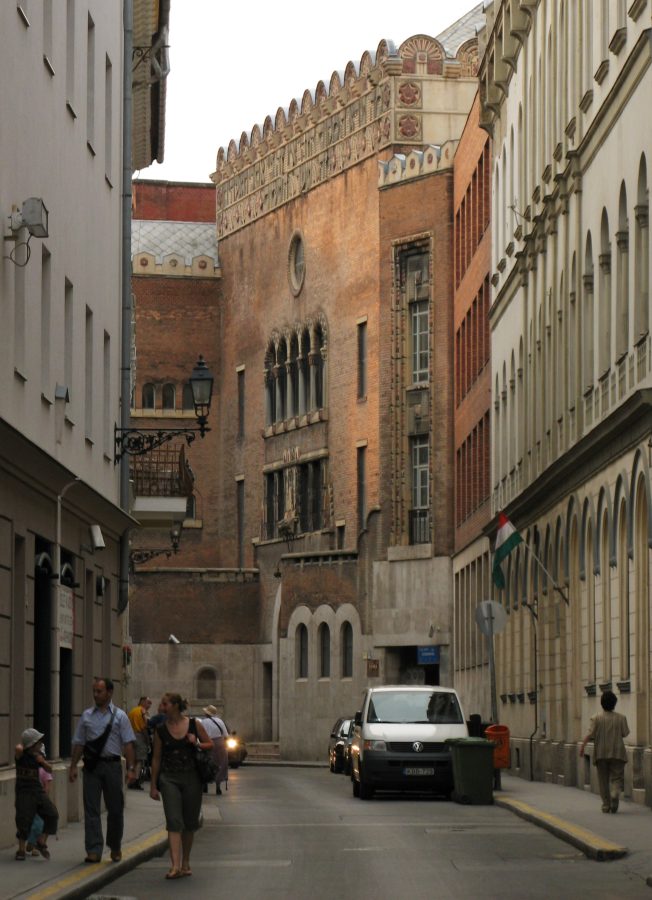
Photo: Diana, CC BY 2.0
The only product sold online for this synagogue is a simple entry ticket, and it is the right choice for most visitors. It covers admission to the main prayer hall during visiting hours; there is no guide included, though staff at the door can answer questions and printed information is usually available. Buying ahead mainly saves you a few minutes at the door and confirms that the building is open on the day you plan to come, which matters because it closes for the Sabbath and Jewish holidays. You can also simply pay on arrival. If you want context rather than just the building, the better option is a walking tour of the old Jewish quarter of Pest.
These are run by several local guides and usually take in the Dohany Street Synagogue, the Rumbach Street Synagogue and the Kazinczy Street complex, along with the ghetto wall memorial, courtyards and memorial plaques. Check whether a tour actually enters this synagogue or only stops outside, since many go inside only at Dohany Street and pay its separate admission there. Note that the Kazinczy Street Synagogue is still an active Orthodox congregation, so the ticket buys a visit outside prayer times, not a place at a service. Anyone wishing to attend a service should contact the community directly.
Live dates and prices from GetYourGuide. Free cancellation on most tickets.
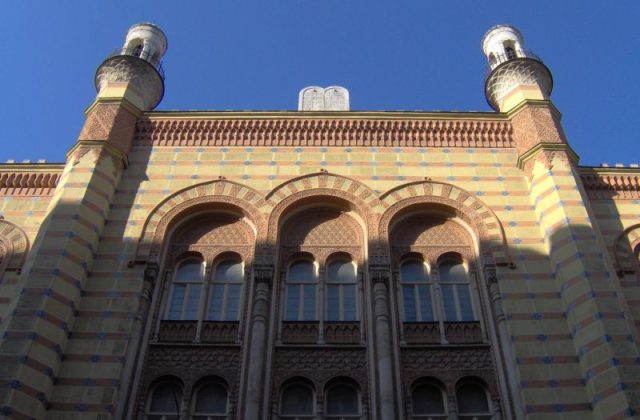
The synagogue stands in the seventh district, the old Jewish quarter of Pest, a few minutes' walk from the Astoria and Deak Ferenc ter metro stations and from the much larger Dohany Street Synagogue. It was built for the Orthodox community, which had split from the Neolog majority of Pest Jews in the late 1860s, and was designed by the brothers Sandor and Bela Loffler after a competition. Work on the synagogue itself started in 1912 and it was consecrated in September 1913, just before the Jewish New Year. It is one of the clearest examples of Art Nouveau applied to a Hungarian synagogue. The street facade is tall and narrow, with a large arched window, slender towers and a stone-coloured surface rather than the brick and Moorish detail of the older synagogues nearby.
Inside, look at the painted geometric and floral ornament on walls and ceiling, the coloured glass, the raised bimah facing the Torah ark, and the women's galleries upstairs, which follow Orthodox practice. The complex around a courtyard also holds a school, a smaller winter prayer house, community offices, a ritual bath and a kosher restaurant, and is still the centre of Orthodox life in Budapest. During the winter of 1944 to 1945 the building lay inside the Pest ghetto and was badly damaged. It was repaired after the war, but the main hall has long needed restoration, and money is still being raised for the roof and facade. Dress modestly, and men should cover their heads. Speak quietly in the prayer hall, follow the staff's guidance on photography, and do not visit during services.
The synagogue opens to visitors on weekdays and Sundays during the day and closes early on Friday ahead of the Sabbath. It is shut on Saturdays and on Jewish holidays, including Rosh Hashanah, Yom Kippur, Sukkot and Passover; check the hours before you go, since they change with the season and with the religious calendar. Mid-morning on a weekday is the calmest time. The surrounding streets are the heart of Budapest's ruin-bar district, so evenings in the neighbourhood are loud, and the street is busiest on Friday and Saturday nights;
this does not affect the synagogue itself, which is closed by then. Any season works, as the visit is indoors, though the unheated hall can be cold in winter. Allow 30 to 45 minutes inside. The obvious combination is a half day in the Jewish quarter: the Dohany Street Synagogue with its museum and memorial garden, the restored Rumbach Street Synagogue, the remaining fragment of the ghetto wall and a meal at one of the kosher or Jewish-style restaurants nearby. St Stephen's Basilica and the Danube are a 15-minute walk away.
Yes. GetYourGuide lists one ticket or tour for Kazinczy Street Synagogue, with live dates and prices and free cancellation on most of them.
Buying ahead mainly saves you a few minutes at the door and confirms that the building is open on the day you plan to come, which matters because it closes for the Sabbath and Jewish holidays.
Allow 30 to 45 minutes inside.
Entry to Kazinczy Street Synagogue: Paid ticket; check current price
Men cover their heads (kippahs are provided); shoulders and knees covered.
Kazinczy Street Synagogue was established in 1913.
Kazinczy Street Synagogue is in Budapest, Hungary. The map on this page shows the exact spot.
How to visit a synagogue: dress, security and Shabbat — When synagogues open to visitors, how to dress, why security is tight and how to behave at a service, from Prague to Djerba.
Budapest, Hungary
The synagogue is run by the Jewish community of Budapest, and visitors buy a single ticket that covers the Great…
3 tickets & tours
Budapest, Hungary
The Rumbach Street Synagogue is visited on an ordinary entry ticket bought at the door, and no ticket for this…
No online ticket