Hindu Temple · Janakpur · Nepal
Janaki Mandir, Janakpur
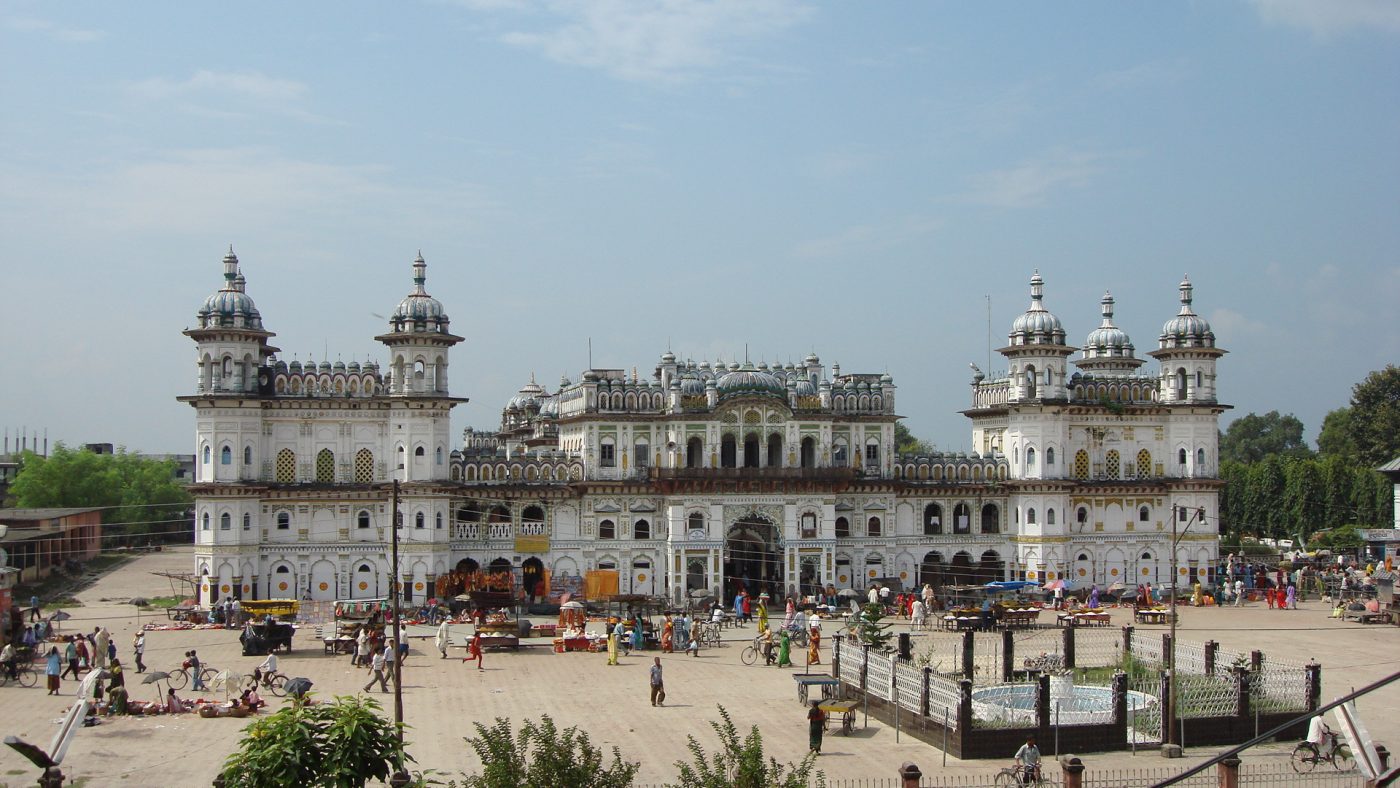
Photo: Adutta.np at English Wikipedia, CC BY-SA 3.0
- Type
- Hindu Temple
- Religion
- Hinduism
- Founded
- 1910 (completed 1910)
- Entry
- Free; small fees for some areas
- Dress code
- Shoulders and knees covered; shoes off at the entrance.
- Tickets
- 1 ticket or tour
Janaki Mandir, Janakpur tickets and tours: which one to book
Janaki Mandir is a busy Hindu temple and entry to the main courtyard and shrine is free; shoes are left at a counter by the gate for a small tip. Some parts of the complex, such as the museum rooms and the wedding pavilion next door, may charge a modest fee paid on the spot. There is nothing to reserve in advance. What can be booked is a cultural tour of Janakpur with a local guide, typically half a day or a full day. These walks usually combine the temple with the sacred ponds of the old town, other shrines associated with the Ramayana and a visit to women who practise Mithila painting, the bold folk art for which the region is known.
Expect the guide and sometimes a rickshaw or car to be included, while lunch, museum entry and anything you buy from the artists are extra. A guide is worthwhile in a town that sees few foreign visitors and where little is signposted in English. Janakpur lies in the plains of southern Nepal, close to the Indian border. Most travellers fly in from Kathmandu, a short flight, or come by long-distance bus; the cross-border railway from Jaynagar in India also serves the town. From the town centre the temple is within walking distance or a short rickshaw ride.
Tickets and tours for Janaki Mandir, Janakpur
Live dates and prices from GetYourGuide. Free cancellation on most tickets.
Visiting Janaki Mandir, Janakpur: what to see and how to behave
The temple is dedicated to Sita, the heroine of the Ramayana, who is believed to have been born in the kingdom of her father, King Janak, whose capital tradition places here. The present building was commissioned by Queen Vrisha Bhanu of Tikamgarh in central India and completed in 1910. Its popular name, Nau Lakha Mandir, refers to the nine lakh, or 900,000, coins that it is said to have cost. According to local tradition, a golden image of Sita was found on this spot in 1657 by the ascetic Shurkishordas, who is remembered as the founder of modern Janakpur. The building is a dazzling white three-storey palace of marble and stone, with domes, turrets, lattice windows and coloured glass, combining Rajput and Mughal influences.
It has some 60 rooms arranged around a central courtyard, where the inner shrine holds images of Sita and Rama. The upper rooms and galleries include displays on the Ramayana and on Mithila painting. Next to the temple stands the Vivah Mandap, the pavilion identified with the wedding of Rama and Sita, with tableaux of the ceremony. The temple was damaged in the 2015 earthquake and has since been repaired. The area around it is a protected monument zone, and the complex is on Nepal's tentative list for World Heritage status. Remove your shoes before entering, dress modestly and keep a respectful distance from the inner shrine, where photography is not allowed. Leather items should not be taken into the sanctum. The evening aarti, with bells, lamps and singing, is open to all and is the best time to be present.
Janaki Mandir, Janakpur: opening hours, ceremonies and the best time to go
The temple opens early in the morning and remains open until mid-evening, often closing for a while in the early afternoon. Early morning and sunset, when the aarti takes place and the white facade turns pink, are the best times to visit. During the day the courtyard is quieter but the marble can be hot underfoot. October to March is the most pleasant season in the Terai; from April the plains become very hot, and the monsoon from June to September brings heavy rain.
The great festival is Vivah Panchami in November or December, which re-enacts the wedding of Rama and Sita with processions and draws huge numbers of pilgrims from Nepal and India. Ram Navami in spring, Chhath in autumn and Holi in March are also celebrated with great energy. Book accommodation well ahead for these dates. Allow an hour or so for the temple and the wedding pavilion. Combine it with the Ganga Sagar and Dhanush Sagar ponds, the Ram Mandir and a visit to a Mithila art centre.
More tours and activities in Janakpur
Before you go
Can I book a temple tour or ticket in Janaki Mandir, Janakpur online?
Yes. GetYourGuide lists one ticket or tour for Janaki Mandir, Janakpur, with live dates and prices and free cancellation on most of them.
When is Janaki Mandir, Janakpur open?
The evening aarti, with bells, lamps and singing, is open to all and is the best time to be present.
How many days do you need in Janaki Mandir, Janakpur?
Allow an hour or so for the temple and the wedding pavilion.
When is the best time to visit Janaki Mandir, Janakpur?
The evening aarti, with bells, lamps and singing, is open to all and is the best time to be present.
What should I wear to visit Janaki Mandir, Janakpur?
Shoulders and knees covered; shoes off at the entrance.
Can I take photos inside Janaki Mandir, Janakpur?
Remove your shoes before entering, dress modestly and keep a respectful distance from the inner shrine, where photography is not allowed.
How much is the entrance fee for Janaki Mandir, Janakpur?
Entry to Janaki Mandir, Janakpur: Free; small fees for some areas
When was Janaki Mandir, Janakpur founded?
Janaki Mandir, Janakpur was established in 1910.
Where is Janaki Mandir, Janakpur?
Janaki Mandir, Janakpur is in Janakpur, Nepal. The map on this page shows the exact spot.
How to visit a Hindu temple: dress, shoes and access — What to wear, what to leave at the gate and where non-Hindus may go in Hindu temples in India, Nepal, Bali and South-East Asia.