
Temple of Artemis
0 km away
The site of the Temple of Artemis, on the edge of Selcuk, is an open field that you can visit freely, so there is no…
9 tickets & tours
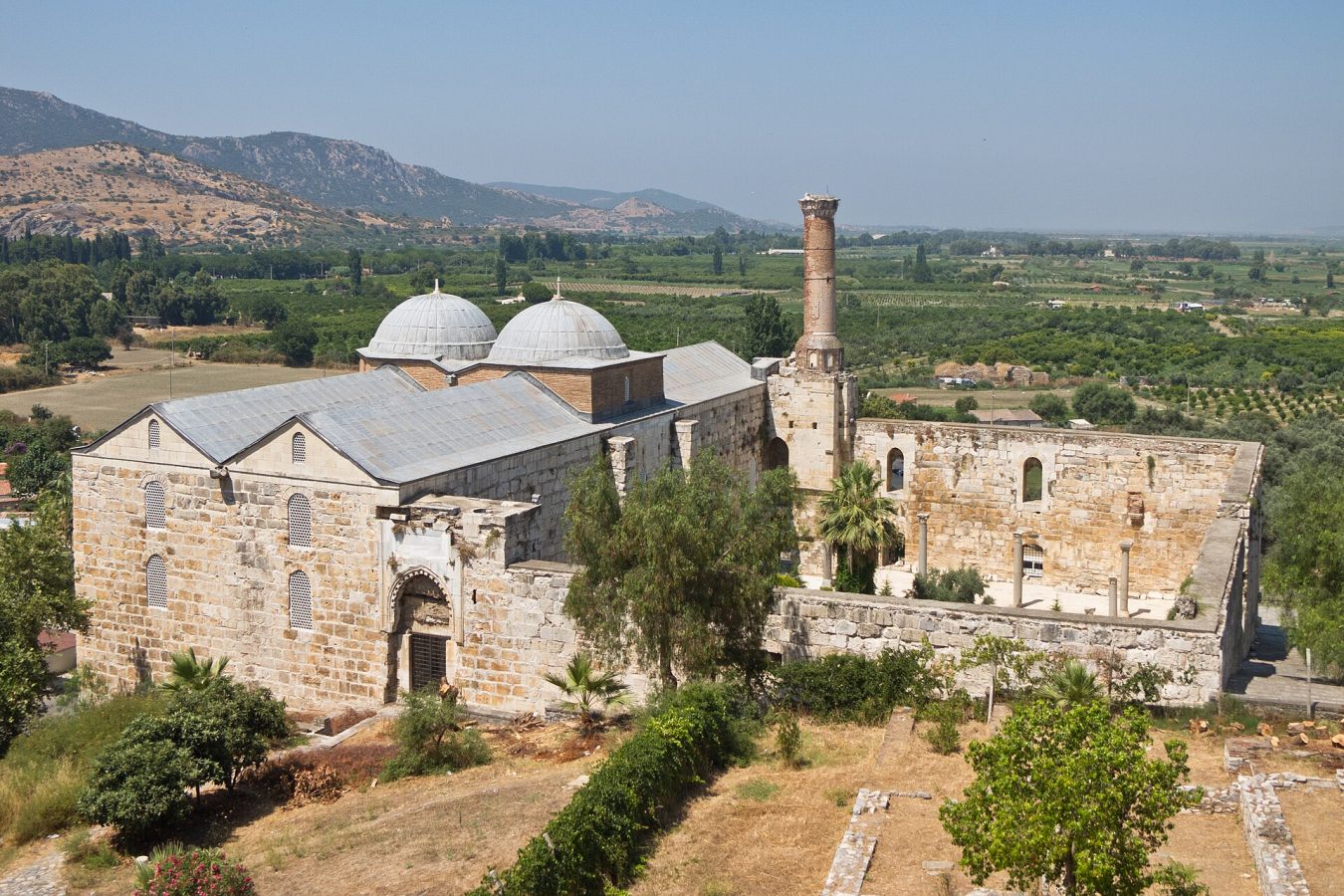
Photo: Carlos Delgado, CC BY-SA 3.0
There is no ticket for the Isa Bey Mosque. It is a working mosque, entry is free, and nothing is sold online for it on its own; you can leave a donation in the box by the door if you wish. Scarves for women are usually available at the entrance, though it is better to bring your own. The mosque stands at the foot of Ayasuluk Hill in the small town of Selcuk, and almost every visitor sees it while exploring the Ephesus area. Independent travellers walk to it in a few minutes from the bus station or the town centre, and pair it with the Basilica of St John just above and the single re-erected column of the Temple of Artemis below.
Organised day tours of Ephesus, run from Kusadasi, Izmir and the coastal resorts and from cruise ships docking at Kusadasi, usually include transport, a licensed guide and the entry ticket to the ancient city; some add the Terrace Houses, the House of the Virgin Mary or a stop in Selcuk, where the mosque may appear as a brief photo stop. Lunch and extra museum entries are often charged separately. If you are staying in Selcuk, visit the mosque independently before or after Ephesus; it needs no guide. If you are coming for the day from the coast, choose a tour that lists Selcuk or the Basilica of St John among its stops. The page lists any GetYourGuide tours whose route passes the mosque.
Live prices from GetYourGuide for tickets and tours that include this temple. Free cancellation on most of them.
The mosque was built in 1374 and 1375 for Isa Bey, ruler of the Aydinid emirate, one of the small Turkish states that divided western Anatolia before the rise of the Ottomans. Its architect came from Damascus, and the plan follows the Great Mosque of Damascus: a broad courtyard leading to a prayer hall that runs across the width of the building, rather than the domed square that later Ottoman mosques made standard. It is one of the most important buildings to survive from this period. Approach from the west, where the main facade is faced with marble and carries fine inscriptions and geometric carving around the tall portal; this is the best-preserved part and the one to study closely. Inside, the large courtyard was once surrounded by porticoes, and some of its columns were taken from the ruins of ancient Ephesus nearby.
The prayer hall is roofed with two domes on drums, and traces of turquoise tiles survive around their rims. Only the brick lower part of one minaret still stands; the second has gone entirely. Next to the mosque is a small octagonal tomb with a pyramid roof. By the early 19th century the building was in ruins and served for a time as a caravanserai, before later restoration returned it to prayer. As in any mosque, dress modestly, remove your shoes before the prayer hall, keep your voice low and avoid walking in front of people at prayer. Visitors should wait outside during the five daily prayers, especially at Friday midday. The mosque is about 500 m west of Selcuk's centre, and Ephesus lies 3 km further south-west.
The mosque is generally open throughout the day, from the dawn prayer until after the night prayer, but visitors are asked not to enter during the prayers themselves; the midday prayer on Fridays is the longest closure. Early morning and late afternoon are the best times, when the low sun lights the carved marble of the west facade and the tour groups are still at Ephesus. The best seasons are April to June and September to October, when the Aegean weather is warm but comfortable for walking between the sites.
July and August are very hot, and the ruins of Ephesus are crowded with cruise passengers in the middle of the day. In spring, look out for the storks that nest on the towers and columns around Selcuk. During Ramadan, the evenings are lively, and on the two Eid festivals the mosque is full for the morning prayer. Allow 20 to 40 minutes. Combine it with the Basilica of St John, the Ephesus Museum, the Temple of Artemis and a full day at ancient Ephesus.
0 km away
The site of the Temple of Artemis, on the edge of Selcuk, is an open field that you can visit freely, so there is no…
9 tickets & tours
295 km away
Cape Sounion lies at the southern tip of Attica, about 70 km from central Athens, and most visitors come on a half-day…
48 tickets & tours
318 km away
The Olympieion is an open archaeological site with a ticket kiosk by the entrance on Vasilissis Olgas Avenue, a short…
2 tickets & tours
Yes. GetYourGuide sells tickets and guided tours whose route includes Isa Bey Mosque; live prices are shown on this page.
Allow 20 to 40 minutes.
Shoulders and knees covered; women cover their hair; shoes off in the prayer hall.
Entry to Isa Bey Mosque: Free; donations welcome
Isa Bey Mosque was established in 1374.
Isa Bey Mosque is in Selçuk, Turkey. The map on this page shows the exact spot.
How to visit a mosque: dress, timing and manners — What to wear, when to go and how to behave in a mosque as a non-Muslim, and which mosques do not admit visitors at all.
Selçuk, Turkey
The site of the Temple of Artemis, on the edge of Selcuk, is an open field that you can visit freely, so there is no…
9 tickets & tours

