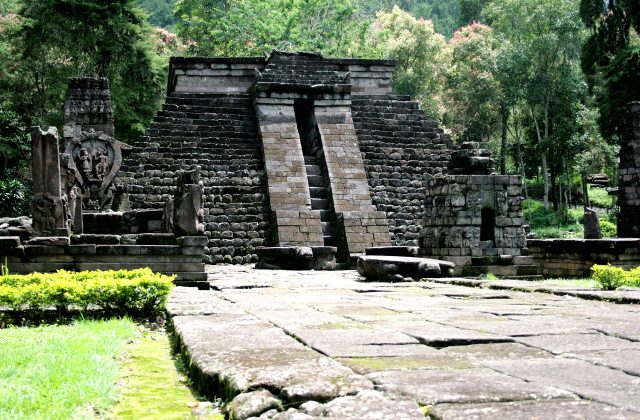
Sukuh Temple (Candi Sukuh)
Solo, Indonesia
There is no online ticket for Candi Sukuh alone. You pay a modest fee at the gate, foreigners at a higher rate than…
5 tickets & tours
Hindu Temple · Solo · Indonesia
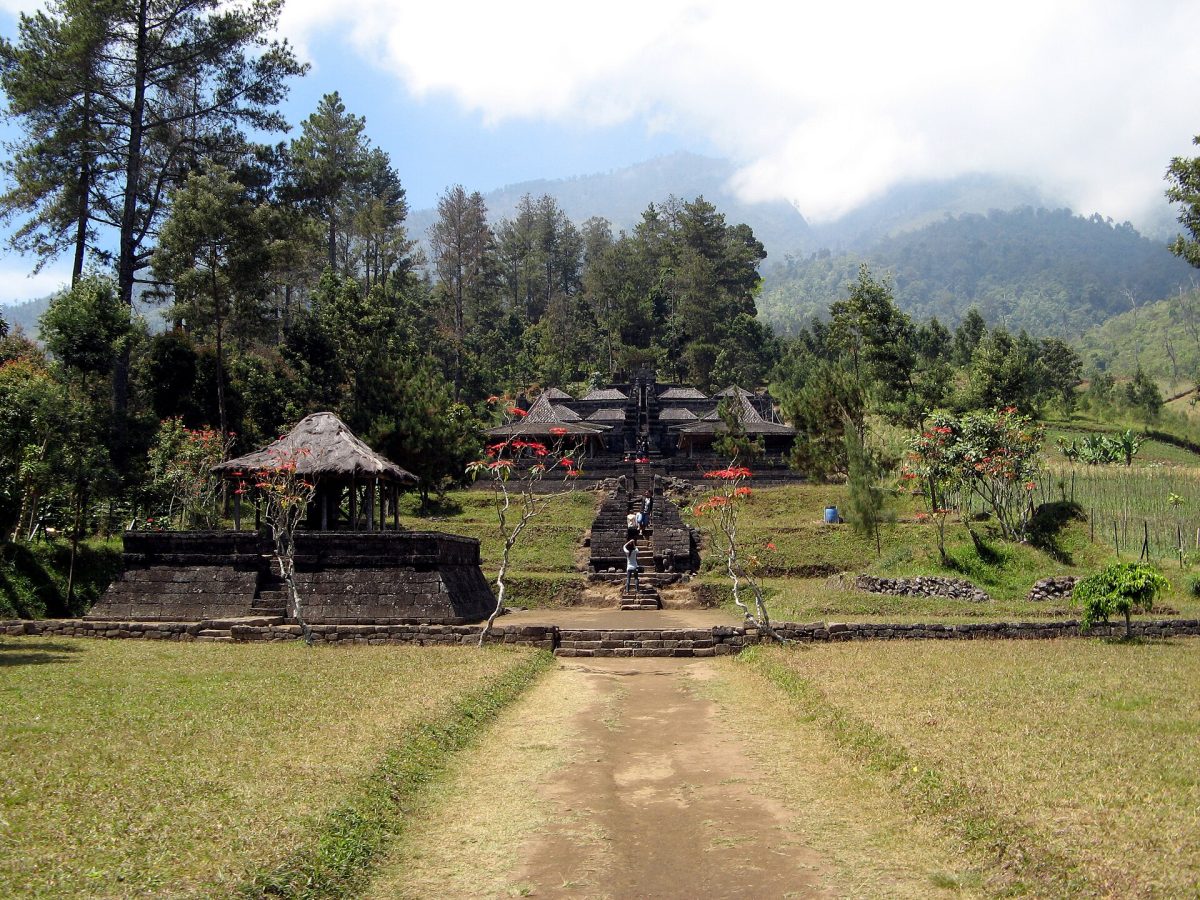
Photo: Michael Gunther, CC BY-SA 4.0
Candi Cetho has no ticket sold online in its own right. You pay a small fee at the gate, where you are given a checked poleng cloth to wrap round your waist, and you can walk in at any time during opening hours without booking. Like its neighbour Sukuh, Cetho is a long way from the usual bases. It is perched at nearly 1,500 m on Mount Lawu, about an hour and a half from Solo and some three hours from Yogyakarta, and the final road is steep and winding. Almost all foreign visitors therefore come on a private car tour. The standard choice is a full day from Yogyakarta that covers both Sukuh and Cetho;
some versions add an hour in Solo, with its royal palaces and batik market, and others stop at the Kemuning tea estate and its hillside cafes, which lie on the road between the two temples. Overland trips to Bromo and Ijen in East Java sometimes pass this way too. These tours normally include pickup, car and driver, and sometimes an English-speaking guide, while entry fees and lunch are often extra. A guide helps to make sense of the symbolism laid into the terraces. Independent travellers based in Solo can simply hire a driver for the day; travelling by scooter is possible but the gradients are serious and the road can be wet and foggy.
Live dates and prices from GetYourGuide. Free cancellation on most tickets.
Cetho dates from the 15th century, the same final phase of Hindu-Buddhist building on Java as Sukuh, and it occupies a dramatic site on the western slope of Mount Lawu at about 1,495 m, where the mountain falls away to tea gardens and the plain far below. Unlike most ancient Javanese temples, it is still in active use: local Hindu families come here to pray, and you will often find incense burning and flowers laid in the shrines. The temple climbs the hillside in a long sequence of terraces, each entered through a tall split gate of grey stone. Much of what you see above ground was rebuilt in the 1970s, when wooden pavilions and Balinese-looking gates were added, so the overall look is partly modern; the oldest work is in the stone layouts on the ground.
On one of the middle terraces look for the large arrangement of stones set flat into the floor: a winged sun disc, the emblem of Majapahit, together with a tortoise, a phallus and other creatures, generally read as an image of creation and fertility. Nearby sit several carved figures with simple, almost primitive features. The top terrace ends in a stepped stone structure, again pyramid-like, reached by a steep stair. A path above the temple leads to the small Saraswati shrine with its spring and statue of the goddess, and to the minor temple of Kethek in the forest. Wear the cloth you are given, keep off the shrines while people are praying, and do not climb on the stone figures. Cetho lies about 6 km north of Sukuh by road.
The temple opens from early morning until late afternoon. Arrive as early as you can: at this altitude cloud usually rises from the valleys around midday, turning the terraces grey and hiding the view, while mornings are often sharp and clear. It is cool all year, and can be properly cold first thing, so bring a warm layer. The dry months from about May to October are the most reliable. In the rains mist is part of the atmosphere, but the steep road needs care.
Hindu holy days such as Galungan and the full moon bring ceremonies with offerings and prayer; visitors may watch quietly from the edges. Weekends are busy with day-trippers from Solo. Allow an hour for the terraces and another half hour if you walk up to the Saraswati shrine. Pair it with Sukuh lower down the mountain and a tea break at Kemuning; see Cetho first, while the morning is clear.
Yes. GetYourGuide lists 4 tickets and tours for Cetho Temple (Candi Ceto), with live dates and prices and free cancellation on most of them.
You pay a small fee at the gate, where you are given a checked poleng cloth to wrap round your waist, and you can walk in at any time during opening hours without booking.
Allow an hour for the terraces and another half hour if you walk up to the Saraswati shrine.
Entry to Cetho Temple (Candi Ceto): Small fee paid at the gate
A black-and-white checked cloth is worn round the waist and is lent at the gate; dress modestly.
Cetho Temple (Candi Ceto) was established in 1400.
Cetho Temple (Candi Ceto) is in Solo, Indonesia. The map on this page shows the exact spot.
How to visit a Hindu temple: dress, shoes and access — What to wear, what to leave at the gate and where non-Hindus may go in Hindu temples in India, Nepal, Bali and South-East Asia.
Solo, Indonesia
There is no online ticket for Candi Sukuh alone. You pay a modest fee at the gate, foreigners at a higher rate than…
5 tickets & tours