Ancient Temple · Lanzhou · China
Bingling Temple Grottoes
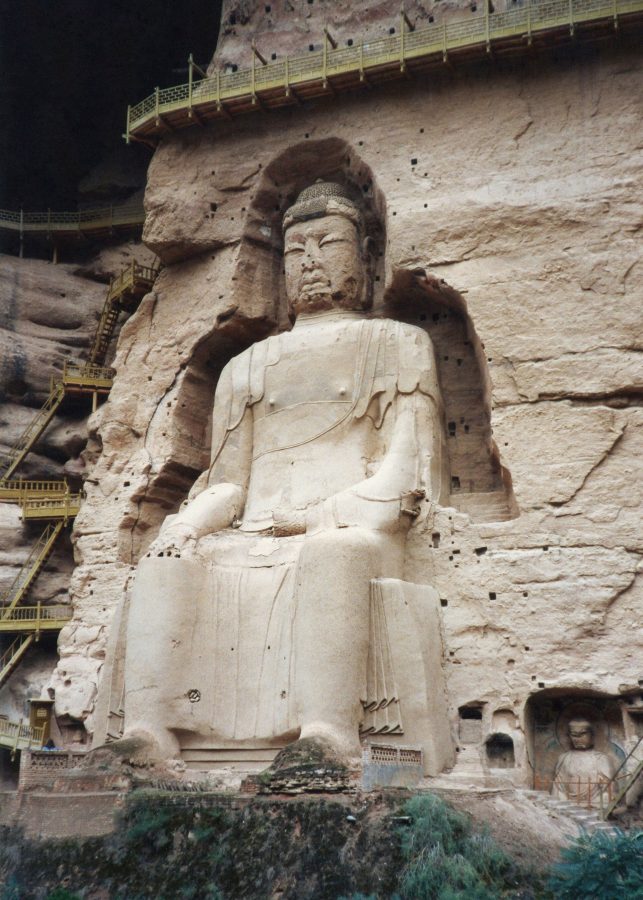
Photo: Bernard Gagnon, CC BY-SA 4.0
- Type
- Ancient Temple
- Religion
- Mahayana Buddhism
- Area
- 1.3 km²
- Founded
- 420 (earliest dated inscription 420 AD)
- Height
- 27 m
- Dress code
- No dress code; wear sturdy shoes for the steep wooden walkways.
- UNESCO
- Silk Roads: the Routes Network of Chang'an-Tianshan Corridor
- Tickets
- 2 tickets and tours
Bingling Temple Grottoes tickets and tours: which one to book
Bingling Temple is a site of Buddhist cave shrines in a canyon on the Yellow River, and the entry ticket is bought at the site office on arrival. It covers the main cliff of caves and the walkway to the giant Buddha. Some of the most important caves high on the cliff, including the oldest dated one, require a separate and considerably more expensive supplementary ticket, which is sold in limited numbers and can be booked through the site office on the day. The real cost is reaching the place. The grottoes are about 100 km south-west of Lanzhou, and the classic approach is by boat across the Liujiaxia Reservoir from a pier near the dam, a crossing of about an hour by speedboat.
Boat tickets are sold at the pier, and the price depends on the type of boat and how many passengers share it. For this reason most foreign visitors come on a day trip from Lanzhou, which is what is offered online. These tours usually include a private car with driver, the drive to Liujiaxia, a stop at the great bridge over the Yellow River, and the boat; some add a detour to colourful striped sandstone hills on the way. The site ticket, the supplementary cave ticket and lunch are often extra. For a site this remote, a pre-arranged car and boat take the uncertainty out of a long day and are the sensible choice.
2 tickets and tours for Bingling Temple Grottoes
Live dates and prices from GetYourGuide. Free cancellation on most tickets.
Visiting Bingling Temple Grottoes: what to see and how to behave
The caves line the northern wall of a narrow canyon carved by a side stream of the Yellow River, under jagged red sandstone peaks. Work began in about 420, under the Western Qin, and continued for more than a thousand years through the Northern Wei, Sui, Tang and later dynasties, so the site reads like a history of Chinese Buddhist sculpture. About 183 caves and niches survive, with nearly 700 stone statues, more than 80 clay figures and areas of wall painting, stretching along roughly 200 m of cliff. Since 2014 it has been part of the UNESCO listing for the Silk Roads. From the boat landing a path runs along the foot of the cliff past niche after niche of seated Buddhas and attendant bodhisattvas, many weathered, some damaged by earthquakes and looters.
Notice how the slender figures of the early period give way to the fuller, more relaxed Tang style. The path ends at the most striking sight: a seated Maitreya Buddha about 27 m high, carved into the rock in the Tang dynasty, its lower half shaped from stone and its upper body finished in clay. Above, wooden stairways climb to the higher caves, including Cave 169, a natural cavern that holds some of the oldest dated Buddhist inscriptions and paintings in China. Photography inside the caves is restricted; follow the staff's directions and never touch the paintings or statues. The stairways are steep and exposed, so take care. Allow about two and a half hours by road from Lanzhou to Liujiaxia, then the boat ride to the canyon.
Bingling Temple Grottoes: opening hours, ceremonies and the best time to go
The site is usually open from morning to late afternoon, but access depends on the boats across the reservoir, which run mainly from spring to autumn; in winter services are reduced or suspended. Check the current situation in Lanzhou before setting out, and aim to leave the city early, as the last boats return in the afternoon. Late spring and early autumn, from May to June and September to October, are the most comfortable months, with mild temperatures and clear light on the red cliffs.
July and August are hot and bring occasional heavy showers, and Chinese holidays in early May and early October bring crowds to the boats. Midday sun makes the canyon very bright and hot, so a morning crossing is best. Allow a full day from Lanzhou, with about two hours at the caves. Combine the trip with the Liujiaxia dam and bridge, or continue south through Linxia to the Tibetan monastery town of Xiahe.
More tours and activities in Lanzhou
Before you go
Can I book a temple tour or ticket in Bingling Temple Grottoes online?
Yes. GetYourGuide lists 2 tickets and tours for Bingling Temple Grottoes, with live dates and prices and free cancellation on most of them.
When is Bingling Temple Grottoes open?
The site is usually open from morning to late afternoon, but access depends on the boats across the reservoir, which run mainly from spring to autumn; in winter services are reduced or suspended.
How many days do you need in Bingling Temple Grottoes?
Allow about two and a half hours by road from Lanzhou to Liujiaxia, then the boat ride to the canyon.
What should I wear to visit Bingling Temple Grottoes?
No dress code; wear sturdy shoes for the steep wooden walkways.
How big is Bingling Temple Grottoes?
Bingling Temple Grottoes covers 1.3 km².
When was Bingling Temple Grottoes founded?
Bingling Temple Grottoes was established in 420.
Where is Bingling Temple Grottoes?
Bingling Temple Grottoes is in Lanzhou, China. The map on this page shows the exact spot.
How to visit an ancient temple: tickets, heat and rules — Tickets, hours, heat, guides, climbing rules and conservation at the ancient temples of Egypt, Greece, Italy, Angkor and the Maya world.