Hindu Temple · Singaraja · Indonesia
Pura Beji Sangsit
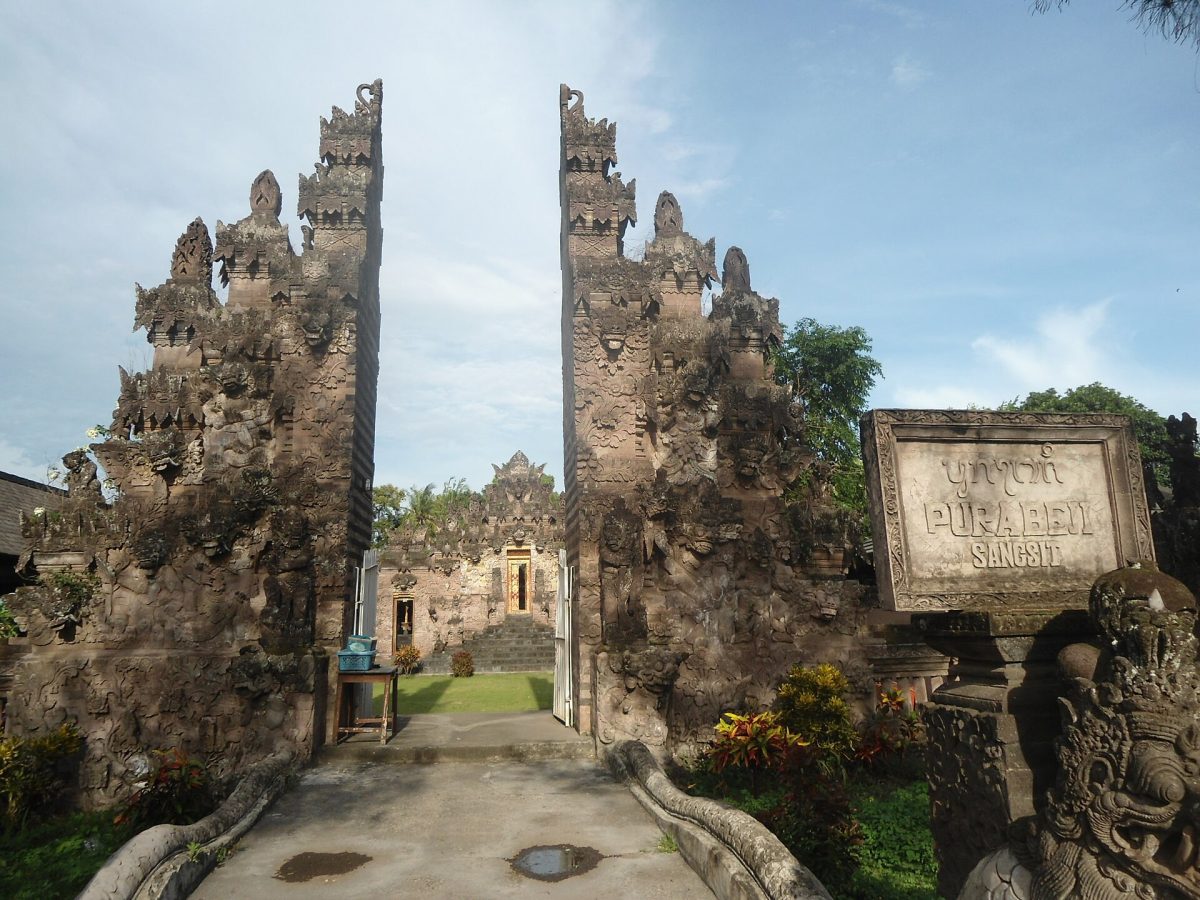
Photo: DayakSibiriak, CC BY-SA 4.0
- Type
- Hindu Temple
- Religion
- Balinese Hinduism
- Founded
- 1400 (15th century)
- Entry
- Small donation; sarong lent
- Dress code
- Sarong and sash required for everyone; both are lent at the entrance.
- Tickets
- 1 ticket or tour
Pura Beji Sangsit tickets and tours: which one to book
Pura Beji is a village temple on the north coast of Bali, and there is no ticket for it sold online. Visitors pay a small donation or fee at the gate, where a temple attendant lends a sarong and sash, and are then free to walk through the courtyards. A local guide sometimes offers to explain the carvings; agree the fee first if you accept. The temple stands in the village of Sangsit, about 8 km east of Singaraja and roughly 20 km from the resort strip of Lovina, so most people arrive by hired car with a driver or by scooter. The tour sold online that genuinely includes it pairs an early-morning boat trip to watch dolphins off Lovina with a drive along the coast to the temple, with hotel pickup and the boat included.
Many private drivers also stop here on a day spent exploring north Bali, combining it with other carved temples nearby, the waterfalls in the hills above Singaraja or the hot springs at Banjar. Note that Beji is a common Balinese word for a sacred spring or bathing place, and several unrelated sites in south and central Bali share it, including a waterfall used for purification rituals near Ubud and a canyon near Guwang. Products built around those places do not visit this temple, which is a three-hour drive away from them.
Tickets and tours for Pura Beji Sangsit
Live dates and prices from GetYourGuide. Free cancellation on most tickets.
Visiting Pura Beji Sangsit: what to see and how to behave
Pura Beji dates from the 15th century, when priests from the Hindu Majapahit kingdom of Java were arriving in Bali, and it is dedicated to Dewi Sri, the goddess of rice and fertility. It is a subak temple, the spiritual centre of the irrigation co-operative that shares water among the surrounding paddy fields, and local farmers still bring offerings here to ask for a good harvest. Its name points to a sacred spring, and traces of an ancient pond have been found on its eastern side. The temple is the finest example of the exuberant north Balinese style, in which almost every surface is covered in carving. The soft white sandstone of the walls, gates and shrine bases is worked into twisting vines, flowers and leaves, with demons, guardian serpents and fierce faces watching from the staircases.
Like all Balinese temples it is laid out in three courtyards of rising sanctity. In the outer one stands the tower for the wooden slit drum, notably plainer than the rest and probably added later. A split gate, crowned with protective demon heads, leads to the middle courtyard with its open pavilions, and a heavily carved roofed portal opens to the inner sanctum and its shrines. Visitors wear the sarong and sash, stay out of shrines where offerings are being made, never climb on walls or step over offerings on the ground, and keep a respectful distance during prayers. Women who are menstruating are asked not to enter, as at all Balinese temples.
Pura Beji Sangsit: opening hours, ceremonies and the best time to go
The temple is generally open during daylight hours, from morning until late afternoon; there are no fixed visiting times published, so arrive well before dusk. Mid-morning gives good light on the pale carved stone, and the north coast is quiet compared with the temples of south Bali, so crowds are rarely a problem. The dry season from April to October brings the clearest weather in north Bali, though the rainy months are still workable, with showers mostly in the afternoon.
The temple's anniversary festival, the odalan, follows the Balinese 210-day calendar, and on such days, as well as during the great festivals of Galungan and Kuningan, the courtyards fill with villagers in ceremonial dress bringing offerings. Visitors may watch respectfully from the sides, and it is the most rewarding time to come. Allow about 45 minutes to an hour. Pura Beji combines well with a dolphin-watching morning at Lovina, the nearby temples of Jagaraga and Kubutambahan, the old port quarter of Singaraja, or the waterfalls at Gitgit on the road south.
More tours and activities in Singaraja
Before you go
Can I book a temple tour or ticket in Pura Beji Sangsit online?
Yes. GetYourGuide lists one ticket or tour for Pura Beji Sangsit, with live dates and prices and free cancellation on most of them.
How many days do you need in Pura Beji Sangsit?
Allow about 45 minutes to an hour.
How much is the entrance fee for Pura Beji Sangsit?
Entry to Pura Beji Sangsit: Small donation; sarong lent
What should I wear to visit Pura Beji Sangsit?
Sarong and sash required for everyone; both are lent at the entrance.
When was Pura Beji Sangsit founded?
Pura Beji Sangsit was established in 1400.
Where is Pura Beji Sangsit?
Pura Beji Sangsit is in Singaraja, Indonesia. The map on this page shows the exact spot.
How to visit a Hindu temple: dress, shoes and access — What to wear, what to leave at the gate and where non-Hindus may go in Hindu temples in India, Nepal, Bali and South-East Asia.