Buddhist Temple · Sedona · United States
Amitabha Stupa and Peace Park
- Type
- Buddhist Temple
- Where
- Sedona, United States
- Religion
- Tibetan Buddhism
- Entry
- Free; donations welcome
- Dress code
- No dress code; walk quietly and do not climb on the stupas or statues.
- Tickets
- Tours that include it
Amitabha Stupa and Peace Park tickets and tours: which one to book
Nothing needs to be booked for the Amitabha Stupa and Peace Park. The grounds belong to a Tibetan Buddhist community, entry is free, and there is no ticket office or timed slot; a donation box near the stupa helps pay for upkeep. No ticket or tour for the stupa alone is sold online, and none is needed. Most visitors drive themselves. The park sits on the edge of West Sedona, below the red cliffs of Thunder Mountain, and is reached along residential streets from the main road through town, with a small parking area at the trailhead. From there it is a short walk on a dirt path through juniper and pinyon to the main stupa.
If you do not have a car, a taxi or ride-hail from Uptown Sedona takes about ten minutes. The stupa also features on some of the spiritual and vortex tours sold in Sedona, which pair it with places such as the Chapel of the Holy Cross, Airport Mesa or Bell Rock; these usually include transport in a jeep or van and a local guide, while meditation or energy sessions cost extra. They are worth it mainly if you want the wider Sedona circuit in one outing. The page lists any GetYourGuide tours that pass the park. For the stupa itself, simply go independently at a quiet hour and give yourself time to sit.
Tickets and tours that include Amitabha Stupa and Peace Park
Live prices from GetYourGuide for tickets and tours that include this temple. Free cancellation on most of them.
Visiting Amitabha Stupa and Peace Park: what to see and how to behave
The centrepiece is the Amitabha Stupa, a white, gold-topped monument about 11 m high, built in the Tibetan style and consecrated in the early 2000s by the Kunzang Palyul Choling community, a Nyingma Buddhist group whose teacher founded the park. A stupa is a reliquary and an object of devotion rather than a building to enter: this one was filled with relics, sacred texts, prayers and other offerings during its construction, and is dedicated to Amitabha, the Buddha of Boundless Light, associated with compassion and a peaceful death. A loop path leads round the stupa, and the custom is to walk it clockwise, keeping the monument on your right, often while reciting a prayer or simply walking slowly.
Prayer flags hang from the trees, and people leave small offerings on the ledges. Further along the trails are a smaller stupa, a large standing Buddha statue and benches placed for meditation, with wide views of the red rock formations around Sedona. Treat the place as a shrine. Keep voices low, do not climb on the base, leave offerings where they are, and keep dogs on a lead and away from the monuments. Photography is generally fine as long as you do not disturb anyone meditating. The paths are rough and uneven, so wear sensible shoes and carry water in summer; there is little shade. Toilets and facilities are minimal.
Amitabha Stupa and Peace Park: opening hours, ceremonies and the best time to go
The park is generally open every day from early morning until dusk; there are no formal hours posted at a gate, but it is not a place to visit after dark. Early morning is the best time: the air is cool, the light on the red rocks is soft, and you are likely to have the path round the stupa almost to yourself before day visitors arrive from Phoenix and Flagstaff. The hour before sunset is also beautiful. Spring and autumn are the most pleasant seasons in Sedona.
Summer afternoons are hot and bring thunderstorms in July and August, and winter mornings can be frosty, with occasional snow on the red rocks. The community holds occasional prayer gatherings and teachings at the site, which visitors may join respectfully. Allow about an hour, longer if you want to sit and meditate. Combine it with a hike in West Sedona, the Chapel of the Holy Cross, the view from Airport Mesa or a drive up Oak Creek Canyon.
Before you go
Can I book a ticket or tour for Amitabha Stupa and Peace Park online?
Yes. GetYourGuide sells tickets and guided tours whose route includes Amitabha Stupa and Peace Park; live prices are shown on this page.
How many days do you need in Amitabha Stupa and Peace Park?
Allow about an hour, longer if you want to sit and meditate.
When is the best time to visit Amitabha Stupa and Peace Park?
Early morning is the best time: the air is cool, the light on the red rocks is soft, and you are likely to have the path round the stupa almost to yourself before day visitors arrive from Phoenix and Flagstaff.
How much is the entrance fee for Amitabha Stupa and Peace Park?
Entry to Amitabha Stupa and Peace Park: Free; donations welcome
What should I wear to visit Amitabha Stupa and Peace Park?
No dress code; walk quietly and do not climb on the stupas or statues.
Where is Amitabha Stupa and Peace Park?
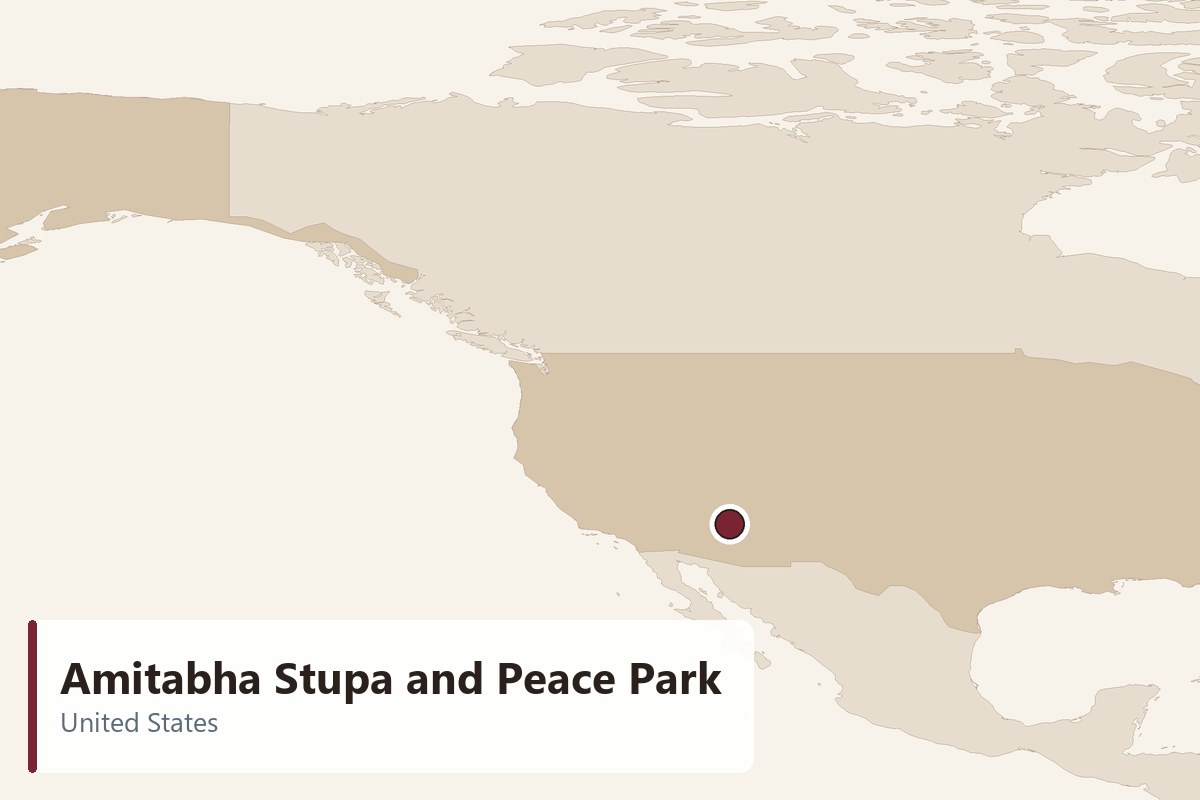
Amitabha Stupa and Peace Park is in Sedona, United States. The map on this page shows the exact spot.
How to visit a Buddhist temple: shoes, dress and manners — Shoes, dress, feet, photos and offerings in Buddhist temples, from the wats of Thailand and Sri Lanka to the Zen temples of Japan.