Ancient Temple · Edfu · Egypt
Temple of Horus at Edfu
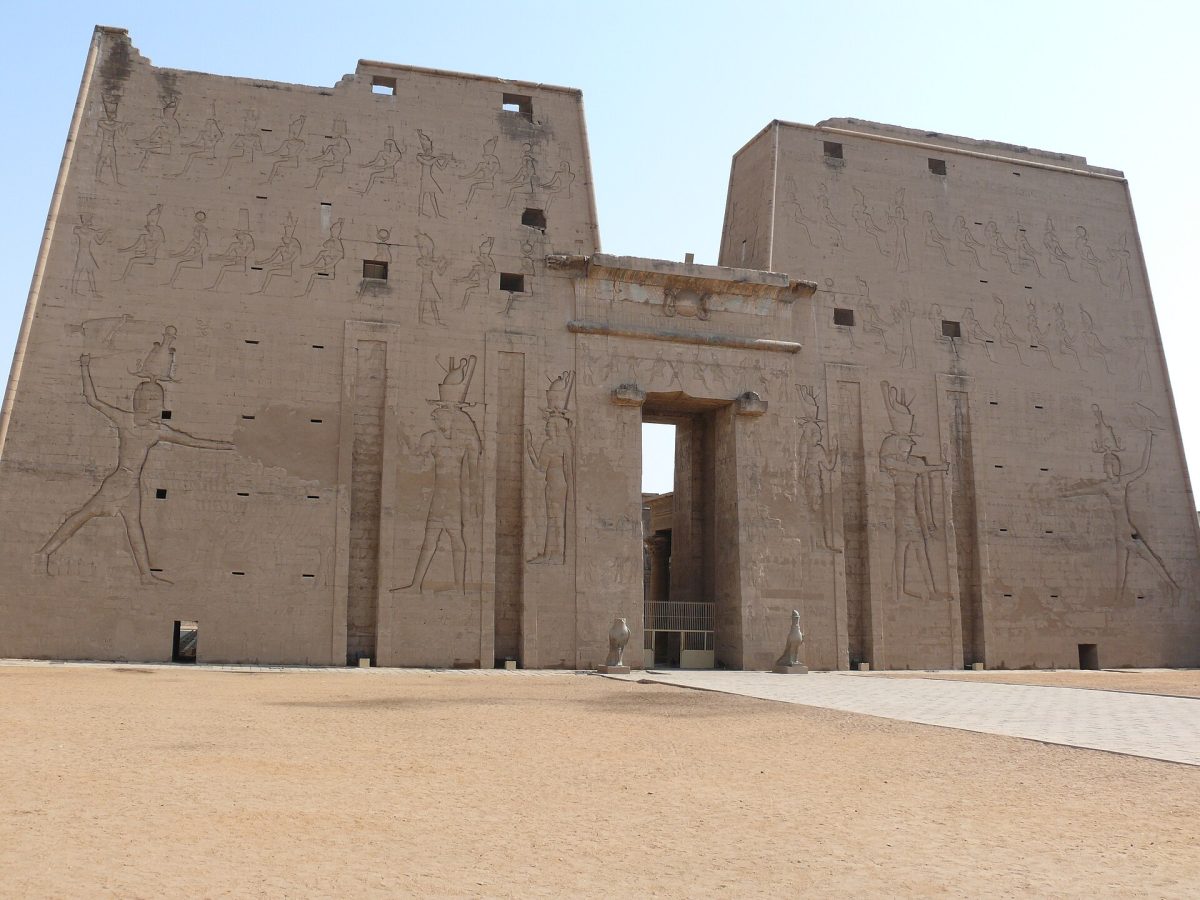
Photo: Ad Meskens, CC BY-SA 3.0
- Type
- Ancient Temple
- Religion
- Ancient Egyptian religion
- Founded
- 237 BC (built 237-57 BC)
- Height
- 36 m
- Entry
- Paid ticket at the gate
- Dress code
- No formal dress code; light clothes covering shoulders and knees are best.
- Tickets
- 8 tickets and tours
Temple of Horus at Edfu tickets and tours: which one to book
The ticket for Edfu is bought at the visitor centre at the entrance, and the price for foreign visitors is set by the antiquities authorities and revised from time to time. Few travellers buy it themselves, though, because Edfu is usually reached as part of a Nile cruise or a long road tour between Luxor and Aswan. The town lies on the west bank of the Nile about 110 km south of Luxor and roughly the same distance north of Aswan, so it fits naturally into journeys between the two. Nile cruises stop here and include a guided visit, with a ride from the riverbank to the temple by horse-drawn carriage.
On land, there are private day tours from Luxor that cover Edfu and Kom Ombo, sometimes ending in Aswan so the trip doubles as a transfer; similar days run from Aswan in the other direction; and longer private tours link Edfu with Kom Ombo, Aswan and even Abu Simbel. Slower options are one- or two-night felucca trips from Aswan that sail north towards Kom Ombo, with the last part of the journey by road via Edfu. Private tours generally include the car, an Egyptologist guide and sometimes lunch, while entrance fees vary by operator. If you are travelling overland between Luxor and Aswan, the day with both temples on the way is the most efficient choice, and the road is easier than repeated train connections.
8 tickets and tours for Temple of Horus at Edfu
Live dates and prices from GetYourGuide. Free cancellation on most tickets.
Visiting Temple of Horus at Edfu: what to see and how to behave
Edfu is the best preserved temple in Egypt, and that is its great reward: here you can walk through a complete sanctuary of the gods with its roofs, gateway and enclosure walls still in place. It was dedicated to the falcon god Horus and built under the Ptolemies, begun in 237 BC and finished in 57 BC, on the site of older temples. Its survival is due partly to its long burial under sand and silt, over which a village grew, until the French Egyptologist Auguste Mariette cleared it from 1860. The front is a towering pylon, about 36 m high, carved with the king smiting his enemies before Horus. Pass the two granite falcons at the gateway into a great colonnaded courtyard, then through the two hypostyle halls, growing darker and lower as you approach the sanctuary.
At its heart stands a polished granite shrine from the reign of Nectanebo II, older than the temple itself, with a replica of the sacred barque in front of it. Around the sanctuary runs a ring of small chapels. The outer walls are covered with reliefs and texts, including the long sacred drama of the struggle between Horus and his rival Seth, shown as a small hippopotamus being harpooned, and the record of the temple's own construction. Look also for the stairway that led priests up to the roof and for the Nilometer that measured the river. Cruise passengers are usually taken by carriage from the landing; ask the driver to wait, and agree the fare first. The site has little shade, so take water and a hat.
Temple of Horus at Edfu: opening hours, ceremonies and the best time to go
The temple is open daily from early morning into the evening. Cruise boats often bring their passengers very early, before breakfast, so the quietest hour can be mid-morning once they have left, or the late afternoon. Overland tours from Luxor usually arrive in the middle of the day, when it is hottest. The best months are October to April, with comfortable days and cool nights on the river; December and January are the busiest. In summer, temperatures often exceed 40 degrees, and only the early morning is pleasant for walking around the outer passage.
In ancient times the great festival here was the annual visit of the goddess Hathor of Dendera, whose statue travelled upriver to meet Horus; the reliefs of this festival are on the walls of the courtyard. Allow about an hour and a half to see the temple properly, including the outer passage between the temple and the enclosure wall. Edfu combines with Kom Ombo, an hour to the south, and with the smaller temple of Esna on the way to Luxor.
More tours and activities in Edfu
Before you go
Can I book a temple tour or ticket in Temple of Horus at Edfu online?
Yes. GetYourGuide lists 8 tickets and tours for Temple of Horus at Edfu, with live dates and prices and free cancellation on most of them.
When is Temple of Horus at Edfu open?
The temple is open daily from early morning into the evening.
How many days do you need in Temple of Horus at Edfu?
Allow about an hour and a half to see the temple properly, including the outer passage between the temple and the enclosure wall.
When is the best time to visit Temple of Horus at Edfu?
Cruise boats often bring their passengers very early, before breakfast, so the quietest hour can be mid-morning once they have left, or the late afternoon.
How much is the entrance fee for Temple of Horus at Edfu?
Entry to Temple of Horus at Edfu: Paid ticket at the gate
What should I wear to visit Temple of Horus at Edfu?
No formal dress code; light clothes covering shoulders and knees are best.
When was Temple of Horus at Edfu founded?
Temple of Horus at Edfu was established in 237 BC.
Where is Temple of Horus at Edfu?
Temple of Horus at Edfu is in Edfu, Egypt. The map on this page shows the exact spot.
How to visit an ancient temple: tickets, heat and rules — Tickets, hours, heat, guides, climbing rules and conservation at the ancient temples of Egypt, Greece, Italy, Angkor and the Maya world.