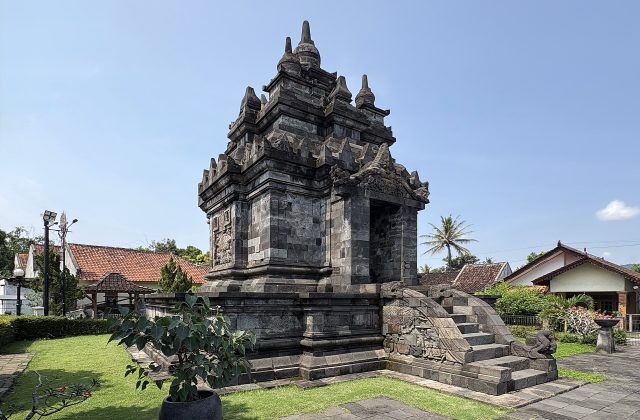
Mendut Temple
70 km away
Mendut has its own small ticket office and the entry fee is modest, paid on the day;
2 tickets & tours
Chinese Temple · Semarang · Indonesia
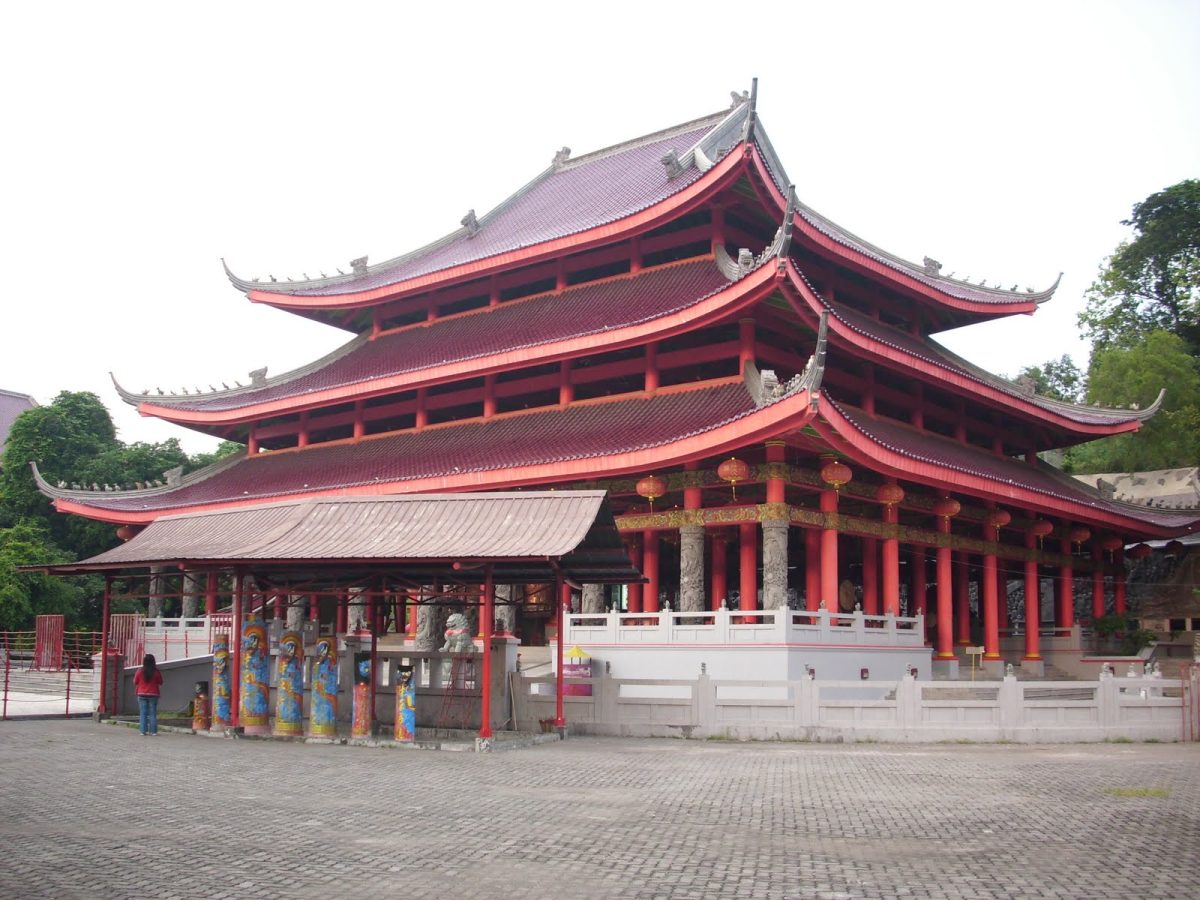
Photo: Yunita Lestari, CC BY-SA 3.0
No ticket for Sam Poo Kong is sold online. Entry is paid at the gate, with a ticket that covers the gardens, courtyards and the outside of the temples. The main shrine in front of the cave is reserved for worshippers, and visitors who want to go inside the inner prayer area pay a further fee there; many are content to watch from the courtyard. Inside the grounds you can also rent Chinese costumes for photographs, pay for incense or buy fortune sticks, all extras rather than requirements. The temple lies in Simongan, on the western side of Semarang, about 5 km from the city centre.
Most visitors take a taxi or a ride-hailing car from their hotel or from the old town, and the trip is short outside the rush hour. City tours of Semarang, typically half a day with a driver and guide, often pair the temple with the Dutch colonial Kota Lama, the Lawang Sewu building and the Chinatown temples. Check whether such a tour includes the gate ticket and whether it allows time to go inside the inner area. Travellers coming from Yogyakarta sometimes add Semarang on a long day or an overnight trip by road or rail, but the city repays a stay of its own. The page lists any GetYourGuide tours whose route passes the temple.
Live prices from GetYourGuide for tickets and tours that include this temple. Free cancellation on most of them.
Sam Poo Kong commemorates the Ming admiral Zheng He, also known as Sam Po, a Chinese Muslim who led great fleets across the Indian Ocean in the early 15th century. Tradition holds that he landed here, up the Garang river, some time between 1400 and 1416, prayed in a cave in the rocky hillside and set up a small shrine before sailing on. One of his officers, Wang Jinghong, stayed behind with some of the crew. The original cave collapsed in a landslide in 1704, and a new cave was dug beside it in the 1720s. Today the complex covers about 3.2 hectares and is shared by Chinese and Javanese worshippers, Confucian, Buddhist, Taoist and Muslim alike. There are five temples in a style that mixes red-and-gold Chinese roofs with Javanese pavilion forms.
Walking from the large gate at the north end, you pass the shrine of the earth god, then the grave shrine of Wang Jinghong, much visited by people seeking success in business. The main temple stands in front of the cave, which holds an altar, a small statue of Zheng He and a well said never to run dry. Further south are shrines to the admiral's anchor and to a weapon he carried, and a bronze statue of Zheng He looks over the open plaza. The complex was largely rebuilt and enlarged between 2002 and 2005, so most of what you see is new, though the setting and the devotion are old. Stay out of the inner areas unless you have the ticket for them, keep quiet near people praying, and do not touch the offerings.
The complex is open every day from morning until evening; the gardens are lit after dark, and the red buildings look their best in the late afternoon and around sunset. Check locally for the current closing hour. Arrive early to avoid the heat and the weekend crowds of domestic visitors. Semarang is hot and humid all year;
the dry season, roughly from May to September, brings fewer downpours than the wet months from November to March. The most spectacular day is the annual festival marking Zheng He's arrival, held in the sixth month of the Chinese lunar calendar, usually in summer, when a procession carries his image through the streets from the Tay Kak Sie temple in Chinatown to Sam Poo Kong. Chinese New Year and Cap Go Meh, fifteen days later, also bring lanterns, lion dances and big crowds. Allow one to two hours. Combine the visit with the old town around the Blenduk church, the Lawang Sewu building and the evening food market in Chinatown.
70 km away
Mendut has its own small ticket office and the entry fee is modest, paid on the day;
2 tickets & tours
71 km away
Candi Pawon is a small Buddhist shrine standing in a village garden between Mendut and Borobudur, about 40 km…
1 ticket or tour
71 km away
Visiting Borobudur now involves two decisions rather than one.
370 tickets & tours
Yes. GetYourGuide sells tickets and guided tours whose route includes Sam Poo Kong (Gedung Batu Temple); live prices are shown on this page.
The complex is open every day from morning until evening; the gardens are lit after dark, and the red buildings look their best in the late afternoon and around sunset.
Allow one to two hours.
Entry to Sam Poo Kong (Gedung Batu Temple): Paid ticket at the gate
Modest clothing; shoulders and knees covered if you enter the prayer halls.
Sam Poo Kong (Gedung Batu Temple) covers 3.2 ha.
Sam Poo Kong (Gedung Batu Temple) was established in 1405.
Sam Poo Kong (Gedung Batu Temple) is in Semarang, Indonesia. The map on this page shows the exact spot.
How to visit a Chinese temple: incense, gods and manners — How to behave in Taoist, Confucian and folk temples in China, Taiwan, Hong Kong and South-East Asia: incense, thresholds and fortunes.