Sacred Site · Amritsar · India
Golden Temple (Harmandir Sahib)
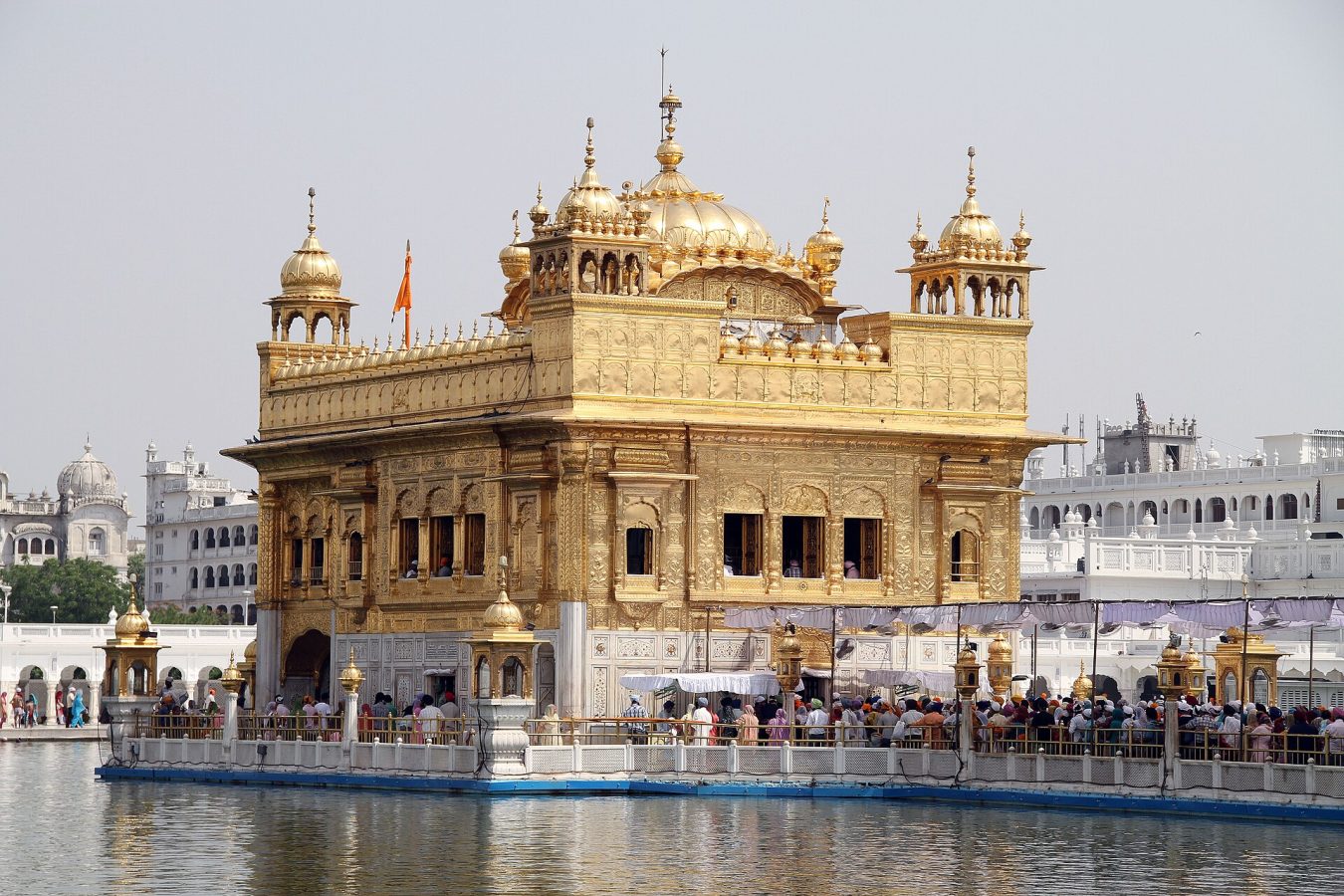
Photo: This picture has been taken by Oleg Yunakov. Contact e-mail:, CC BY-SA 3.0
- Type
- Sacred Site
- Religion
- Sikhism
- Founded
- 1581 (begun 1581, completed 1589; rebuilt 1764)
- Entry
- Free
- Dress code
- Everyone covers their head; shoes and socks off; wash feet before entering; no tobacco or alcohol.
- Tickets
- 15 tickets and tours
- Website
- sgpc.net
Golden Temple (Harmandir Sahib) tickets and tours: which one to book
The Golden Temple is open to anyone of any faith, and there is no ticket, no queue to book and no fee: entry, the shoe deposit, the loan of a head covering and the meal in the community kitchen are all free. You can wander in at any hour, and volunteers at the information office near the main entrance will explain the customs. Most travellers simply walk or take a cycle-rickshaw from their hotel in the old city. Paid products are about context and logistics rather than access. Guided walks of the temple, including evening walks to see it lit up and tours led by a Sikh guide who takes you behind the scenes of the kitchen, explain what you are seeing and who the people around you are.
Half-day tours usually add the Jallianwala Bagh memorial next door and other historic sites in the city, and the most popular combination adds the sunset flag-lowering ceremony at the Attari-Wagah border with Pakistan, about 30 km to the west, with a car and driver. From Delhi, which is roughly 450 km away, there are two- and three-day packages that include train or road transport, hotels, the temple at both day and night, and the border ceremony, and some overnight versions that travel there and back with a single night in Amritsar. Since the temple itself is free, compare these on transport, hotel and the quality of the guide.
15 tickets and tours for Golden Temple (Harmandir Sahib)
Live dates and prices from GetYourGuide. Free cancellation on most tickets.
Visiting Golden Temple (Harmandir Sahib): what to see and how to behave
The temple is the holiest shrine of Sikhism and stands at the centre of a large rectangle of white marble buildings around the Amrit Sarovar, the sacred pool completed by the fourth Guru, Ram Das, in 1577. His successor, Guru Arjan, built the shrine in the middle of the water from 1589 and installed the Sikh scripture there in 1604. Destroyed several times by Afghan and Mughal armies, it was rebuilt in marble and copper by Maharaja Ranjit Singh, who had the upper storeys covered in gilded copper in 1830, giving the temple its English name. The complex was badly damaged again during the army operation of 1984 and restored afterwards. Enter by one of the four gateways, which face the four directions as a sign of openness, and walk down the steps to the marble walkway around the pool, moving clockwise.
A causeway leads out to the shrine itself, where the scripture is read and hymns are sung all day to music. Look for the Akal Takht facing the causeway, the seat of Sikh religious authority, and visit the langar, the community kitchen, where volunteers serve a simple vegetarian meal to tens of thousands of people every day, everyone seated together on the floor. Visitors are welcome to help wash plates or roll chapatis. Sit quietly by the water if you wish, but do not dip your feet in it or turn your back on the shrine for photographs. Photography is not allowed inside the sanctum. The temple lies in the heart of the old city, a short walk from the Heritage Street and about 2 km from the railway station.
Golden Temple (Harmandir Sahib): opening hours, ceremonies and the best time to go
The complex is open around the clock. Each night, usually around 10 pm, the scripture is carried in a palanquin procession from the shrine to the Akal Takht to rest, and before dawn it is brought back in a second ceremony; both are moving to watch, and the shrine itself is closed for cleaning in the hours between. The temple is beautiful at any hour, but come twice if you can: in the early morning, when the marble is cool and pilgrims bathe in the pool, and after dark, when the gold glows in the water.
Midday in May and June is brutally hot on the bare marble. The best season is from October to March, though winter mornings can be foggy. The great festivals are Vaisakhi in mid April, Bandi Chhor Divas at the time of Diwali, when the whole complex is lit with lamps and fireworks, and Guru Nanak's birthday in November; all bring huge crowds. Allow at least two to three hours, including the langar. Combine the visit with Jallianwala Bagh and the Partition Museum nearby, and with the border ceremony in the late afternoon.
More tours and activities in Amritsar
Before you go
Can I book a temple tour or ticket in Golden Temple (Harmandir Sahib) online?
Yes. GetYourGuide lists 15 tickets and tours for Golden Temple (Harmandir Sahib), with live dates and prices and free cancellation on most of them.
When is Golden Temple (Harmandir Sahib) open?
The Golden Temple is open to anyone of any faith, and there is no ticket, no queue to book and no fee: entry, the shoe deposit, the loan of a head covering and the meal in the community kitchen are all free.
How many days do you need in Golden Temple (Harmandir Sahib)?
Allow at least two to three hours, including the langar.
When is the best time to visit Golden Temple (Harmandir Sahib)?
The temple is beautiful at any hour, but come twice if you can: in the early morning, when the marble is cool and pilgrims bathe in the pool, and after dark, when the gold glows in the water.
Can I take photos inside Golden Temple (Harmandir Sahib)?
Photography is not allowed inside the sanctum.
How much is the entrance fee for Golden Temple (Harmandir Sahib)?
Entry to Golden Temple (Harmandir Sahib): Free
What should I wear to visit Golden Temple (Harmandir Sahib)?
Everyone covers their head; shoes and socks off; wash feet before entering; no tobacco or alcohol.
When was Golden Temple (Harmandir Sahib) founded?
Golden Temple (Harmandir Sahib) was established in 1581.
Where is Golden Temple (Harmandir Sahib)?
Golden Temple (Harmandir Sahib) is in Amritsar, India. The map on this page shows the exact spot.
How to visit a gurdwara: head cover, feet and langar — How to visit a Sikh gurdwara, with notes on Jain temples, Baha'i houses of worship and Cao Dai temples: dress, timing and conduct.