Phnom Chisor
143 km away
Phnom Chisor has no ticket to book online. Foreign visitors pay a small fee at the foot of the hill or at the top, and…
2 tickets & tours
Chinese Temple · Phu Quoc · Vietnam

Photo: Bùi Thụy Đào Nguyên, CC BY-SA 3.0
There is nothing to book for Dinh Cau. The shrine stands on a rocky outcrop at the mouth of the Duong Dong River in Phu Quoc's main town, it is open to anyone who climbs the steps, and entry is free. Incense and small offerings are sold nearby if you would like to light a stick at the altar, and there is a donation box inside, but no ticket is checked at any point. No tour sells a visit to this shrine on its own. Most travellers arrive on foot or by motorbike taxi from Duong Dong town centre, since the rock lies only a few minutes' walk from the busy streets around the town's night market.
From the resorts along Long Beach, a taxi or ride-hailing car takes ten to twenty minutes depending on where you stay. The shrine is also a regular stop on half-day island sightseeing tours that circle the town and the north or south of the island. Those trips typically combine it with a pepper farm, a fish sauce factory, a pearl farm or the old prison, and include transport and a guide; the shrine itself costs nothing. Evening food tours that wander the night market often end here for the sunset view. The page lists any GetYourGuide tours whose route passes the shrine, but the place is small and easy to see independently, ideally at the end of the afternoon.
Live prices from GetYourGuide for tickets and tours that include this temple. Free cancellation on most of them.
Dinh Cau is less a grand temple than a small shrine and lookout perched on a pile of dark boulders where the Duong Dong River meets the sea. Local fishermen built it in the 1930s to honour the spirits believed to protect people who work on the water, and for generations crews have stopped here to pray for calm seas and good catches before heading out. The beacon on top of the rock has also served as a simple landmark for boats entering the river mouth. From the waterfront a short flight of stone steps leads up through a gate to a compact shrine with a red and gold altar, incense burners and offerings of fruit and flowers. Beside it a small tower stands on the highest point of the rock.
The real draw is the setting: from the top you look out over the Gulf of Thailand, along the beaches that curve away to the south, and back over the river, where blue-painted fishing boats crowd the harbour and unload in the morning. Although it receives many visitors, the shrine is still in daily use, so keep your voice down near the altar, take off your hat, and avoid stepping over offerings or posing for photographs in front of people who are praying. Clothing need not be formal, but beachwear is out of place inside the shrine itself. The rocks are uneven and can be slippery after rain or spray, so wear shoes with some grip. The night market and the seafood restaurants of Duong Dong begin almost at the foot of the steps.
The shrine is accessible from early morning until evening, and there are no fixed hours published for it. Sunset is the favourite time: the rock faces west across the sea, and in the dry season the sun drops straight into the water behind the fishing boats. Arrive at least half an hour early to find a spot on the rocks, as the viewpoint gets crowded. Early morning is quieter and the harbour is busy with boats returning. The best season on Phu Quoc runs from November to April, when skies are clear and the sea is calm.
From May to October the southwest monsoon brings rain, rough water and hazy sunsets. Local fishing communities hold offerings and celebrations here around the lunar new year and during the island's sea festivals, when the shrine fills with worshippers and incense. Allow 20 to 30 minutes for the shrine itself, and combine it with dinner at the Duong Dong night market or a stroll along the riverside harbour.
143 km away
Phnom Chisor has no ticket to book online. Foreign visitors pay a small fee at the foot of the hill or at the top, and…
2 tickets & tours
184 km away
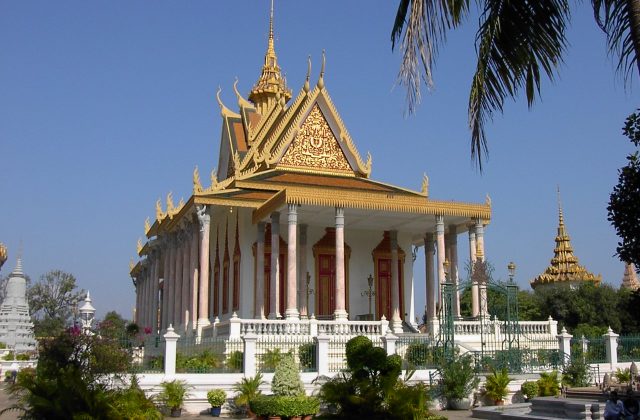
The Silver Pagoda stands inside the walls of the Royal Palace in Phnom Penh, and the only way in is with the palace…
2 tickets & tours
184 km away
No ticket for Wat Phnom alone is sold online, and none is needed: foreigners pay a small fee at a booth at the foot of…
23 tickets & tours
Yes. GetYourGuide sells tickets and guided tours whose route includes Dinh Cau Shrine; live prices are shown on this page.
The shrine stands on a rocky outcrop at the mouth of the Duong Dong River in Phu Quoc's main town, it is open to anyone who climbs the steps, and entry is free.
Allow 20 to 30 minutes for the shrine itself, and combine it with dinner at the Duong Dong night market or a stroll along the riverside harbour.
Early morning is quieter and the harbour is busy with boats returning.
Entry to Dinh Cau Shrine: Free
Modest clothing is respectful inside the shrine; remove hats at the altar.
Dinh Cau Shrine is in Phu Quoc, Vietnam. The map on this page shows the exact spot.
How to visit a Chinese temple: incense, gods and manners — How to behave in Taoist, Confucian and folk temples in China, Taiwan, Hong Kong and South-East Asia: incense, thresholds and fortunes.