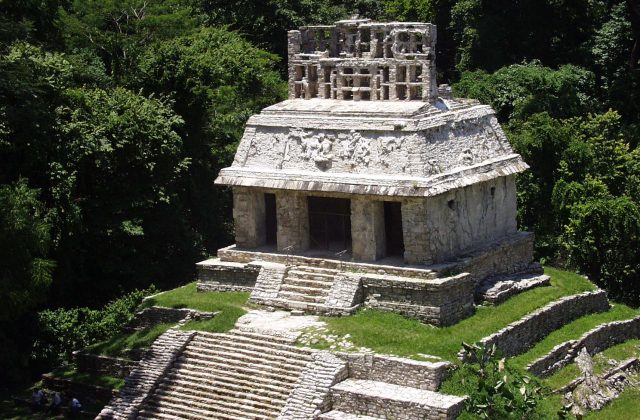
Uxmal
Yucatán, Mexico
Uxmal lies in the Puuc hills about 62 km south of Merida, roughly an hour's drive, and entry is paid at the…
29 tickets & tours
Ancient Temple · Yucatán · Mexico

Photo: Daniel Schwen, CC BY-SA 4.0
Entry to Chichen Itza is paid at the ticket hall at the main gate and is made up of two parts, a federal fee for the archaeological zone and a separate state fee, which together cost noticeably more for foreign visitors than for Mexicans. Check the current amounts before you go, and bring some cash in case card payment is not working. Official guides can be hired at the entrance. What is sold online is mostly the long day out from the coast. Chichen Itza lies inland in Yucatan state, about 45 km west of Valladolid and around 120 km east of Merida, but two and a half to three hours from Cancun, Playa del Carmen and Tulum, where most visitors stay.
The standard tour from the Riviera Maya is a full day by coach with a guide, entry, a swim in a cenote and lunch, followed by a stop in the colonial town of Valladolid. Variations add the ruins of Coba, with its taller pyramid set in forest, or choose a different cenote such as Ik Kil or Suytun. When comparing offers, check whether entrance fees are included, how large the group is and, above all, what time the coach arrives: big tours from Cancun reach the site at midday in the heat and the crowds. The sensible alternative is to spend a night in Valladolid or Piste, the village by the entrance, and walk in at opening time with a guide hired at the gate.
Live dates and prices from GetYourGuide. Free cancellation on most tickets.
Chichen Itza was one of the greatest Maya cities, at its height between about 600 and 1200 AD, and a centre of power for the northern lowlands of Yucatan. Its name refers to the mouth of the well of the Itza, the lineage that dominated the city, and the site mixes the Puuc style of the region with forms that recall central Mexico. It is a UNESCO World Heritage Site, managed by the national institute of anthropology and history. The heart of the site is a great open plaza dominated by El Castillo, the stepped pyramid of Kukulcan, the feathered serpent, with a staircase on each side and a temple on top; climbing has been forbidden since 2006. Its design follows the solar calendar, and at the equinoxes the afternoon sun casts a pattern of triangles down the north staircase that looks like a serpent's body joining the carved heads at its foot.
Around the plaza, see the Great Ball Court, the largest in Mesoamerica, with its stone rings high on the walls and reliefs of a player being sacrificed; the platform carved with rows of skulls; and the Temple of the Warriors with its forest of carved columns. A raised causeway leads north to the Sacred Cenote, a deep natural well into which offerings, and people, were thrown. In the southern part, the round observatory known as El Caracol and the older buildings of the Las Monjas group are quieter. There is little shade and the paths are long, so bring water, a hat and sunscreen. Souvenir vendors line the paths through the site. Drones and tripods need special permission.
The site opens daily at 8 am and closes in the late afternoon, with last entry about an hour before closing; check the current hours locally. The best plan is to be at the gate at opening, when the light is soft, the heat bearable and the coach tours from the coast still on the road. By 11 am the plaza is crowded and the sun fierce. The most comfortable season is from November to March, when the weather is dry and less humid. April and May are extremely hot, and from June to October the rainy season brings afternoon storms and the risk of hurricanes.
The spring and autumn equinoxes, around 21 March and 22 September, draw huge crowds to watch the serpent of light on El Castillo; the effect is visible for several days on either side, which is a quieter time to see it. Sundays can be busy with Mexican visitors. Allow three to four hours for the main monuments. Combine the visit with a swim in a nearby cenote, the colonial town of Valladolid, the smaller site of Ek Balam, or continue west to Merida.
Yes. GetYourGuide lists 8 tickets and tours for Chichen Itza, with live dates and prices and free cancellation on most of them.
The site opens daily at 8 am and closes in the late afternoon, with last entry about an hour before closing; check the current hours locally.
Allow three to four hours for the main monuments.
Entry to Chichen Itza: Paid at the gate; federal and state fee
No dress code; wear a hat, sun protection and light clothes.
Chichen Itza was established in 600.
Chichen Itza receives about 2.6 million a year (2017).
Chichen Itza is in Yucatán, Mexico. The map on this page shows the exact spot.
How to visit an ancient temple: tickets, heat and rules — Tickets, hours, heat, guides, climbing rules and conservation at the ancient temples of Egypt, Greece, Italy, Angkor and the Maya world.
Yucatán, Mexico
Uxmal lies in the Puuc hills about 62 km south of Merida, roughly an hour's drive, and entry is paid at the…
29 tickets & tours
Yucatán, Mexico
Xlapak is the smallest stop on the Puuc Route, the road through the hills of southern Yucatan that links a chain of…
No online ticket